
Ba Ria – Vung Tau: Comprehensive Factors to Develop Logistics Sector
Thời sự - Logistics - Ngày đăng : 08:00, 01/01/1970
Being a gateway to East Sea of the South Eastern part and located near international marine routes, Ba Ria – Vung Tau have had favorable conditions to develop seaports, port services and logistics sector as well. It is a place that offers great potentials to become a regional transshipment port – a place with comprehensive factors that nowhere else in Vietnam can possess.
Considerable Advantages of Ba Ria – Vung Tau
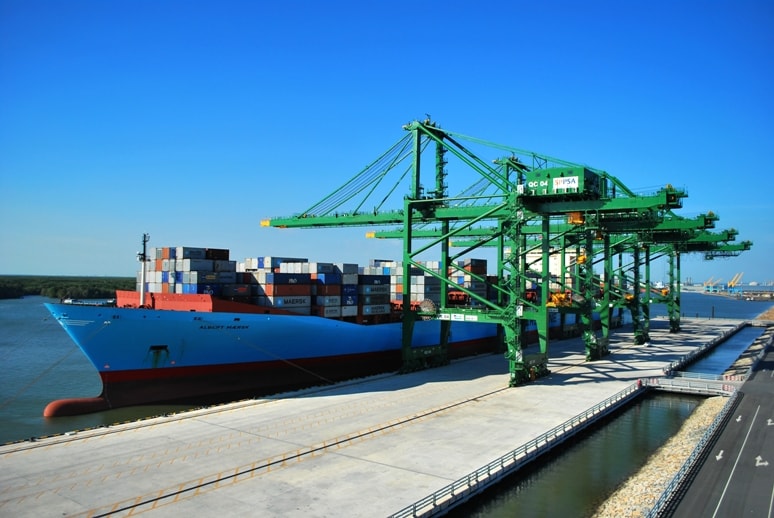
Ba Ria – Vung Tau port area is located near international cargo transshipment routes, among which there are regular routes of mother-vessels connecting large economic zones in the world. According to experts, Ba Ria – Vung Tau port system located along the Thi Vai River has been considered to be the most important one thanks to the river connecting 6 other rivers, enabling to reach anywhere in provinces in the South and the natural depth, enabling to receive vessels of over 100,000 tons. Therefore, it is possible for Ba Ria – Vung Tau port system in connection with those in Dong Nai and in HCMC to create a connecting port system that links to dynamic economic centers.
The province has had a good infrastructure system: land, sea, railroad networks have been planned to develop, gradually connecting to regional transport networks, for example, the enlargement of National Highway 51, Bien Hoa - Long Thanh - Dau Giay express way, inter-port road, Bien Hoa - Vung Tau railroad network, Long Thanh airport, Asian Highway/ Southern Economic Corridor…, and thus creating advantages in transport network between Ba Ria -Vung Tau and other regions.
Ba Ria – Vung Tau port area as an import-export gateway boosts the development of industrial zones in the province and in other nearby provinces as Dong Nai and Binh Duong. In return, the industrial zones will help the ports operate in full capacity, guaranteeing a healthy sustainable development of them. A distance of 10-65 kilometers from the industrial zones to Cai Mep – Thi Vai port area is a contributing factor to the development of the port system, helping the industrial zones in on-time delivery and reception. Therefore, the port system in the future will be transshipment location to the South of Vietnam and to other regional countries as Laos, Cambodia and Thailand.
Ba Ria – Vung Tau: A Transshipment Center
According to the plan to develop Vietnam seaport system until 2020 with orientation to 2030, Thi Vai – Vung Tau port system belonging to South Eastern seaport system is to develop to national general ports and international gateway ports, making itself a driving force to the development of Ba Ria – Vung Tau port areas, of the key economic zone in the South and of the country.
"To achieve the targets, the province has been developing industrial zones and there have been 220 investment projects mostly in steel production…" said Mr. Tran Minh Sanh – Chairman of Ba Ria – Vung Tau province. In addition, 30 industrial zones with the total areas of 2,000 ha have been planned to attract investment projects, making a strong base to develop logistics sector. A land fund of 800ha in the area of lower Cai Mep has been spared for the development of port services. Another 1,100ha has been planned for 26 projects of local port and warehousing services. In addition, there have been the developments of the systems of cities that will connect other cities and regions to make a synchronous industrial economic corridor – seaports. Japan has had 14 investment projects in Ba Ria – Vung Tau with total investment capital of 1.4 billion dollars (not including investment capital in oil projects and ODA funded ones), ranked 7th among countries with large investment in the province. And 10 of them have been put into operation.
The ODA funded dredging work on the navigation way has been completed and it is now put into operation, enabling to vessels of 80,000DWT to enter and some berths have successfully received vessels of 80,000-131,000DWT lower draft. With the advantages as 300-meter berths, 14.5-meter depth along side berth, Cai Mep – Thi Vai port area has had a high capacity of loading/unloading. In 2010, the capacity of loading/unloading reached 37 million tons/year; in September 2011: about 55 million tons/year; in 2015: 57-75 million tons/year estimated; in 2020: 85-124 million tons/year; in 2030: 167-287 million tons/year. And it is possible for the port area to receive container vessels in direct routes from Vietnam to American and European markets.
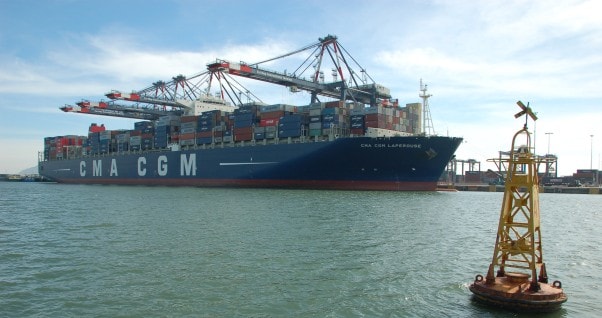
According to experts, ports in Cai Mep – Thi Vai area when fully equipped will be possible to receive cargo transshipment from Vietnam and from nearby countries. There have been 52 projects in ports that have been in developing process, and 24 ports have been put into operation. Big shipping companies as APM-Maersk, CMA-CGM, Hanjin Shipping has been in joint-venture in investing and operating ports in Cai Mep –Thi Vai area as CMIT and TCIT. Especially, the container ship Laperouse (France) of CMA-CGM anchored at Cai Mep International port (CMIT – Phuoc Hoa Commune, Tan Thanh District, Ba Ria – Vung Tau. This is one of the biggest container ship of CMA-CGM and also of the world that first anchored a Vietnam port. Ba Ria – Vung Tau has become a destination in international maritime routes, becoming a transshipment and logistics service supply spot for the region and for Vietnam.