

Circular Supply Chain: A Strategic Shift for Green Logistics
English - Ngày đăng : 08:00, 22/07/2025
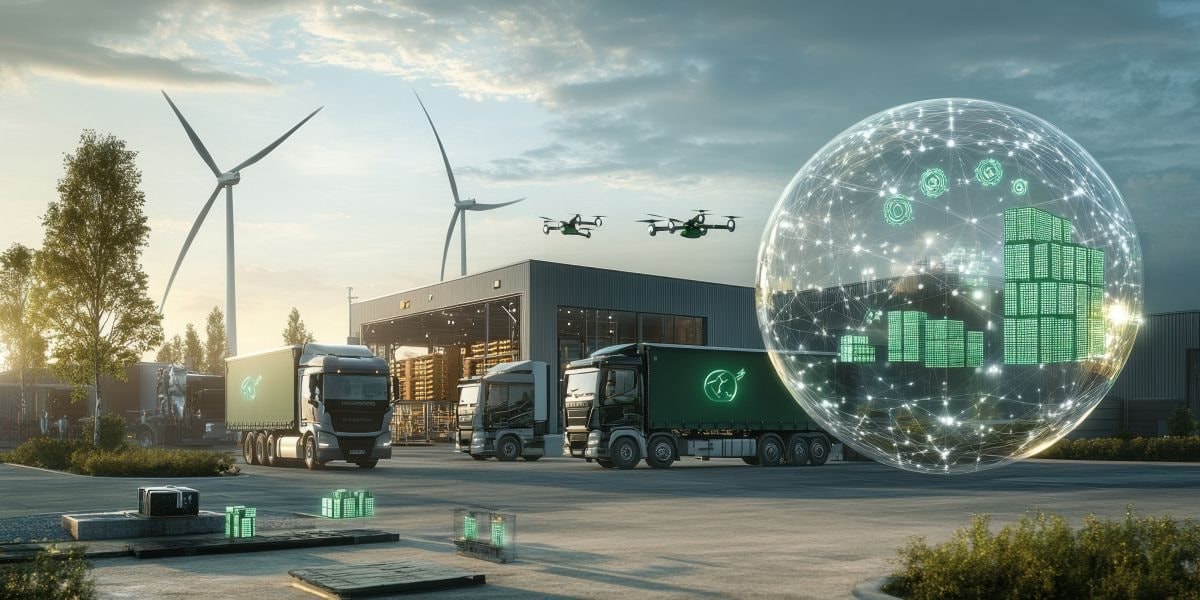
Unlike the traditional linear model—consume and discard—a circular supply chain integrates recycling, reuse, and value regeneration. It not only helps reduce carbon emissions but also optimizes long-term operational costs.
Concept: From Disposal to Regeneration
Traditional supply chains follow a linear logic: raw material extraction – production – consumption – disposal. This model is no longer viable as resources become scarce, and environmental regulations (such as the EU Green Deal and Carbon Border Tax) require businesses to prove sustainability throughout the product life cycle.
A circular supply chain (CSC) is a redesigned flow of materials aimed at extending product lifespans, reducing waste, and transforming yesterday’s “outputs” into tomorrow’s “inputs.” More than just recycling, the circular model includes post-consumer product recovery, repair – sorting – recycling – reuse, and reintegration into production processes.
This requires integrated thinking across departments: product design must allow disassembly, transportation must include return flows, and factories must be capable of handling recycled inputs. It’s a synergy of reverse logistics, technological innovation, and Product Lifecycle Management (PLM) strategy.
Circular SCM helps reduce material costs and meet ESG standards—criteria in environment, society, and governance that are increasingly mandatory for accessing global markets.
Europe leads the transition from linear to circular supply chains. Standout models include: Germany’s Green Dot packaging collection system, the Netherlands’ EPR (Extended Producer Responsibility) scheme, and IKEA’s reverse logistics center in Sweden.
In these countries, manufacturers are financially and physically responsible for products post-consumption. They collaborate with local authorities, retailers, and recyclers to collect, sort waste, and reintroduce materials into production. This reduces waste taxes while utilizing resources that would otherwise be lost.
IKEA, for example, designs all products to be disassembled and reassembled, allowing customers to return used furniture. It also built a reverse logistics system to handle returns efficiently in terms of fuel and time.
We reuse up to 80% of recycled plastic materials, and the cost is only 40% compared to importing new materials. Adopting a circular model not only cuts input costs significantly but also opens opportunities to build a sustainability-driven brand—something increasingly valued by consumers and global partners. In the long term, this becomes the foundation for Vietnamese businesses to enter the green value chain and become strategic partners in the global supply network.
Vietnam: Big Potential, Many Hurdles
In Vietnam, the concept of a circular supply chain is still relatively new, mostly applied by exporters, FDI enterprises, or those under ESG pressure from parent corporations. However, the demand for recycling and recovery is becoming urgent—especially in packaging, textiles, and electronics.
The 2020 Environmental Protection Law mandates Extended Producer Responsibility (EPR), a positive signal requiring companies to plan product lifecycles from the design stage. Simultaneously, FTAs like EVFTA and CPTPP open vast export markets—accompanied by strict carbon standards.
Yet the biggest challenges remain: lack of reverse logistics infrastructure, insufficient financial incentives (e.g., tax credits, investment support), and no standardized sorting or recycling systems. Most recyclable waste in Vietnam is still handled by the informal sector (scrap dealers, household recycling), lacking integration and data transparency.
For circular supply chains to realize their potential, close coordination is needed between policy, technology, and business models. Recycling startups must be linked with large enterprises, distribution systems need digitization, and consumers must be educated to participate in the “zero waste” journey.
From Option to Survival Strategy
A circular supply chain is no longer a “green” choice for corporate social responsibility—it is a core strategy to survive in a low-emission economy. Optimizing material costs, avoiding carbon taxes, and enhancing traceability—all point toward one model: regeneration instead of consumption.
With new global market demands, Vietnamese enterprises can no longer stay on the sidelines. Circular supply chains are the key for sustainable exporters, and beyond that, a path to competitive advantage through mastery of materials, data, and product lifecycles.