

Hong Kong: From Mega Airport to the “Capital” of Green Maritime Finance
English - Ngày đăng : 08:00, 21/11/2025
Mega airport – gateway to the global supply chain
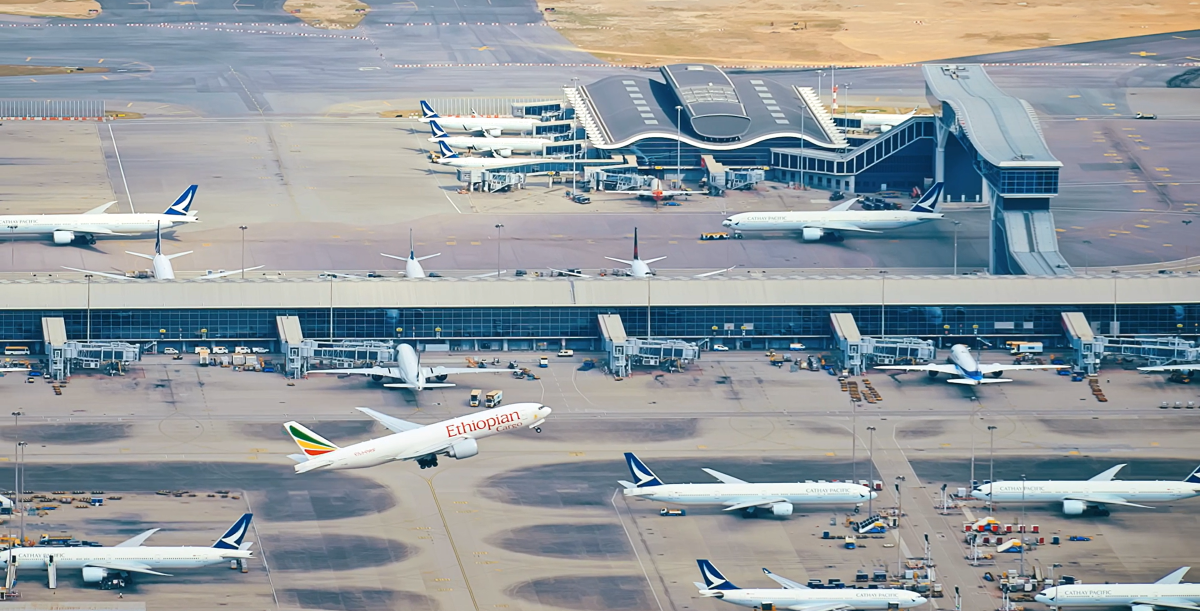
Located on Chek Lap Kok Island, about 30 km from downtown, Hong Kong International Airport (HKIA) covers more than 1,900 hectares. Terminal 1 has been in operation since 1998, while the expanded Terminal 2 has been phased into service since September 2025.
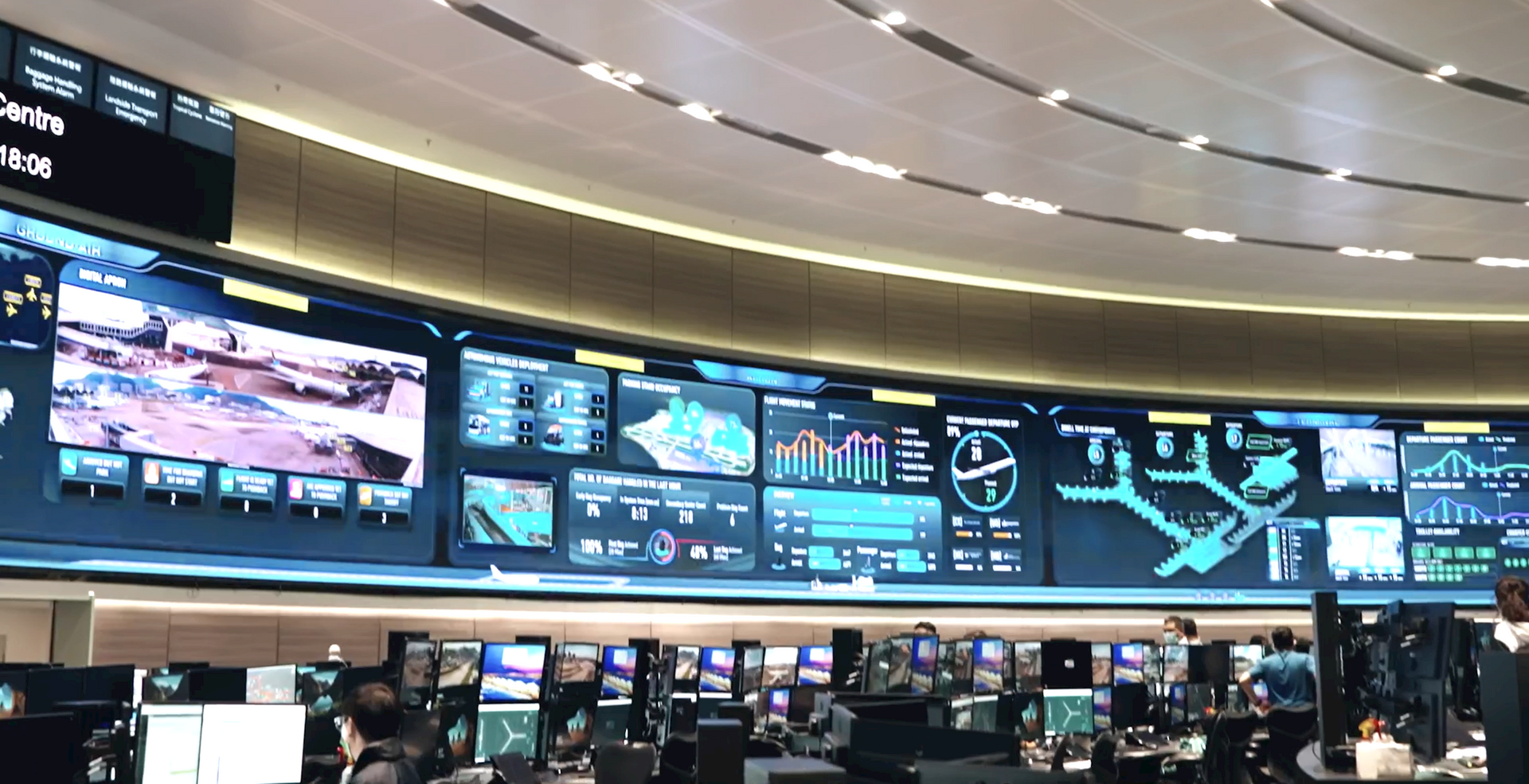
In the 2024–2025 financial year alone, HKIA handled close to 55 million passengers, around 5 million tonnes of cargo and more than 370,000 aircraft movements, with a maximum capacity of 102 flights per hour across three runways.
The airport currently connects to over 200 destinations worldwide through approximately 140 airlines, operating around the clock. Half of the world’s population is no more than five hours’ flight from Hong Kong – an advantage that turns HKIA into an ideal “transit hub” for high-value supply chains, from technology products and electronic components to pharmaceuticals requiring strict temperature control.
Beyond air transport, HKIA is also a rare intermodal node in the region. The Airport Express rail link takes passengers to the Central financial district in 24 minutes; franchised buses operate around 85 routes; there are cross-boundary coaches, SkyPier high-speed ferries, the SkyLimo service, and the Hong Kong–Zhuhai–Macao Bridge, which together connect the airport with more than 110 cities across the Greater Bay Area (GBA).
This very “air + road + sea” configuration forms the foundation for Hong Kong to strengthen its role as the logistics gateway of the entire GBA.
Green finance for shipping: the advantage of “one country, two systems”
If HKIA is the convergence point for cargo and passengers, Hong Kong possesses another “runway” no less important: capital flows for the green transition. At the flagship session “Hong Kong: A Global Maritime Capital”, Ms Mable Chan, Hong Kong’s Secretary for Transport and Logistics, offered an in-depth analysis of the city’s advantages as Asia’s principal gateway for green maritime finance.
For many years, Hong Kong has built a strong reputation in green bonds, sustainable financial products and transparent disclosure frameworks. Building on this foundation, the city is rapidly developing services in ship financing, insurance, legal advisory and credit ratings, all aligned with emission-reduction goals. Initiatives to establish a hub for green marine fuels—supplying new fuels such as methanol, ammonia and hydrogen to the international fleet—are being designed in tandem with financial solutions to reduce risk for investors during the transition period.
Mable Chan stressed that the “one country, two systems” framework gives Hong Kong a unique institutional edge: it benefits from the immense market of Mainland China while maintaining international standards in financial regulation, legal practice and risk management. This allows the city to act as a “transfer station” for green capital, channeling funds from global institutions into regional port-infrastructure projects, shipping fleets and digital technologies.
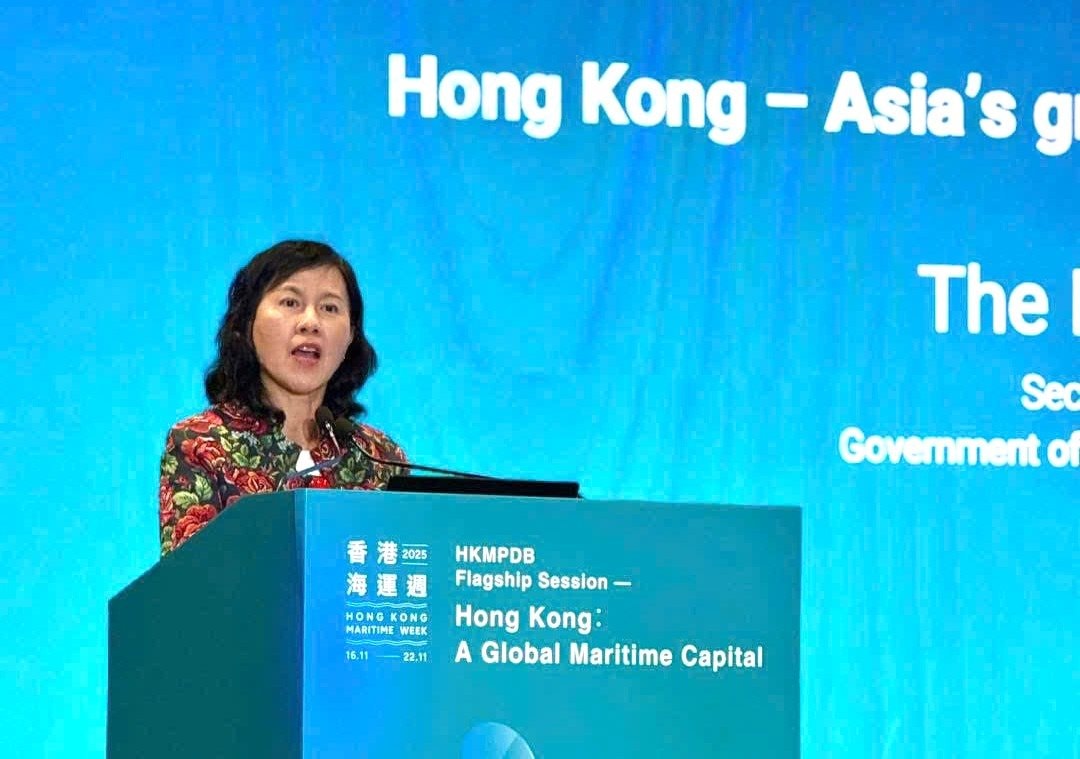
In discussions with representatives of the international maritime community, Chan described Hong Kong with the keyword “marketplace” – a vibrant market where shipowners, financiers, lawyers, technology experts and policymakers all come together. Here, green loan agreements, P&I insurance, digital-data solutions and cross-border legal services are “assembled” into comprehensive service packages for enterprises. This approach enables Hong Kong to function not just as a port of call, but as a place where strategic decisions for the shipping industry are actually shaped.
HKMPDB and the “Global Maritime Capital” vision
On 1 July 2025, the Hong Kong Maritime and Port Development Board (HKMPDB) was officially established, serving as the “strategic brain” for the long-term development of the city’s port and maritime sector. At the flagship session held during Maritime Week, HKMPDB brought together shipowners, financial institutions, law firms and regulators to discuss key topics such as green finance, digital transformation, regulatory frameworks and cross-border cooperation.
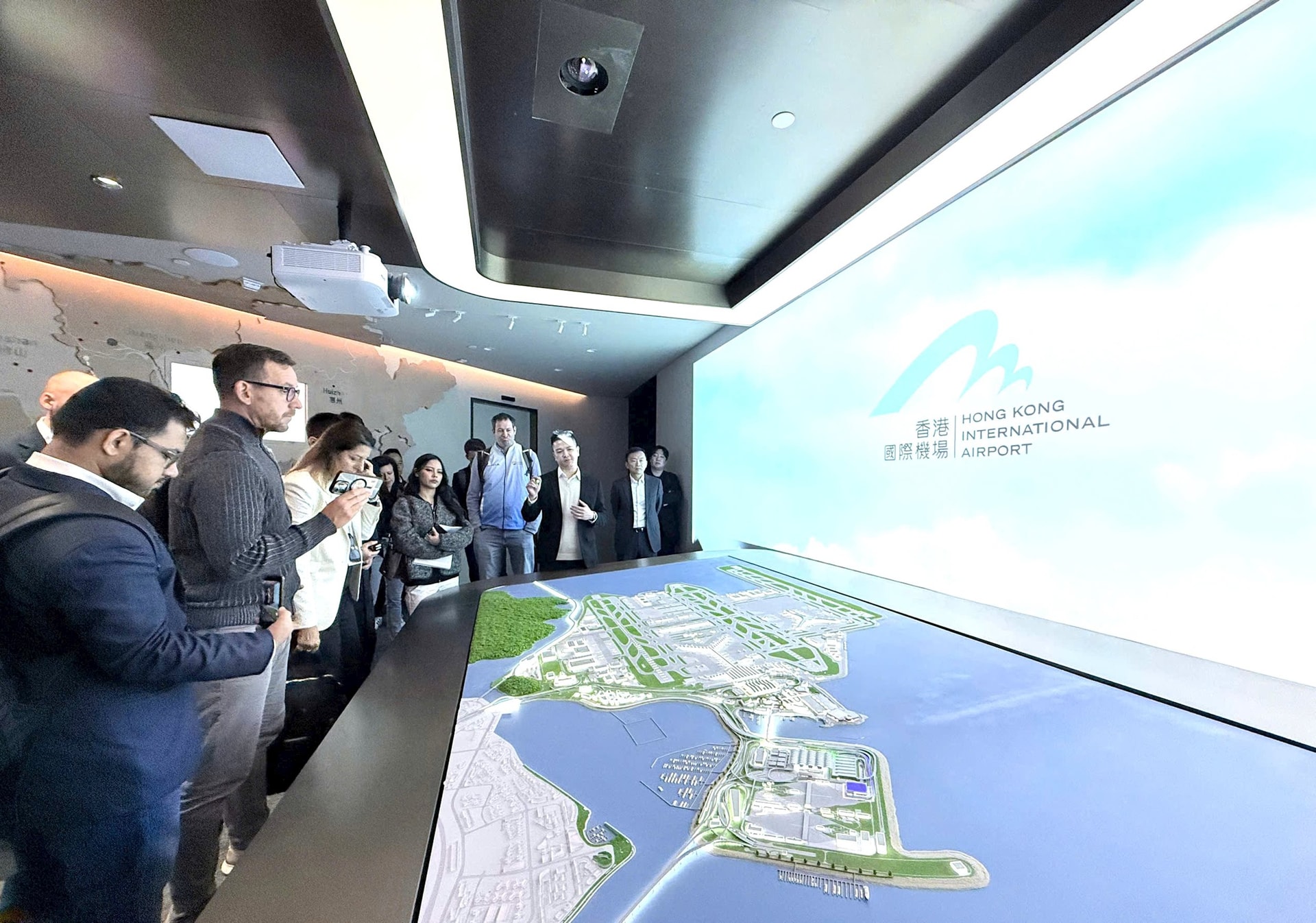
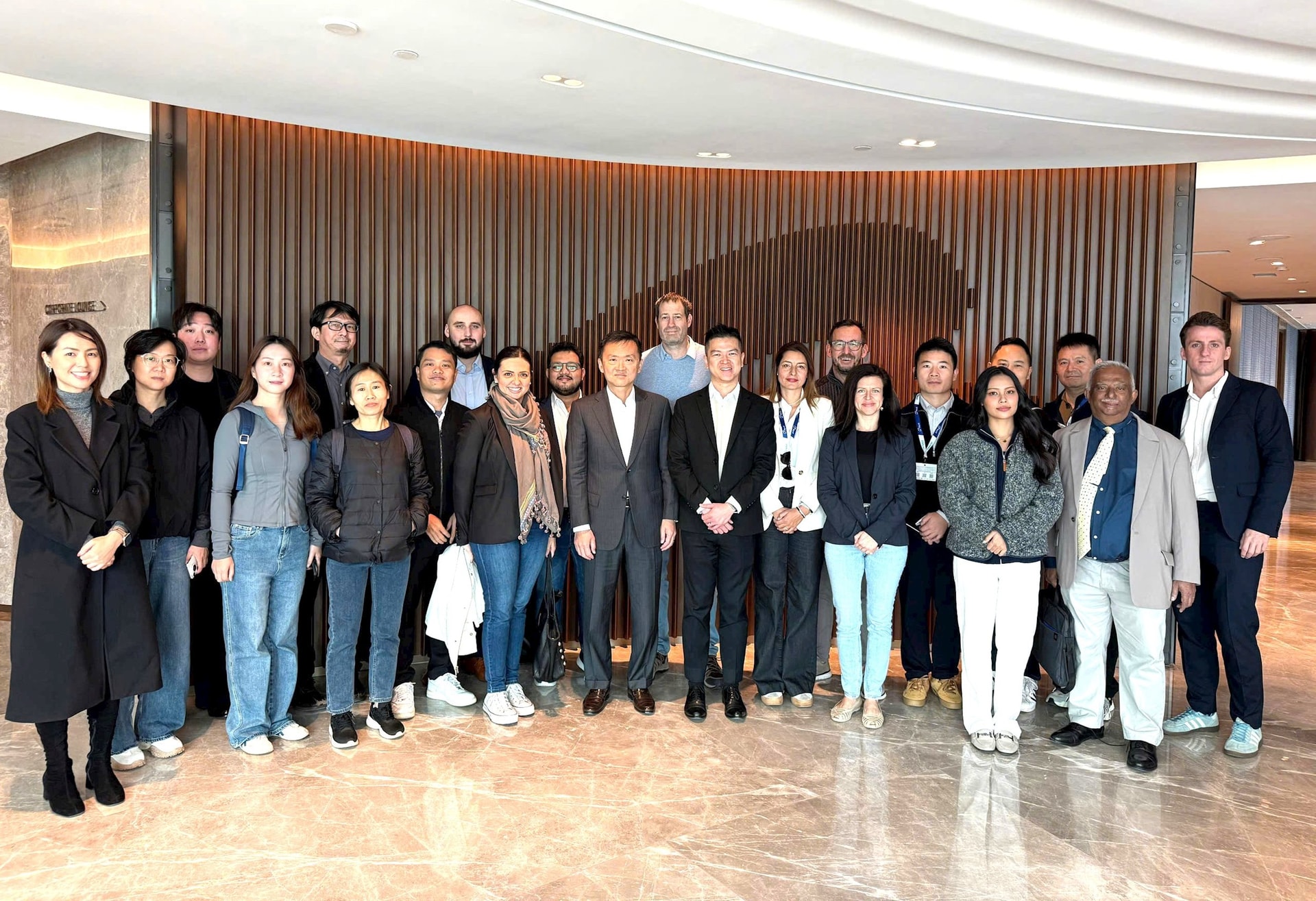
Beyond closed-door meetings, Mable Chan also took time to meet about 20 journalists from Mainland China and overseas, sharing how Hong Kong is responding to geopolitical turbulence and a reshaping global trade order. According to her, the city’s strategy is to deepen comprehensive cooperation with mainland provinces and cities to secure cargo sources and expand the client base for ports, shipping lines and related services in Hong Kong.
The “Global Maritime Capital” vision, therefore, should be understood not merely as a matter of rankings in international shipping-centre indices, but as the capacity to coordinate between hard infrastructure (ports, airports, logistics facilities) and soft infrastructure (finance, legal systems, data and highly skilled human resources). In this picture, HKIA—with its tightly interwoven intermodal network across the GBA—serves as an “extended arm” of maritime ambitions, since a strong seaport today must be paired with a cargo and passenger airport of commensurate scale.
A dual ecosystem for future supply chains
Taken as a whole, Hong Kong is gradually positioning itself as a “dual ecosystem”: on one side stands the mega-hub HKIA, serving as a central transit point for passengers and cargo and as a connector for the GBA; on the other side is a re-organized network of ports, maritime services and green finance operating under the “Global Maritime Capital” vision.
As global supply chains face pressure to cut emissions, diversify risk and digitise, the intersection of sky, sea and capital in Hong Kong will be a critical test. If the city can fully leverage its institutional advantages, maintain international standards and remain committed to sustainable development, it is well-placed to become one of the strategic pillars of the world’s green logistics and finance networks in the decade ahead.