

Freighter Fleet Boom: A Long-Haul Play in Asian Airlines’ Cargo Strategy
English - Ngày đăng : 08:04, 29/11/2025
Boeing’s 2024 World Air Cargo Forecast likewise estimates that air cargo traffic will grow by an average of 4% per year through 2043, forcing a significant expansion of cargo fleets to keep pace with demand. That is why Asian airlines are quietly pivoting their long-term strategy toward cargo, looking far beyond the short-lived freight rate “spikes” of recent years.
Why are airlines back in love with freighters?
After the pandemic, many believed the golden age of freighters was over once belly cargo on passenger aircraft returned. But developments in 2023-2025 have told a different story. IATA reports that in 2024, global air cargo demand rose by around 11–12% compared with 2023, with Asia–Pacific carriers leading the way at 14.5% demand growth and 11.3% capacity growth. At the same time, IATA’s global outlook stresses that capacity growth is being held back by shortages of new aircraft and ongoing supply chain issues in aircraft production.

This mismatch between demand and available lift has led many airlines to realize they need their own dedicated freighter fleets instead of relying too heavily on belly capacity, which is tied to passenger schedules and seasonality. Freighters allow carriers to fly at night, serve destinations that are not major tourist markets but are cargo hotspots (logistics centers, industrial zones far from large cities), and tailor aircraft configuration and products to specific segments - from e-commerce and electronics to cold-chain and pharmaceuticals.
On top of that, “China+1” and the shift of supply chains toward Vietnam, India and Southeast Asia give regional airlines a long runway for cargo - not just a temporary Covid-era windfall. When Airbus forecasts a 45% increase in the global freighter fleet and Boeing calculates that the air cargo market will almost double by 2043, it becomes clear that those who own and control cargo capacity will have significant bargaining power with multinational corporations.
Pax–freighter, belly cargo, ACMI: reshuffling the deck route by route
Not every airline has the capital to place large freighter orders, especially when the Airbus A350F has seen deliveries pushed back to late 2027 and the Boeing 777-8F is not expected until 2028. This reality forces carriers to “reshuffle the deck” among three sources of capacity: belly cargo, in-house freighters and wet lease/ACMI.
On high-volume, year-round corridors such as Asia–North America and Asia–Europe, many airlines are choosing a hybrid model: using passenger-belly capacity as the backbone and then adding freighter frequencies in peak seasons or for specific products (cross-border e-commerce, high-value goods, cold-chain). Cargo-focused players like Qatar Airways Cargo, Emirates SkyCargo, Korean Air, Cathay and newer entrants such as Maersk Air Cargo are all pursuing some version of this mixed strategy, supplemented with flexible ACMI contracts to turn capacity “on and off” with the seasons.
For mid-sized Asian airlines, the typical solution is an asset-light approach: relying on ACMI leases or partnering with dedicated freighter operators, while channeling investment into sales capability, digital booking platforms and value-added logistics services (door-to-door, fulfillment, cold-chain). Executed well, this allows them to participate deeply in the cargo value chain without shouldering the full risk of owning large freighter fleets in a still-volatile market.
Partnership opportunities for Southeast Asian airports, GSAs and 3PLs
A swelling global freighter fleet also means more room for airports, ground handlers, general sales agents (GSAs) and 3PLs in Southeast Asia. Airbus expects 2,605 new freighters to enter the market by 2044 - nearly 1,700 of them converted from passenger aircraft—implying a corresponding rise in demand for ground infrastructure, cargo warehousing and MRO and conversion services.
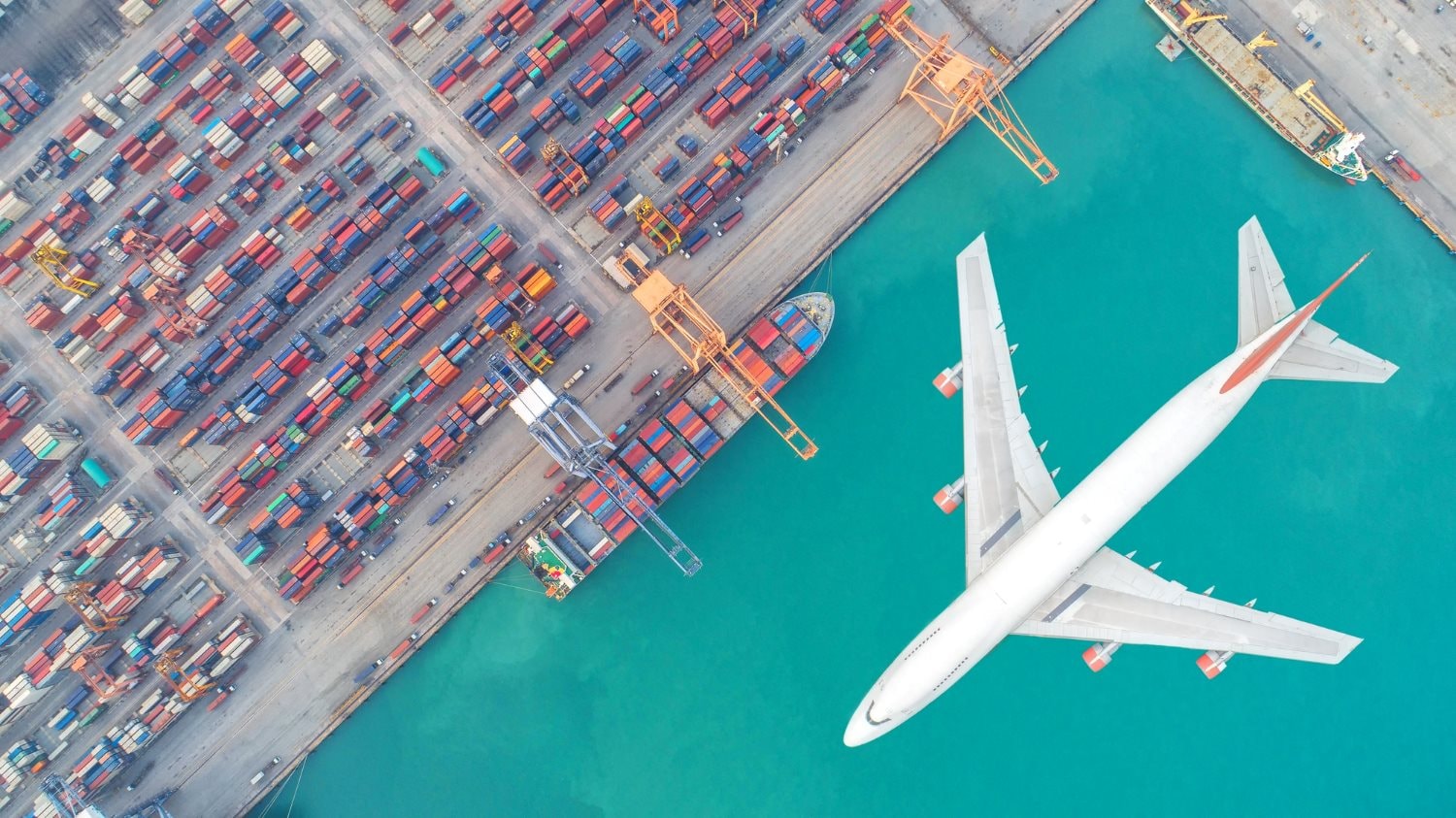
Airports with strong transit potential such as Singapore, Bangkok, Kuala Lumpur, Tan Son Nhat and Noi Bai can secure crucial positions in global freighter networks if they move early: expanding cargo terminals, standardizing e-AWB processes, investing in cold storage and building dedicated e-commerce handling centers. For 3PLs and GSAs, the opportunity lies in designing comprehensive service bundles around cargo flights: consolidating freight from industrial zones, customs clearance, bonded warehousing, labeling and repacking at the airport, then linking into domestic road and coastal shipping networks.
Especially now, as the risk of capacity shortages becomes more pronounced—around 150 of the world’s 630 large wide-body freighters are nearing or past the 25-year mark while new deliveries are delayed - airports and operators that can help airlines optimize aircraft turnaround times (fast handling, minimal delays) will carry extra weight in negotiations over new route launches.
Long-term forecasts are sending a consistent message: air cargo is set to grow steadily over the next 20 years, with the dedicated freighter fleet expanding by at least 45% and cargo volumes nearly doubling. In a context where both Airbus and Boeing face delivery delays, the risk of undersupply on certain “hot” trade lanes is very real. This situation forces Asian airlines, airports and logistics providers—especially in Southeast Asia—to make a choice: either invest and secure their place in the global freighter network, or accept standing on the sidelines of a strategic game that will shape the next two to three decades.
Today’s “freighter boom” is more than a multi-billion-dollar ordering spree among major carriers; it is a clear sign that cargo is becoming a second strategic pillar alongside the passenger business. For Asia–Pacific—at once the world’s factory and a rapidly rising consumer market—owning or being tightly integrated with a strong freighter network will determine the standing of airlines, airports and logistics companies in global supply chains. The question is no longer “Should we do cargo?” but rather: at which link in the emerging “freighter value chain” will each player choose to stand in the 2025–2045 horizon?