
“Green Skies” 2050: Decarbonization Pressure on the Air Cargo Supply Chain
English - Ngày đăng : 08:20, 17/12/2025
In the context of IATA’s commitment to Net Zero by 2050, the aviation supply chain – especially air cargo – is under pressure to “green” itself much faster than the pace of volume growth.
From Net Zero pledges to alarming emission numbers
Since the Fly Net Zero resolution in 2021, the industry has set the goal of bringing net CO₂ emissions down to zero by 2050 through a combination of measures: next-generation fuel-efficient aircraft, operational optimization, carbon offsetting and, above all, SAF. However, developments over 2023-2025 show a wide gap between ambition and implementation.

After a steep drop during the pandemic, aviation emissions bounced back to more than 90% of their pre-2019 peak as early as 2023 and have continued to climb alongside the recovery in travel and trade. Meanwhile, the share of “green” fuel remains tiny: in 2024, SAF volumes were around 1 million tonnes – roughly 0.3% of global jet fuel consumption; in 2025 they are expected to reach 2 million tonnes, still only about 0.7% of total airline fuel demand.
At the same time, IATA’s latest analysis of feedstock availability indicates that to reach Net Zero, the industry will need about 500 million tonnes of SAF per year by 2050 – 250 times more than the 2 million tonnes expected in 2025. The good news is that in theory, sustainable feedstocks (used cooking oil, agricultural waste, e-fuels, etc.) could cover a large share of demand if investment priorities shift; the bad news is that the current rollout pace is far too slow compared with the trajectory required.
SAF, carbon pricing and the cost equation for air cargo
IATA estimates that SAF could deliver around 65% of the emission reductions needed to hit Net Zero by 2050, with the advantage of cutting lifecycle CO₂ by up to 80% compared with conventional jet fuel. But for now, SAF is still several times more expensive than fossil fuel, adding billions of dollars per year to the industry’s fuel bill. As airlines start blending SAF and are increasingly exposed to the EU ETS and CORSIA, the extra cost inevitably cascades down to customers – including shippers and logistics players.
One recent example is Singapore: starting in 2026, the country will impose a SAF levy on passengers, up to 41.6 Singapore dollars per person, to fund its national sustainable aviation fuel program. Many experts expect similar mechanisms to be applied to cargo – in the form of “green” surcharges or minimum SAF-blend requirements on certain routes. In Europe, proposals to expand ETS coverage to more flight types will also make airfreight costs to and from major hubs such as Frankfurt, Amsterdam and Paris increasingly volatile.
For the air cargo supply chain, this has two key implications. First, lanes subject to tighter SAF and ETS rules will carry structurally higher baseline rates, forcing shippers to re-evaluate the “carbon + time” trade-off when choosing between ocean, air or sea–air solutions. Second, multinational customers are demanding greater transparency on shipment-level emissions, and expect forwarders to propose optimized CO₂ scenarios – not just cost and lead-time comparisons.
How Asian logistics players can adapt to “green skies”
In this context, Asian logistics providers and shippers can no longer remain on the sidelines. On one hand, they face pressure from global corporations – many of which have SBTi-aligned emission targets – to deliver lane-by-lane, shipment-by-shipment CO₂ data. On the other hand, Asia–Pacific is becoming a testing ground for new “green” policy tools: SAF levies, voluntary carbon markets and government-backed SAF production incentives.
FIATA and partners such as Smart Freight Centre are developing standardized emission-measurement tools and practical decarbonization guidance for logistics companies worldwide – including those in Asia. At the individual-company level, “adaptation” can no longer mean simply “buying green options when a client asks,” but must start from the foundation: digitizing operations, collecting robust operational data (routes, loads, aircraft types), integrating with internationally recognized emission-calculation tools, and using that to design tailored “green” service packages for customers.
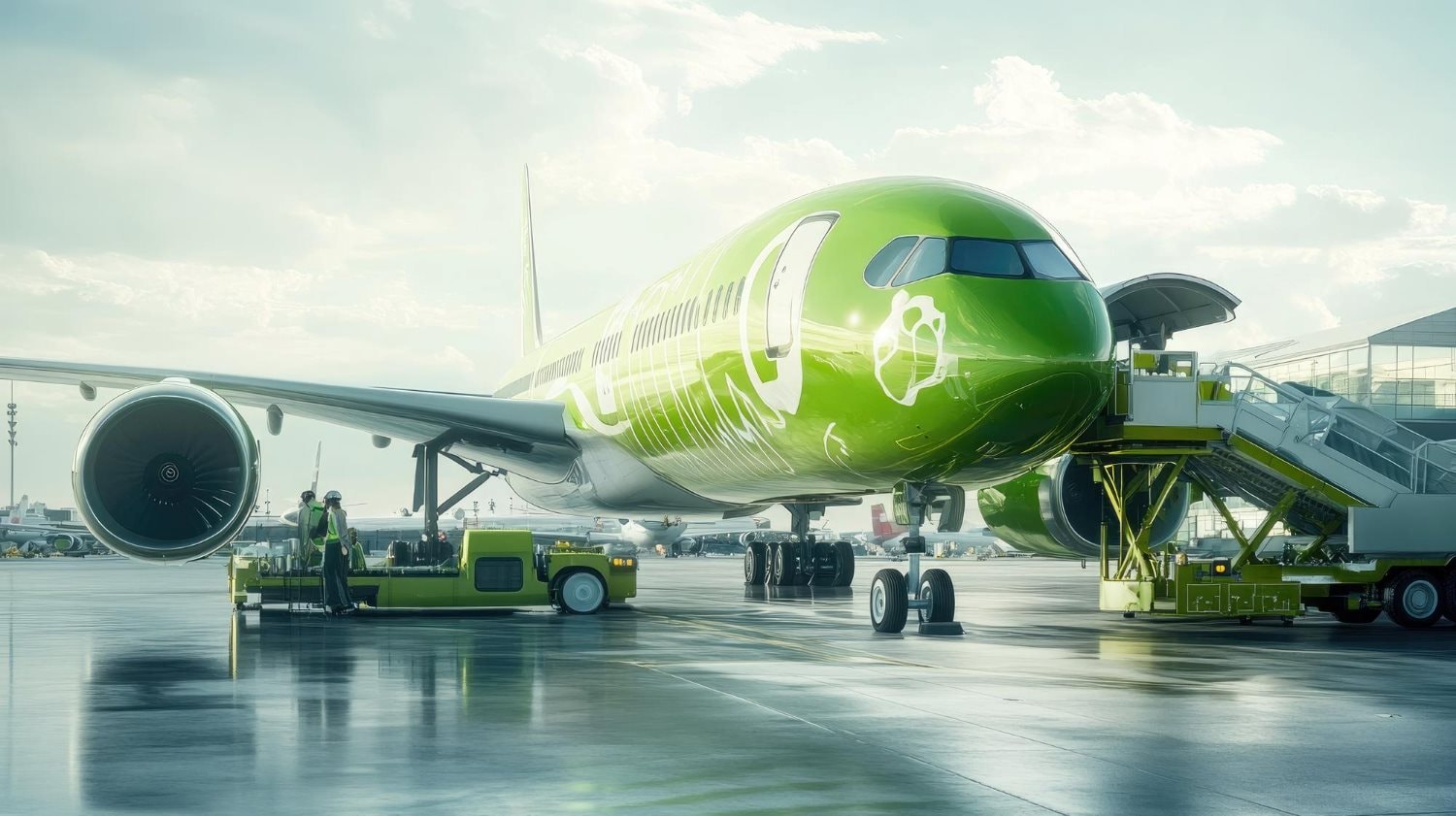
For airlines and terminal operators in ASEAN, investments in fuel-efficient fleets, optimized flight planning, reduced ground time, electric ground-support equipment and rooftop solar for cargo terminals are not just CSR stories; they are long-term competitive advantages. Airports and carriers that can demonstrate lower emissions per tonne-kilometre will be more attractive to multinationals who are now counting every tonne of CO₂ across their supply chains.
IATA’s Net Zero 2050 roadmap rests on the assumption that roughly 65% of the required emission reductions will come from SAF, 13% from new aircraft and engine technologies, 3% from infrastructure and operational improvements, and about 19% from carbon offsets and CO₂ removals. Meanwhile, IATA’s latest reports estimate that global SAF production in 2025 will be only about 2 million tonnes, or 0.7% of aviation’s total fuel demand – meaning the industry is still effectively at the “starting line” of the decarbonization race.
The pressure to “green the skies” is no longer a political slogan; it is increasingly baked into cost structures, rate levels and contract conditions across the aviation supply chain. Given Asia–Pacific’s role as the fastest-growing air cargo region, it will also be at the epicentre of new emission policies – from CO₂ reporting requirements and minimum SAF mandates to carbon taxes and credit schemes. Companies that treat this as a chance to restructure – by building capabilities in measurement, optimization and early participation in SAF initiatives – will not only meet compliance demands, but also gain a voice in shaping the new “green skies” standards for the global air logistics industry.