

Drone Logistics and Urban Air Mobility: A “Low-Altitude Wave” Poised to Break in Asia - Pacific
English - Ngày đăng : 08:00, 31/12/2025
With its role as the world’s factory and surging demand for fast delivery, Asia–Pacific is very likely to be one of the first hotspots where these models move beyond pilots into real operations.
From tech experiments to real distribution networks
Ten years ago, drone delivery was often dismissed as a marketing gimmick. By 2024–2025, the picture looks very different. Zipline – widely regarded as a model for drone-based logistics – reports having completed more than 1.4 million real deliveries and flown over 100 million miles, starting with medical supply routes in Rwanda and Ghana before expanding into the United States. Alphabet’s Wing has also ramped up quickly: after trials in the US and Australia, 2024–2025 has brought new partnerships with DoorDash and Walmart in the Dallas–Fort Worth area and other cities, handling thousands of grocery, food and essential-goods orders each day.
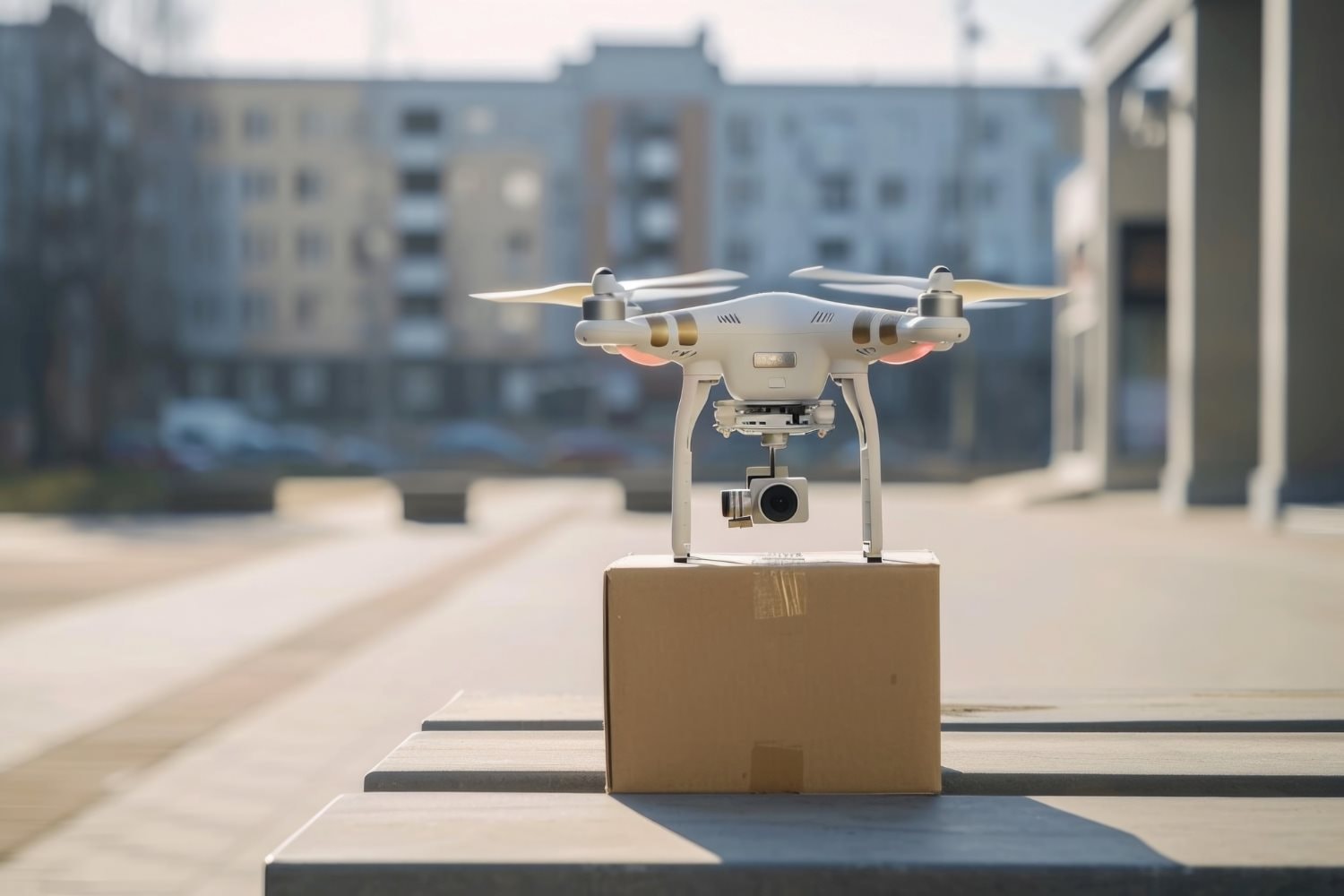
At the market level, studies estimate that the number of drones dedicated to delivery will increase from about 32,000 units in 2024 to more than 275,000 by 2030, reflecting huge growth in demand for rapid delivery of parcels under 2–5 kg. In that landscape, Asia–Pacific is both a “laboratory” and a vast market: in China, giants such as JD.com, Meituan and SF Express already operate large drone fleets to deliver food, parcels and fresh products in both urban and rural areas, as part of Beijing’s highly ambitious “low-altitude economy” strategy.
AAM, cargo eVTOLs and “airborne transfer stations”
Drone logistics is not just about small quadcopters dropping packages on doorsteps. Reports by PwC, the World Economic Forum and others on AAM point to an emerging structure in which electric vertical take-off and landing aircraft (eVTOLs) and heavy-lift cargo drones will act as “airborne transfer stations” over short- and medium-range routes.
In Japan, the Ministry of Land, Infrastructure, Transport and Tourism (MLIT) has already issued a regulatory framework for Level 4 UAVs, allowing beyond-visual-line-of-sight (BVLOS) operations in populated areas, and is subsidizing “drone hub” projects and drone logistics pilots for rural and island communities. JDrone has recently launched cargo-drone services using Yamaha FAZER R G2 and DJI Flycart 30 units to move materials for construction, forestry and mining in mountainous regions where trucks struggle to reach.
Against this backdrop, many experts predict the emergence of “air hub-and-spoke” models: goods are moved from consolidation centres to “drone depots” near residential areas or factories by heavy-lift drones, and from there smaller drones handle the last leg of the journey. Combined with existing road and waterway networks, AAM could add a new layer to the supply chain, complementing traditional air cargo on short, urgent, small-volume segments.
Fresh data confirm that drone logistics has moved well beyond “experiments for show.” A 2024 review notes that Zipline has surpassed 1 million deliveries, while Wing has exceeded 350,000; Amazon, Walmart, DoorDash and Uber Eats are also rapidly scaling up investments. A recent PwC report forecasts that the AAM market – including cargo drones – will grow nearly eightfold between 2024 and 2034, reaching around USD 87.8 billion. This suggests that drone logistics is no longer a mere “add-on,” but is gradually becoming a new layer of transport infrastructure with its own business models, physical assets and regulatory frameworks.
What opportunities for Southeast Asia and Vietnam?
In Southeast Asia, drone logistics is increasingly viewed as a tool to solve last- and mid-mile challenges in the context of rapid urbanization, chronic road congestion and highly fragmented geography with rivers and islands. Singapore is piloting the integration of drones into port and airport operations; Indonesia and the Philippines are exploring drone models to connect small islands and support healthcare and disaster relief; Thailand is deploying drones for smart agriculture and delivery routes in its northern highlands.
For Vietnam, the drone-logistics story is tightly linked to digital-economy and green-logistics strategies. Plausible scenarios include:
- Drones transporting medicines and medical supplies to remote areas and small islands – drawing on Zipline’s African model but adapted to Vietnam’s infrastructure and regulatory reality.
- Light cargo drones collecting test samples, documents and high-value components from satellite provinces and delivering them to major hospitals and industrial hubs.
- Integrating drones into logistics centres near airports and seaports to handle small e-commerce parcels requiring same-day delivery, in connection with existing 3PL networks.
However, there are significant barriers around BVLOS regulations, safety standards, data security and social acceptance (noise, privacy). Experience from the US, Japan and China shows the need for a clear pilot roadmap and “sandbox” corridors – prioritizing routes for healthcare, relief and remote islands – before scaling up more broadly.
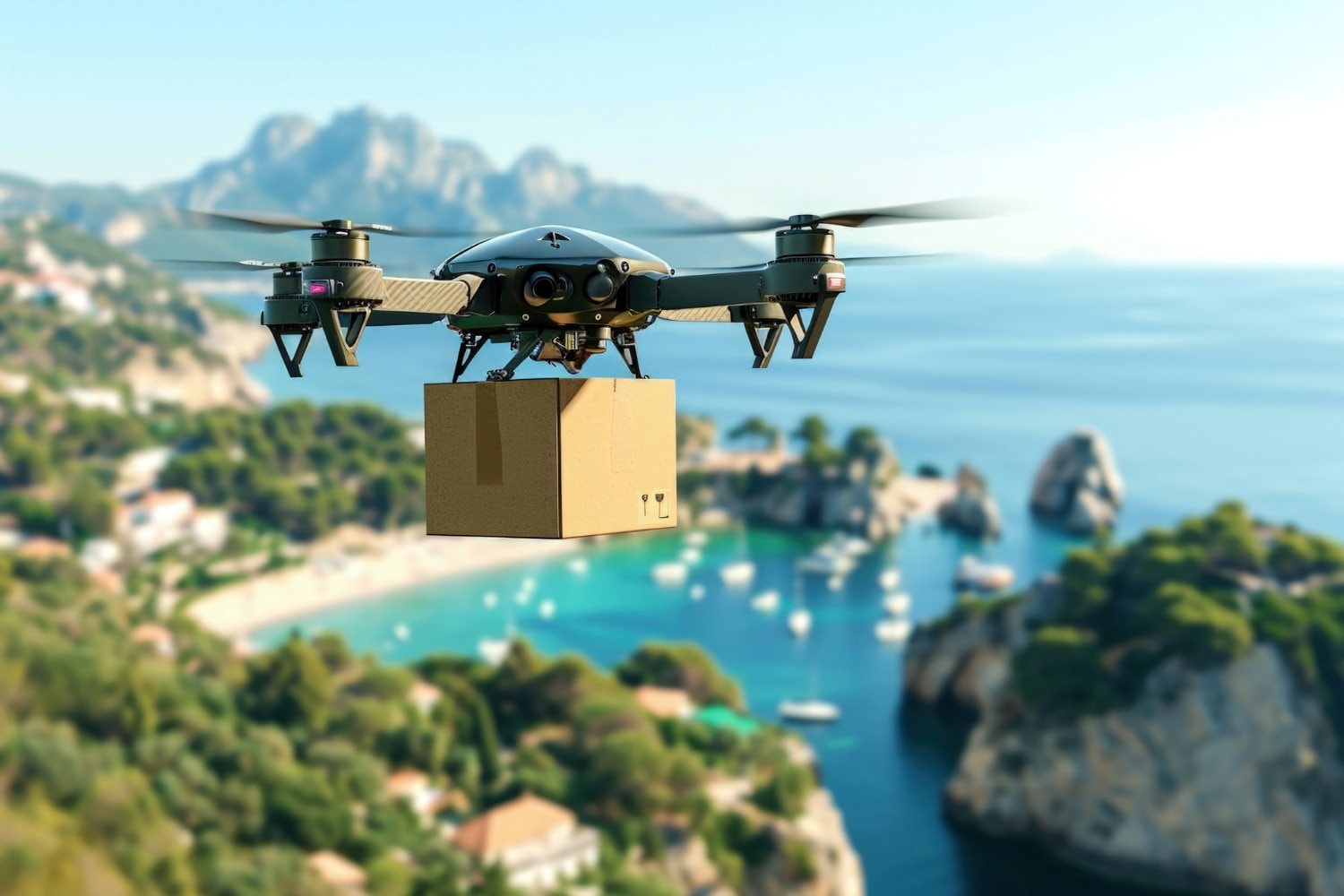
In the longer term, if Vietnam wants to participate meaningfully in the “low-altitude economy” that is gaining traction in China, it will need to link drone logistics with digital infrastructure: 3D mapping, UTM-like systems to manage low-altitude airspace, and online booking and tracking platforms. This is also an opportunity for tech startups, logistics companies and universities to jointly build new capabilities – from system design and operations to flight-data analytics and network optimization.
Drone logistics and urban air mobility may not immediately transform the landscape of international air cargo, but they are creating a new transport layer at “low altitude,” where data, algorithms and regulation matter as much as rotors and batteries. For Asia–Pacific in general, and Southeast Asia and Vietnam in particular, the key question is no longer “When will drone delivery arrive?” but where they want to sit in this new value chain: merely as end users of ready-made services, or as designers, testers and operators of drone-logistics networks that plug directly into traditional air-cargo corridors. Those who answer early – and act quickly enough – will have a real chance to seize the advantage in this “low-altitude wave” that is about to break.