

EV Batteries and Supply Chains: What New Opportunities for Vietnam’s Logistics Sector?
English - Ngày đăng : 08:29, 16/03/2026
Behind these figures lies an entirely new supply chain: batteries, components, charging infrastructure, assembly plants, distribution networks and recycling facilities - all dependent on a suitable logistics backbone. With multiple battery and EV manufacturing projects underway, Vietnam’s logistics industry now has a window to position itself as a strategic link in the regional EV map.
Battery and EV Investments: Putting Vietnam on the Global Supply-Chain Map
Market research indicates that Vietnam’s EV market is growing rapidly, with a valuation of around US$3 billion in 2023 and strong momentum expected through 2030. In the two-wheeler segment, Ho Chi Minh City alone targets about 1.2 million electric motorbikes by 2030, supported by more than 25,000 public charging points and battery-swap cabinets. In passenger cars, VinFast nearly doubled its domestic deliveries to some 170,000 EVs in 2025, underscoring strong home-market growth.
In parallel, a wave of battery-project investments is reshaping the industrial landscape. In January 2026, BYD and Kim Long Motor broke ground on a roughly US$130 million battery factory in Hue, with an initial capacity of 3 GWh per year and a plan to double output to 6 GWh and expand into passenger-vehicle batteries. Studies suggest that if Vietnam reaches its 2030 targets of around 1.55 million electric two-wheelers, 171,000 electric cars and 10,000 MW of battery energy storage systems (BESS), total battery demand could approach 47 GWh, requiring US$3.3–5.4 billion in supply-chain investment.
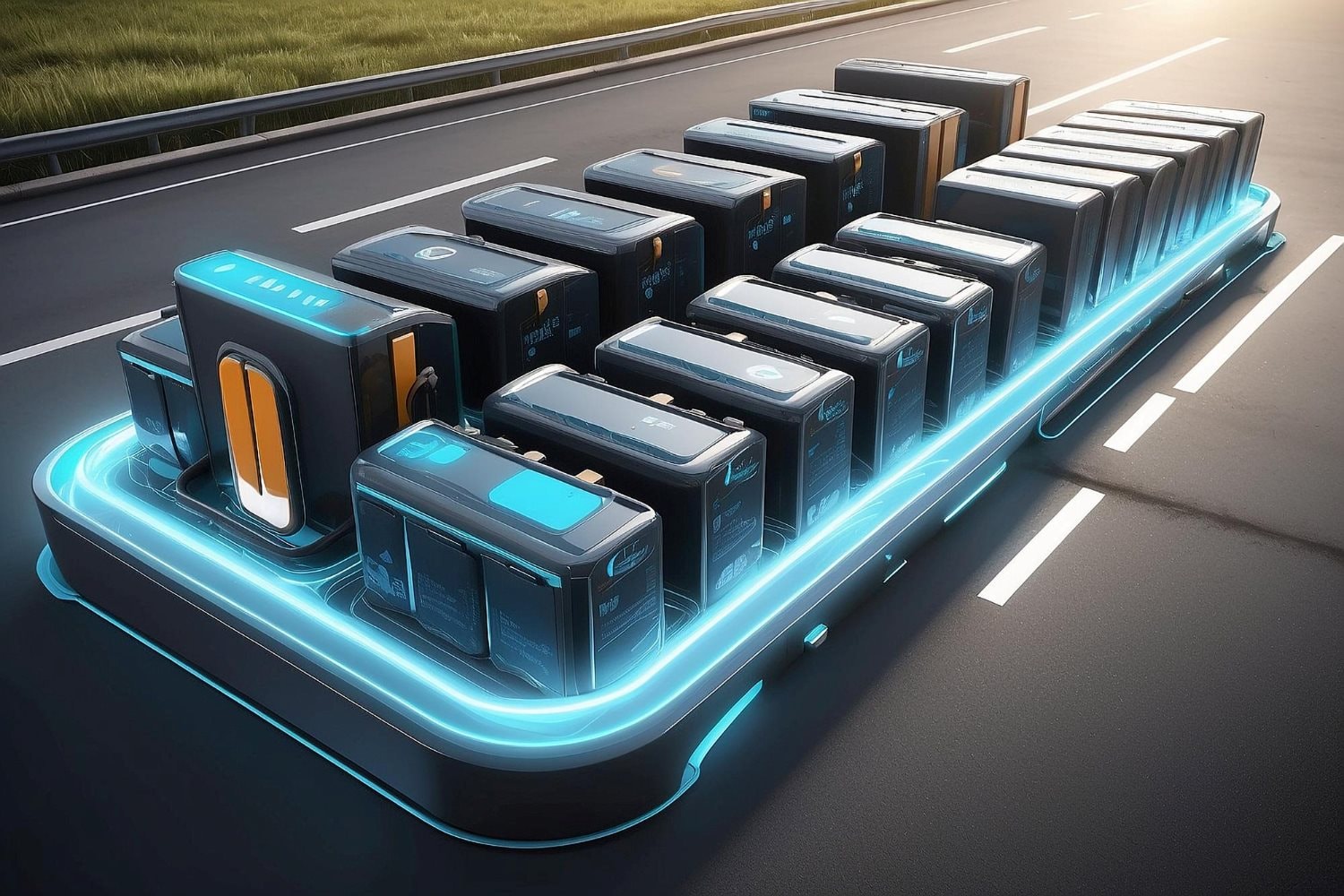
Vietnam is at a critical juncture to carve out a place in the global lithium-ion battery supply chain. With fast-growing domestic demand, proximity to major raw-material and manufacturing hubs in China, Korea and ASEAN, and a broad FTA network, the country can emerge as a base for pack assembly, module production and component manufacturing. Yet to move beyond simple assembly, Vietnam must pair industrial policy with a robust EV logistics strategy from upstream materials to end-of-life recycling.
EV Supply Chains: From Raw Materials and Components to Charging and Recycling
EV and battery supply chains differ markedly from those of internal combustion engine vehicles. First, batteries are classified as dangerous goods and thus require strict protocols for transport, storage and packaging to manage fire and impact risks. Second, battery materials and components (cells, modules, packs, BMS units) typically flow across multiple borders through industrial parks, seaports and ICDs before reaching assembly plants. Third, even after a vehicle is sold, logistics continues through the life of the charging, battery-swap, maintenance and recycling networks.
For logistics providers, this creates three distinct opportunity spaces:
- Upstream battery logistics – specialised warehousing and transport for cells, modules, packs and high-value electronic components, along with JIT/JIS inventory management for OEM and EV-assembly plants.
- Infrastructure deployment logistics – transporting and installing charging stations and swap cabinets, distributing batteries to swap networks and collecting used packs for inspection.
- Recycling and circular-economy logistics – collecting end-of-life batteries, transporting them to recycling facilities and managing traceability data for each batch to comply with environmental rules and extended producer responsibility (EPR).
Treating EVs merely as “another commodity” would mean missing the chance to design specialised service packages for battery-centric supply chains, a segment expected to boom over the next decade.
Ports, Industrial Parks and Free Zones: Foundations for EV Logistics Corridors
Battery and EV plants tend to cluster near deep-water ports and major industrial zones to optimise flows of materials and finished products. In Vietnam, this points to the importance of linking EV and battery logistics planning with port clusters such as Lach Huyen, Cai Mep–Thi Vai and nearby industrial and free-trade zones.

Properly designed free zones and specialised industrial parks for auto and battery suppliers can offer bonded warehouses for cells and modules, distribution hubs for packs serving multiple OEMs and value-added services such as testing, relabelling and pack reconfiguration for specific vehicle models. Meanwhile, ICDs and road/rail connectors can help cut lead times and improve reliability for just-in-time EV production.
The EV and battery supply chain does not stop at factory gates; it stretches across seaports, ICDs, bonded warehouses, free zones, charging and swap networks and recycling plants. Countries that build complete “EV logistics corridors” - with integrated infrastructure, streamlined policies and specialised 3PL/4PL services - will hold a competitive edge in attracting FDI for battery, component and vehicle production for both domestic demand and export markets.
The EV wave is creating a new layer of “invisible infrastructure” in Vietnam: the battery and EV supply chain, where logistics is central. Vietnam has already taken notable steps with battery plants, surging EV adoption and plans for charging and swap networks. If it can align industrial zoning with a specialised battery and EV logistics strategy—from raw materials and components to end-of-life recycling—the country can move beyond being a mere end market and establish itself as a key node in the regional EV value chain.