

When AI Enters the Factory, the Hospital, and the Warehouse: Value Appears Only When the System Is Mature Enough
English - Ngày đăng : 08:34, 02/04/2026
In some settings, results arrive relatively quickly; in others, progress is incremental; and in many cases, the economic logic matters as much as the technology itself. Evidence from manufacturing, healthcare, and logistics points to a consistent pattern: AI scales fastest in environments with repeatable data, stable processes, high levels of control, and measurable efficiency goals. Where systems remain fragmented, infrastructure is uneven, or cost structures do not yet create enough pressure, adoption tends to move more slowly than the headlines suggest.
In manufacturing, AI is gradually moving beyond the role of a standalone analytics tool and becoming part of the factory’s digital nervous system. The combination of robotics, sensors, computer vision, predictive analytics, and digital twins allows companies not only to observe production in real time but also to simulate changes before implementing them on the line. What matters is that the gains do not come from a single application.
They come from multiple layers of technology working on top of a shared data foundation. Results recorded across the World Economic Forum’s Global Lighthouse Network show that when AI, machine learning, and digital twins are integrated with discipline, companies can cut defects, shorten lead times, improve on-time delivery, and reduce energy use at the same time. That is the kind of value every operations leader understands: not intelligence on a dashboard, but better output in the real plant.
Yet manufacturing also reveals why so many companies become trapped in pilot mode. A model may perform well on one line or at one site, but scaling across multiple factories, shifts, and product categories requires standardized data definitions, consistent defect classification, synchronized execution systems, and training for frontline staff. Without these conditions, AI may help a plant see problems more clearly, but not solve them faster. Put simply, AI in manufacturing works best when digital transformation and operating-model transformation are treated as the same agenda rather than two separate ones.
Healthcare: Where AI Frees Time Rather Than Replaces Clinicians
If manufacturing measures value through productivity, healthcare measures value first through care time and the quality of the clinical interaction. That is why the most compelling AI tools in healthcare are not necessarily those that promise to replace diagnosis, but those that address a quieter and more persistent burden: administration. Many advanced health systems are coping with prolonged workforce shortages while physicians and nurses continue to spend large amounts of time documenting, coding, and completing records.
In England, NHS guidance on AI-enabled ambient scribing signals that this technology has moved beyond the margins of experimentation into a managed deployment framework. Early implementations at several hospitals indicate that voice-based clinical documentation tools can release meaningful amounts of documentation time and create additional capacity for patient care. The significance is substantial. In settings where a consultation may last only a few minutes, reducing the time clinicians spend looking at screens and increasing the time they spend focusing on patients is not merely an efficiency gain. It is also a human gain.
At the same time, healthcare reinforces one of AI’s most important rules: beneficial impact lasts only when it is paired with control. Clinical records are not a domain in which casual error is acceptable. AI in hospitals must therefore sit inside clearly defined processes for human validation, data protection, storage, and professional accountability.
Model capability alone is not enough; institutional trust determines scalability. Healthcare is thus a particularly sharp illustration of AI’s likely future. The technologies that prevail will not necessarily be those that look the most dramatic. They will be the ones that help systems become more humane, safer, and more sustainable.
Logistics and Warehousing: When Local Economics Determines the Pace of Automation
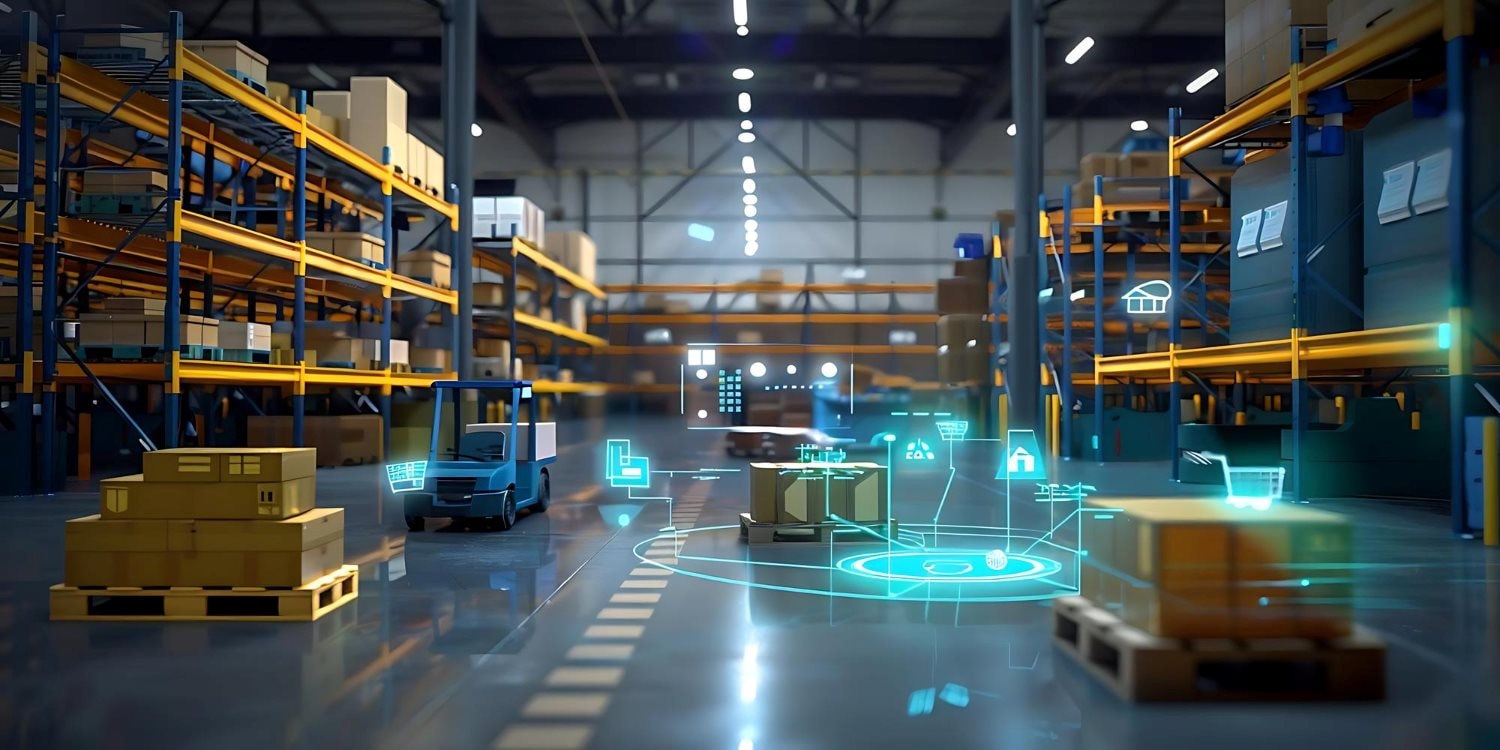
In logistics, AI and automation are opening the door to major changes - from demand forecasting and inventory optimization to transport scheduling, warehouse management, and lifecycle traceability. McKinsey has argued that AI can help distributors reduce inventory by 20-30% through better forecasting and planning. The International Federation of Robotics continues to report growth in both industrial and service robots, with labour shortages acting as one of the strongest drivers of adoption. Yet logistics also makes especially clear that the pace of AI adoption cannot be separated from local economic structure.
The source manuscript captures the Vietnamese reality with precision. Technically speaking, autonomous forklifts and semi-automated warehouse solutions are no longer unusual. But turning them into rational investment decisions is another matter. Upfront capital costs are high. Deployment requires digital mapping, IT integration, redesigned traffic flows, safeguards for human-machine interaction, and a stabilization period that can stretch over years. In an environment where labour remains relatively affordable, warehouse layouts change frequently, and companies need assets that can be deployed flexibly, many operators will find that electrification or moderate digitalization delivers more convincing economics than full automation.

This leads to an important conclusion for logistics executives and policymakers alike: AI should not be imposed as a symbol of modernization. It should be evaluated as a productivity option suited to a specific cost structure, facility design, and order profile. Markets with severe labour shortages, highly standardized warehouse environments, and strong safety pressures will absorb automation more rapidly. Markets such as Vietnam may follow a different path: prioritizing data quality, process optimization, operational digitalization, equipment electrification, and only then moving toward deeper automation in nodes where volume, repeatability, and risk are high enough to justify it.
Seen more broadly, this is the mindset required for discussing AI in operations. Technology does not move along a single linear path for every country or every industry. Value appears only when the system is mature enough, and that maturity is shaped by data, governance, labour conditions, physical infrastructure, economic incentives, and coordination across the supply chain. AI does not create efficiency on its own. It amplifies a system that is already prepared to generate efficiency. In the factory, the hospital, and the warehouse alike, the decisive factor remains the quality of the people and institutions standing behind the technology.
------------
Main reference sources: World Economic Forum, McKinsey, NHS England, IFR, and the source manuscript’s analysis of logistics and warehouse economics in Vietnam.