
The Durian “Green Channel” Is Rewriting the Rules of Agricultural Exports
English - Ngày đăng : 07:00, 29/04/2026
The Bottleneck of Fragmentation
By May 2025, the total number of growing-area codes and packing facilities licensed by the General Administration of Customs of China (GACC) for Vietnamese durian had exceeded 1,800. Yet that figure conceals a harsh reality. Since June 2024, GACC has suspended 15 packing plants and 18 growing areas after detecting cadmium residues above permitted thresholds. In October 2025, when several laboratories testing for cadmium and Auramine O temporarily suspended operations for maintenance, nearly 2,000 durian containers were congested at factory warehouses, along transport routes and around border-gate areas. In a market that accounts for such a large share, any suspension order from GACC immediately shocks the flow of goods, creates localized congestion at northern border gates, increases warehousing and yard-storage costs, and directly erodes cargo owners’ profit margins.
Excessive dependence on a single market is putting the durian industry in a state of “running while queuing.” Unless it shifts from a mindset of “raw export” to “integrated value-chain governance,” maintaining GACC codes will become a costly war of compliance for Vietnamese logistics enterprises.
The first critical bottleneck lies in the lack of synchronization across end-to-end operations. For durian, temperature control means managing a complex biochemical process: frozen durian (Durio zibethinus) includes whole durian fruit (with peel), durian puree (without peel) and durian pulp (without peel), all originating from ripe fresh durian grown in Vietnam. The product must be frozen at -35°C or lower for at least one hour until the core temperature reaches -18°C or lower, and that core temperature must be maintained at -18°C or below throughout storage and transport in accordance with CAC/RCP 8-1976 requirements.
In practice, the route from Dak Lak or Tien Giang to Lang Son involves many transfer legs: changing tractors, waiting for drivers and waiting for procedures. At staging yards near the border gates, many drivers have to run generators around the clock to keep reefer containers cold and prevent cargo damage. Each interruption in power supply forces the refrigeration system to recover temperature, and for a fruit with a physiological ripening cycle of only five to seven days, a few hours of temperature deviation are enough for stems to ferment, spines to change color and flesh to lose firmness. These sensory defects can become grounds for Chinese traders to push down prices or refuse cargo when containers are opened at Pingxiang or Puzhai.
The second bottleneck lies in document synchronization. A mismatch between the growing-area code declared on the phytosanitary certificate and the actual code printed on the packaging, an enterprise that has not completed registration under Order 248 but still appears as the named entity on the invoice, or data declared on the CIFER system that does not match the Chinese customs declaration—all of these errors can push a shipment into the customs red inspection channel, triggering a chain of consequential losses.
According to GACC warnings, from the beginning of 2024 to 2025, a total of 827 Vietnamese shipments of durian, jackfruit, bananas, chilies and mangoes failed to comply with China’s food-safety regulations. Durian received the highest number of warnings, with 761 shipments, including 589 contaminated with cadmium and 157 with Auramine O. Technical barriers from GACC are shifting from “supporting adaptation” to “tightening enforcement.” For logistics managers, documentation is no longer a final completion step; it must become a pre-control stage. Any data discrepancy can lead to compulsory 100% inspection, causing cycle time to surge and destroying the integrity of the cold chain established earlier. Looking deeper, however, another harsh truth emerges: the fragmented logistics model currently used by the vast majority of exporters is itself creating “grey zones” of responsibility, where no single contractor is willing to bear the cost when an incident occurs, and the cargo owner is always the last party left to absorb the damage.
The Answer from an Integrated Model
From the perspective of a service provider, Mr. Tran Huy Tuan, Head of Market Development at U&I Logistics, points out a paradox: the vulnerability of cargo owners does not lie in production capacity, but in the way services are purchased on an “ad-hoc” basis. “The core weakness is not a lack of understanding of procedures, but a fragmented service-purchasing mindset—hiring reefer trucks, customs agents and cross-border transfer brokers from independent points of contact,” Mr. Tuan observed. The result of this model is an information break, leaving the cargo owner as the only entity bearing all financial risks when the supply chain encounters a problem.
According to the representative of U&I Logistics, to protect profit margins against variables at the border gate, enterprises need to shift toward an integrated logistics model built on two main pillars: placing the entire journey from the packing facility to the border transfer point under a single responsible legal entity. This eliminates “grey zones” of responsibility and establishes an end-to-end quality commitment. Temperature data and document data must be operated in parallel on a centralized management platform.
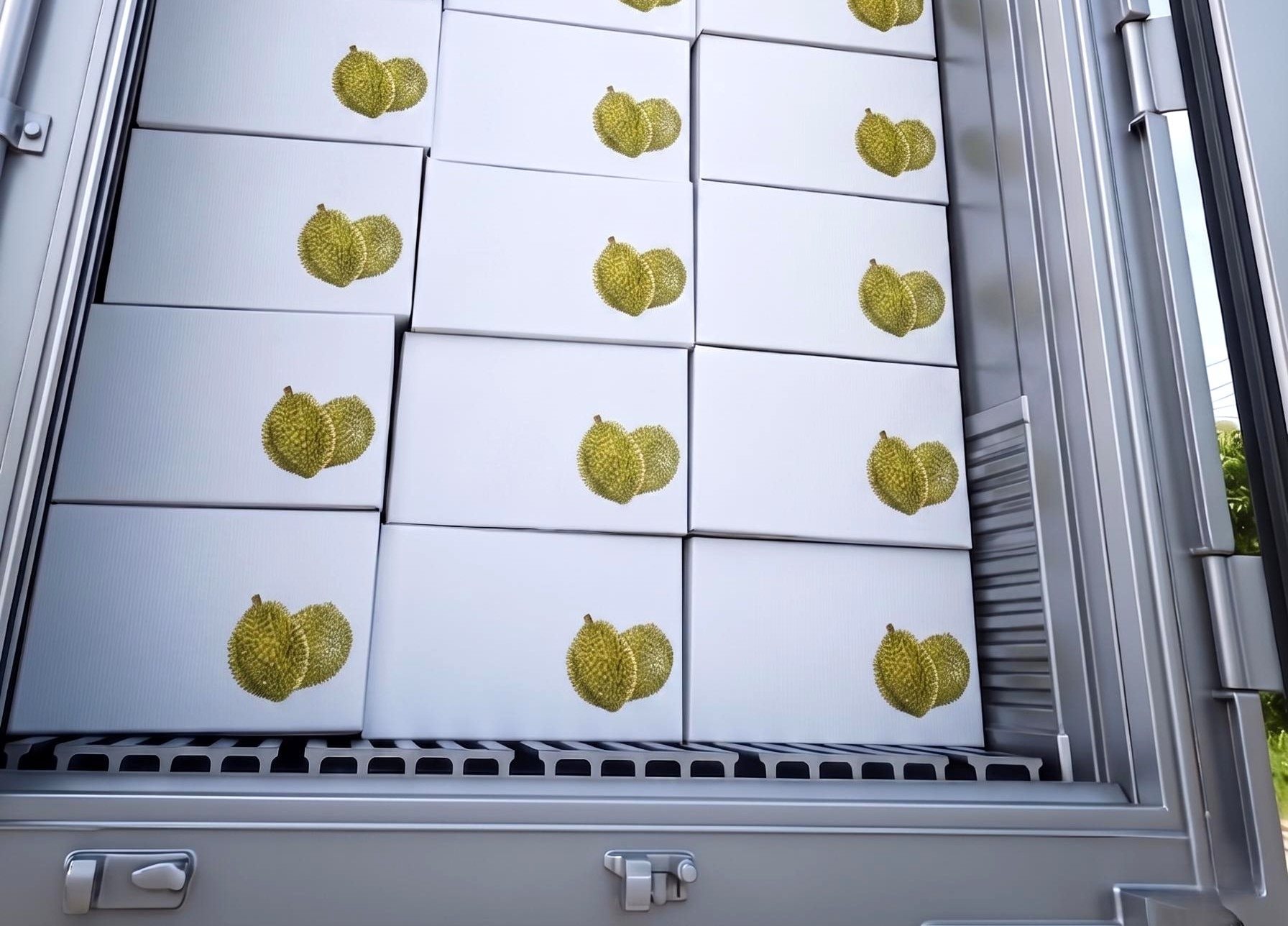
Putting that principle into practice, the company has standardized an integrated cold-chain and customs-clearance model for the export corridor from Dak Lak and Tien Giang through Huu Nghi International Border Gate. Reefer containers are dispatched directly to coded packing facilities, preset with specialized temperature ranges of 13-15°C and 15-20% ventilation for fresh durian, or a core temperature of -18°C for frozen goods, and fitted with sensors that transmit temperature and humidity data to the operations center in real time. Through a single platform, cargo owners can track not only shipment location but also cargo conditions. Any adverse variable—from generator power drops to deviations from permitted temperature thresholds—triggers automatic alerts, enabling the operations team to intervene during transport instead of discovering damage only when the container is opened at the border inspection yard.
As GACC tightens control through digital systems, the company has established an on-site pre-clearance control process: before a container leaves the yard, operations staff cross-check three layers of data, matching the growing-area code on the phytosanitary certificate with the actual label on the packaging; verifying the validity of the Order 248 registration of the entity named on the invoice; and synchronizing CIFER data with customs declarations at both the Vietnamese and Chinese ends. At Huu Nghi, instead of waiting passively, the on-site clearance team confirms the transfer schedule with the Chinese-side carrier before the truck reaches the yard, reducing storage time and protecting the integrity of the cold chain already established.
The key point in U&I Logistics’ model is the integration of all links—from the source warehouse, transfer transport and inspection yard to the border transfer vehicle—into a single service contract. Cargo owners no longer have to face buck-passing among subcontractors when incidents arise. A single accountable focal point is the key to protecting shipment value at the border gate.
The "Green Channel" is Setting a New Standard
The integrated cold-chain and customs-clearance model being deployed by pioneering companies is no longer the isolated effort of individual enterprises; it has converged with a larger policy momentum from the State. Decision No. 5272/QD-BNNMT, signed by the Minister of Agriculture and Environment on December 13, 2025, officially formalized the Green Channel process for durian—a closed-loop management model that runs from soil testing at the growing area, cultivation and harvesting, attaching traceability tags to trees and labels to fruit at harvest, to plant quarantine and issuance of certificates of origin right in the locality where the orchards are located.
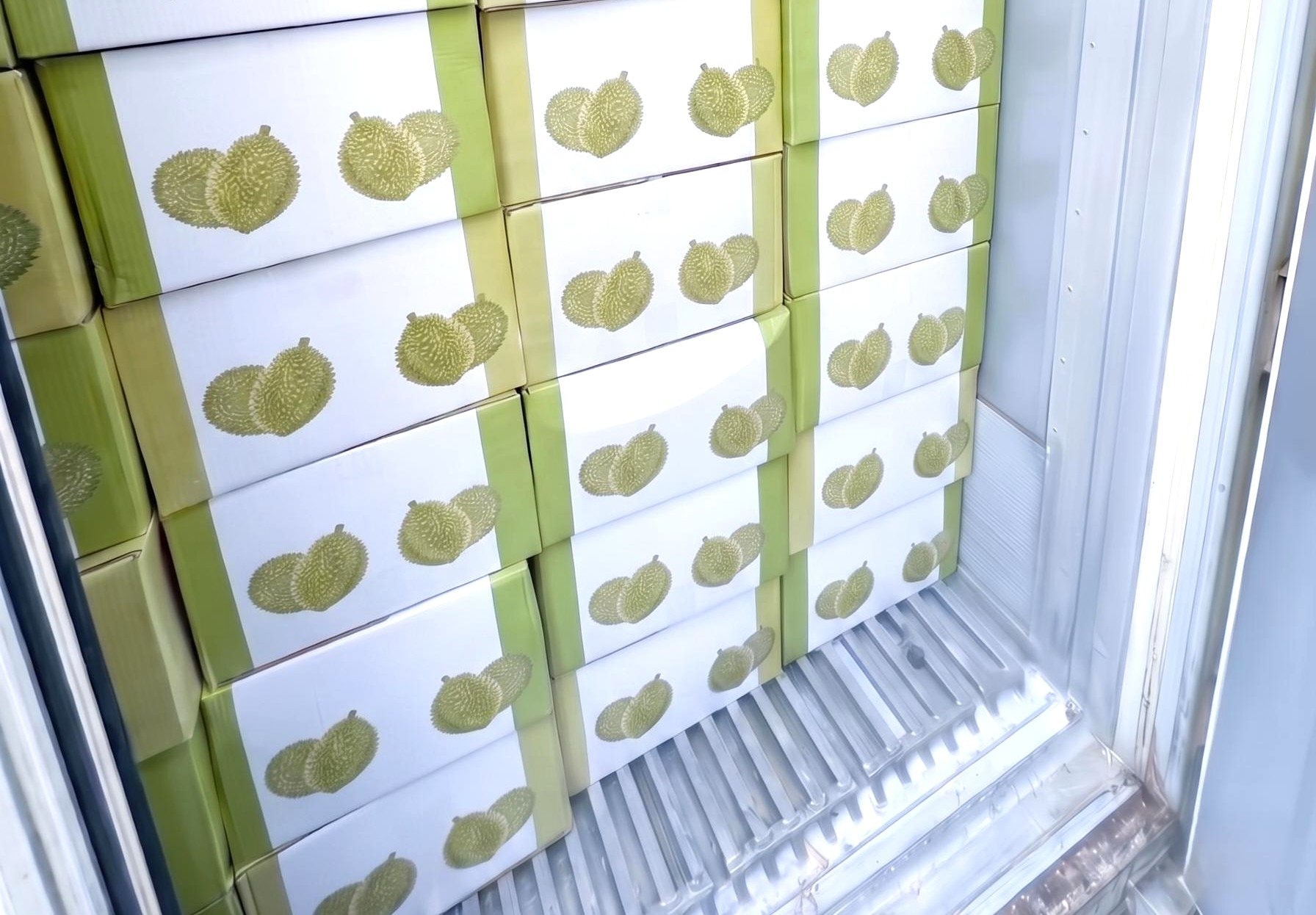
Instead of concentrating all verification pressure at the border gate, the Green Channel pushes control to the starting point of the chain and issues a digitalized data set accompanying each shipment. The first durian shipment applying this process cleared customs at Huu Nghi Border Gate on April 10, 2026, shortening the entire route from harvest to cross-border trucking to about six days, compared with eight to eleven days under the traditional method.
The alignment in operating logic between the Green Channel and the model of integrated logistics providers is no coincidence. Both converge at one core point: the transparency and continuity of supply-chain data. More broadly, shortening the export route by two to five days is opening new room for price negotiation for the entire official fruit and vegetable export sector serving the Chinese market.
The story of the durian industry is not merely an isolated phenomenon; it is a signal of a structural shift across the entire official fruit and vegetable export sector to China. As the “Green Channel” is expanded to other agricultural products, the units that master the flow of information and can commit to end-to-end responsibility will not only protect profits, but also establish a new benchmark for Vietnamese agricultural exports in the seasons ahead.