
Asia - Europe intermodal rail: A chance for vietnam to move beyond a “sea-only” mindset
English - Ngày đăng : 09:30, 30/06/2026
When maritime transport is no longer the only answer
For a country with a long coastline, rapidly developing ports and large trade volumes, maritime transport remains irreplaceable for Vietnam. Most imports and exports will continue to move by sea because of cost advantages, scale and global network coverage. However, recent shocks in international supply chains have shown one thing clearly: too much dependence on a single mode of transport can create systemic risk.
The Red Sea crisis, congestion at certain international ports, freight rate volatility, changes in shipping routes, faster delivery requirements for high-value goods and cross-border e-commerce are forcing companies to ask a new question: beyond sea freight, what other options can balance speed, cost and reliability?
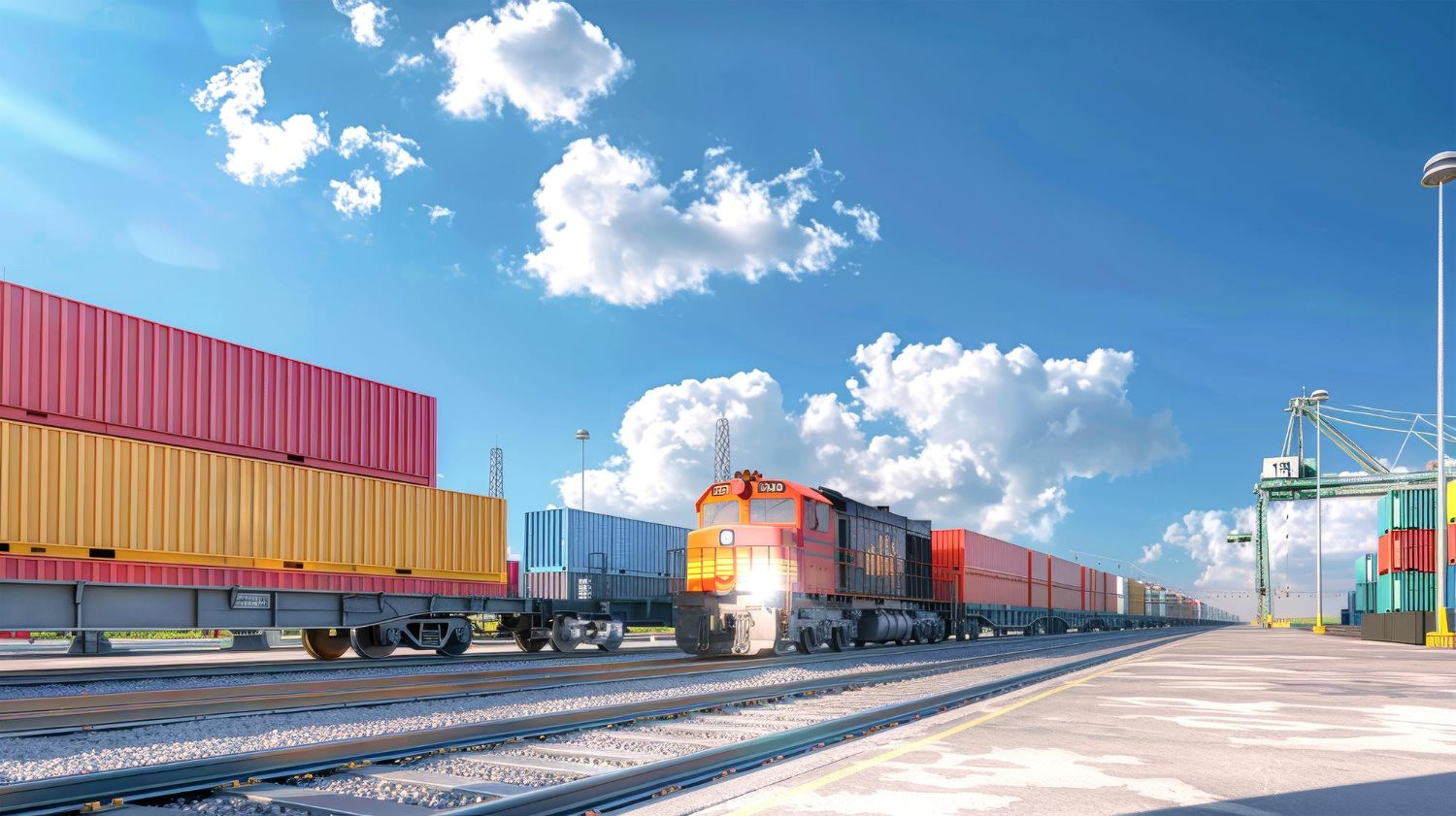
Asia–Europe intermodal rail appears in this context. It cannot replace sea freight in volume or cost, but it can serve as a strategic complement for certain product groups: electronics, components, machinery, high-value goods, cargo requiring stable transit times, and shipments moving deep into inland China, Central Asia, Russia or Europe.
This momentum is becoming clearer as cross-border rail connectivity between Vietnam and China increases. In 2025, data from Vietnam Railways cited by economic media showed that cargo transported from Vietnam to China reached about 500,000 tonnes, while shipments to third countries totalled around 27,000 tonnes. Through this network, Vietnamese goods have reached distant markets such as Mongolia, Kazakhstan, Russia and Europe.
Vietnam stands at the gateway to a larger network
Intermodal rail should not be viewed as a single transport route from one station to another. It is part of an expanding continental trade network between East Asia, Central Asia and Europe. The China–Europe Railway Express has grown rapidly over the past decade, connecting hundreds of cities and becoming an additional option between sea freight and air freight.
According to data from China and international logistics media, China–Europe freight train services exceeded 20,000 trips in 2025, carrying more than 2 million TEUs. In the first two months of 2026, both train trips and cargo volumes continued to grow year-on-year.
What does this mean for Vietnam? If Vietnam sees intermodal rail only as a small export channel, the opportunity will remain limited. But if it is viewed as a link in a broader multimodal logistics strategy, the opportunity becomes much larger. Vietnam can connect goods from northern manufacturing hubs, industrial parks, seaports, inland container depots, logistics centres and rail border gates into the China–Central Asia–Europe network.
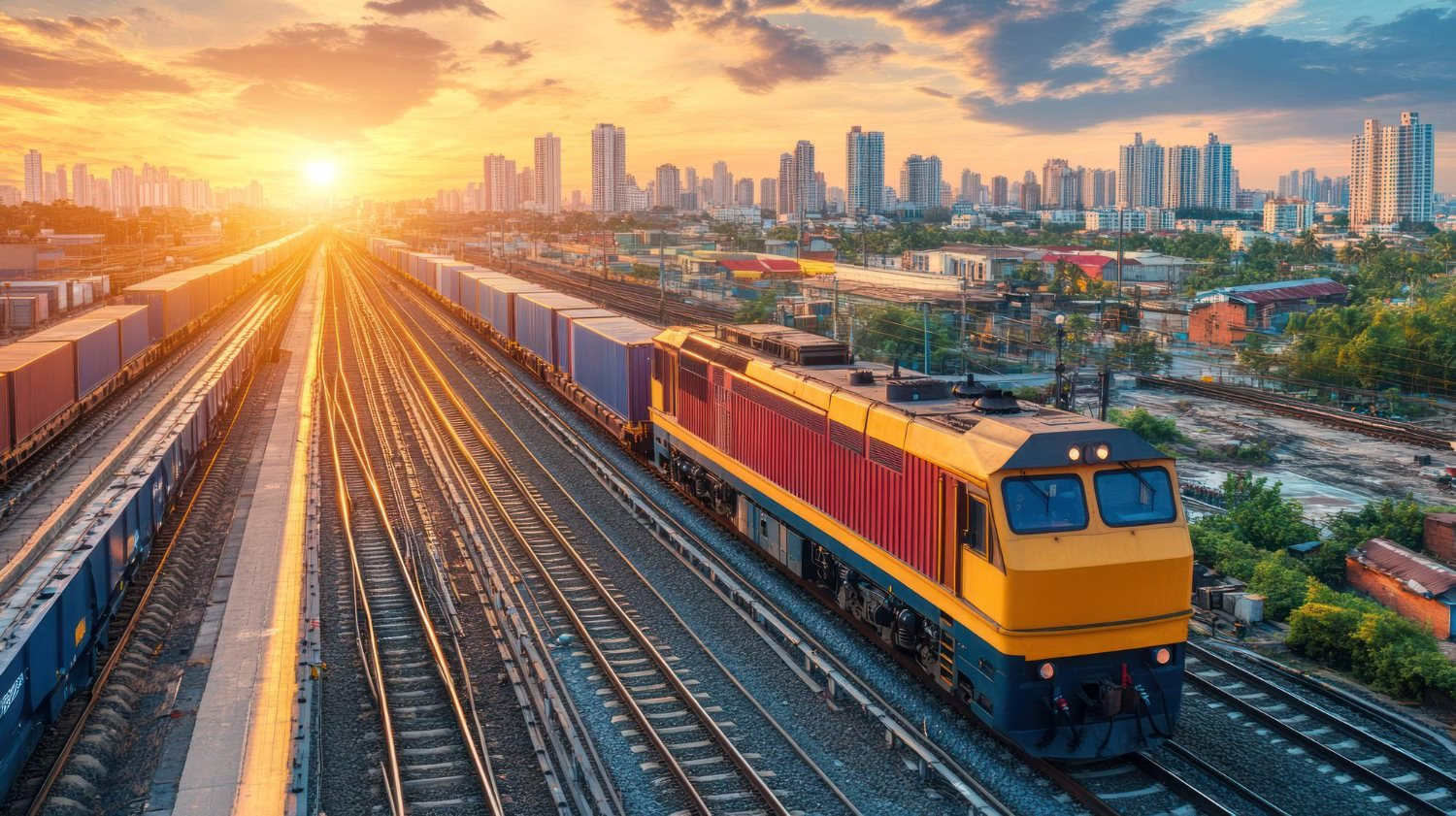
As China has also expressed interest in increasing rail infrastructure cooperation with Vietnam, including finance, technology, training and project participation, rail is becoming a new bright spot in bilateral strategic connectivity.
Asia–Europe intermodal rail is not a rival to maritime transport. It is a complementary option that gives businesses more choices when balancing speed, cost, stability and geopolitical risk. For Vietnam, the greatest value lies not in one specific train route, but in the ability to organise multimodal logistics.
Bottlenecks: infrastructure, track gauge, freight stations and connecting services
For intermodal rail to develop, Vietnam must face its current bottlenecks. The first is domestic rail infrastructure, which remains limited in capacity, speed, technology and connectivity with seaports, industrial parks and logistics centres. If cargo has to be transhipped too many times, time and cost increase, reducing rail’s attractiveness.
The second is track gauge and transhipment capacity. Vietnam–China rail connectivity involves both metre-gauge and standard-gauge systems, requiring efficient transhipment, technical coordination and border procedures. If bottlenecks at border stations are not addressed, rail’s time advantage will be weakened.
The third is the lack of integrated logistics services around rail. Companies do not need only a train. They need door-to-door service, consolidation, container loading, customs clearance, insurance, cargo tracking, document handling, warehousing at both ends, road connections and route consulting. If rail offers only “station-to-station” service, it will struggle to compete with more familiar and complete sea freight services.
The fourth is limited market data. Many exporters do not yet know which goods are suitable for rail, how long transit takes, how costs compare with sea and air, and what risks exist in documents, insurance, transit and payment. Specific communication, consulting and market trials are needed to help businesses understand and use rail services.
Rail must be positioned within supply chain strategy
Not every type of cargo should move by rail. For large-volume, low-value and less time-sensitive goods, sea freight remains the optimal choice. For extremely urgent or very high-value goods, air freight has its own role. Rail fits best in the middle: faster than sea, cheaper than air and more stable in certain maritime disruption scenarios.
Vietnamese businesses therefore need to classify cargo by three criteria: cargo value, time sensitivity and disruption risk tolerance. Sectors such as electronics, components, machinery, equipment, planned consumer goods, cross-border e-commerce, processed agricultural products and shipments moving inland into China and Central Asia could be suitable for trial.
At the policy level, intermodal rail must be linked with the development of ICDs, dry ports, logistics centres, industrial parks and economic corridors. An international freight station should not stand alone. It must become a node in a logistics network where cargo is consolidated, sorted, cleared, transhipped and distributed.
From transport route to geoeconomic advantage
If organised well, Asia–Europe intermodal rail can add another layer to Vietnam’s geoeconomic capability. Vietnam is not only a coastal country with port advantages; it can also become a connection point between mainland Southeast Asia, China, Central Asia and Europe. This is particularly meaningful as global supply chains seek flexibility, multiple nodes and multimodal options.
But this opportunity will not materialise automatically. It requires infrastructure investment, process standardisation, international cooperation, workforce training, logistics service development and a change in the mindset of import-export businesses. If rail is treated merely as a secondary transport mode, Vietnam will not capture its full value. If it is treated as part of supply chain strategy, the story changes.
Asia–Europe intermodal rail is not a replacement for maritime transport. But it is an important reminder: modern logistics cannot depend on a single route. In a volatile world, companies need more options, more scenarios and more modes of connection.
For Vietnam, developing intermodal rail is not just about adding more train services. It is about building multimodal logistics capability, connecting infrastructure with trade, border gates with industrial parks, data with services and Vietnam with a wider commercial space.