

Dung Quat EPC: A New Growth Driver for BSR and Vietnam's Refining and Petrochemical Industry
English - Ngày đăng : 16:44, 09/07/2026
Dung Quat is entering a new phase of deep modernization: expanding capacity, improving crude-processing flexibility, upgrading product quality to Euro V standards, and laying the foundation for greener operations, higher efficiency and long-term competitiveness in Vietnam's refining and petrochemical sector.
From contract signing to full-scale implementation
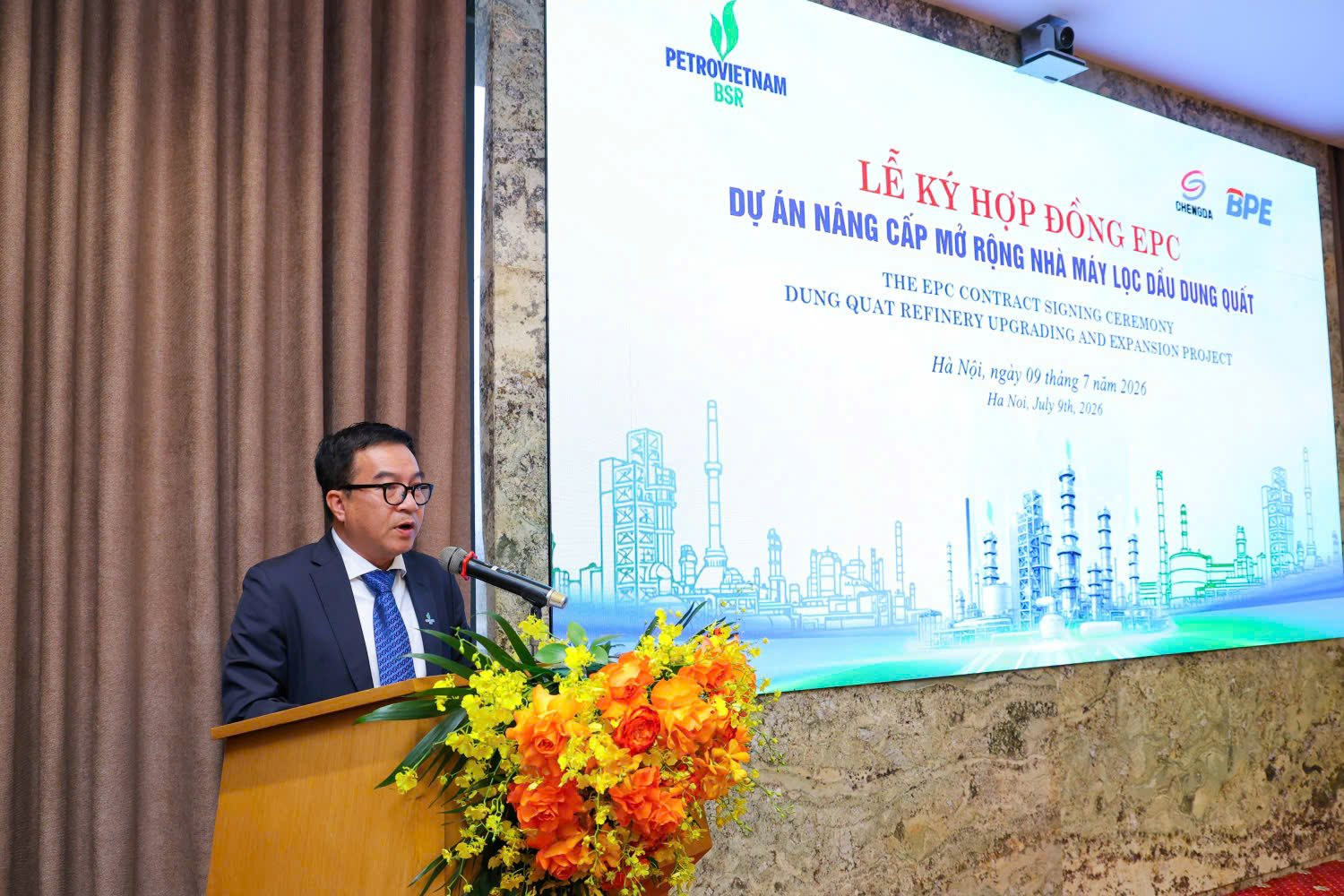
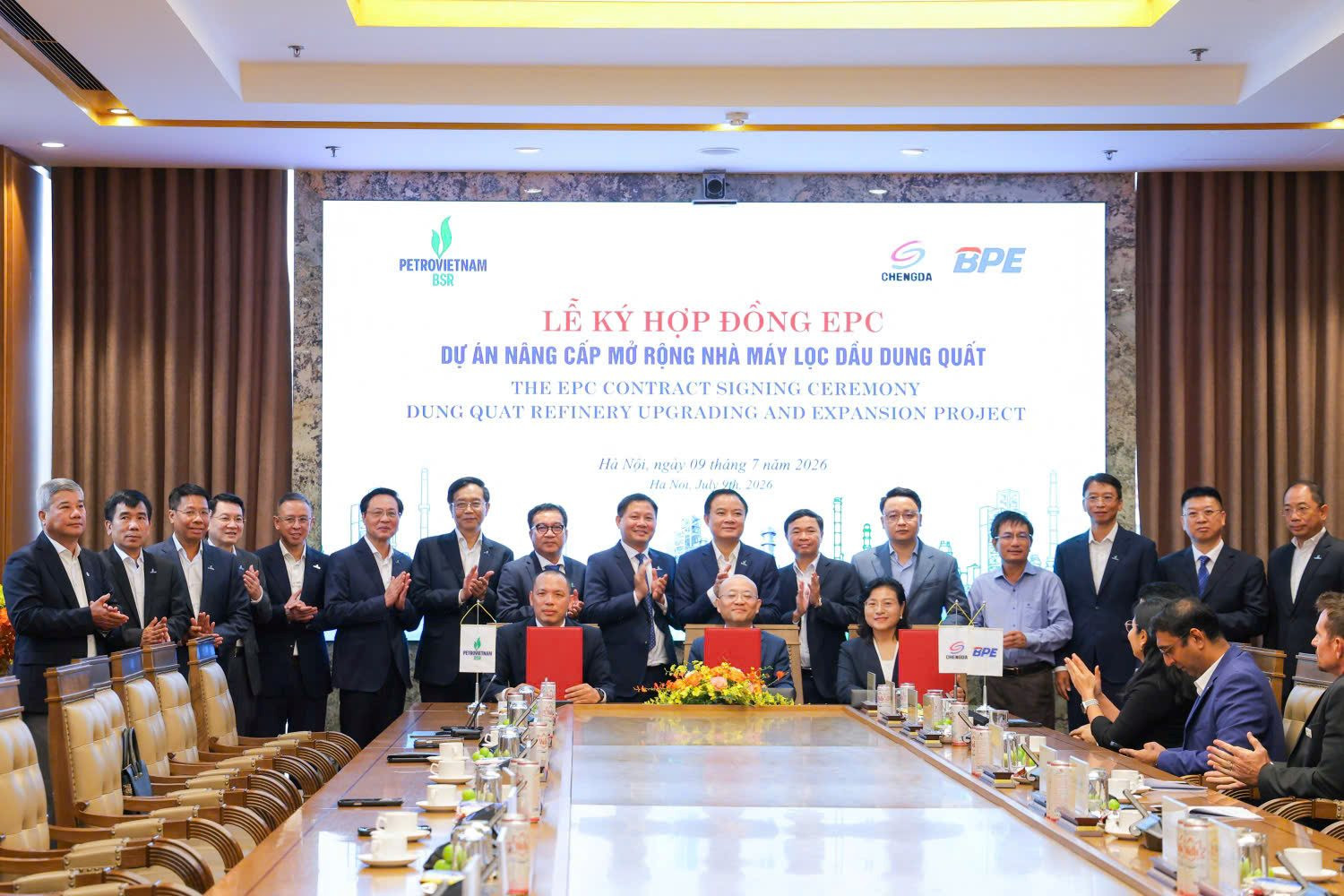
On July 9, 2026 in Hanoi, BSR held the signing ceremony for the EPC and PMC contracts under the Dung Quat Refinery Upgrade and Expansion Project. This was not merely an investment procedure, but a clear signal that the project has officially moved from the preparation stage into implementation. After completing key legal, technological, engineering and financing preparations, the selection of the EPC contractor shows that BSR has entered a new stage that requires stronger control over schedule, quality, safety and investment efficiency.
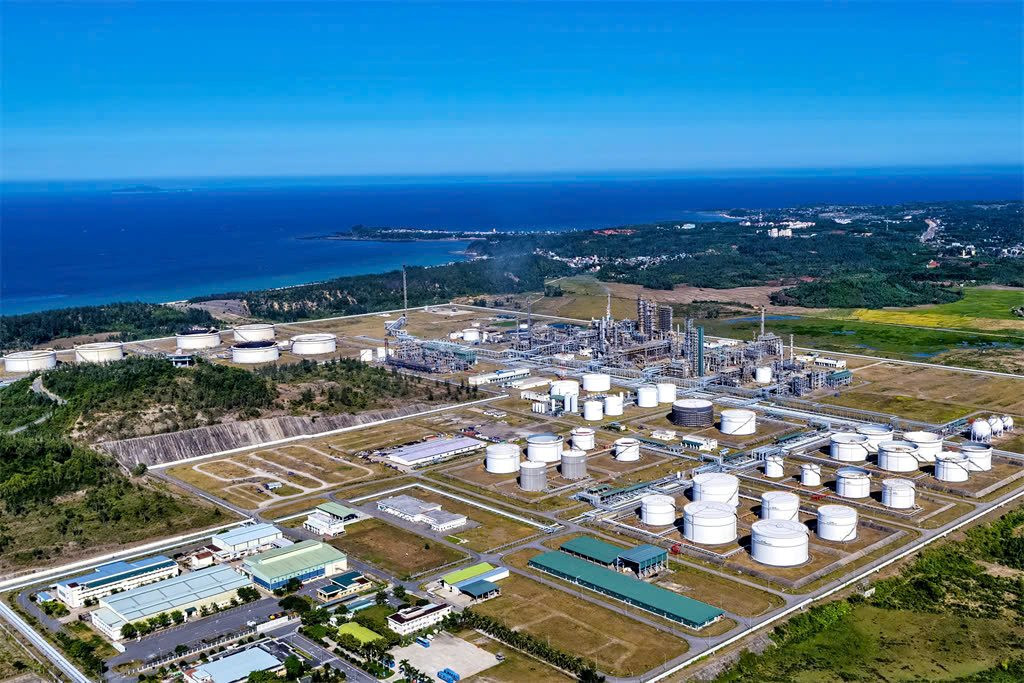
The Dung Quat upgrade and expansion is identified as a nationally important project and a key project of the energy sector. It has a total investment of about VND 36.397 trillion, equivalent to USD 1.489 billion. Once completed, the refinery's crude-processing capacity will increase from 148,000 barrels per day to 171,000 barrels per day. This increase is particularly meaningful as Vietnam's energy demand continues to rise while environmental and fuel-quality standards become increasingly stringent.
Higher capacity, better product quality and stronger adaptability
The value of the project goes beyond the capacity increase. More importantly, it will give Dung Quat Refinery a new level of adaptability. After the upgrade, the refinery will be able to process a wider range of domestic and imported crude oils, reduce dependence on a limited number of feedstock sources, and help BSR respond more proactively to volatility in the global energy market.
Another major objective is to improve product quality to meet Euro V standards and comply with the Government's environmental roadmap. In refining and petrochemicals, product standards are directly linked to technology capability, operating efficiency and the ability to participate more deeply in high-quality fuel supply chains. For Dung Quat, this upgrade is essential not only to maintain its role in securing domestic fuel supply, but also to strengthen BSR's competitiveness for the decades ahead.
The Dung Quat Refinery Upgrade and Expansion Project has a total investment of approximately VND 36.397 trillion, equivalent to USD 1.489 billion. It will raise crude-processing capacity from 148,000 barrels per day to 171,000 barrels per day. The project is planned for implementation over 37 months from the effective date of the EPC contract and is expected to be put into operation in 2028.
Licensed technologies and project governance: conditions for success
A refinery upgrade cannot succeed on investment scale alone. The decisive factors lie in the technology system, integration capability and strict supervision at every stage. During the Front-End Engineering Design (FEED) phase, BSR engaged Foster Wheeler, a Wood Group company from the United Kingdom, a consultant with deep experience in major refinery projects and a long-standing connection with Dung Quat from the early design phase.
The licensed technologies selected for the project come from leading global providers, including Axens of France, UOP of the United States, Merichem of the United States, KT - Kinetics Technology of Italy and Worley of the Netherlands. These technologies are associated with residue upgrading, hydroprocessing of gasoline and diesel, LPG treatment, caustic treatment, hydrogen production and sulfur recovery. For an existing refinery, each revamp solution must be compatible with current operating systems, avoid technological conflicts, and ensure safety and efficiency.
Under the EPC contract, the Chengda - BPE consortium will carry out detailed engineering, procurement, construction, installation and commissioning based on the advanced technologies defined during the FEED phase. In parallel, the PMC contract with Foster Wheeler will strengthen project management, schedule control, quality assurance and technical supervision throughout implementation.
Four governance principles: safety, quality, schedule and efficiency
For complex heavy-industry projects, success is measured not only by the completion date, but also by the way the project is executed. BSR has defined four guiding principles: safety is the core value and top priority; quality is the honor and reputation of every participating party; schedule is a commitment to the Government, Petrovietnam and partners; and efficiency is the ultimate measure of success.
BSR and the EPC contractor consortium demonstrate their determination to successfully implement the Dung Quat Refinery Upgrade and Expansion Project.
This approach shows that BSR is placing the project within a broader framework. It is not simply building additional capacity, but also building new governance capability. Every engineering, procurement, installation and commissioning activity must be linked to safety discipline, quality standards, schedule obligations and investment efficiency. In the context of energy transition, refinery projects are no longer viewed solely as fuel-production projects; they are also about technological upgrading, emissions reduction, resource optimization and market adaptation.
BSR's four principles during the EPC phase form the project's governance framework: safety as the highest priority; quality as the reputation of all parties; schedule as a commitment to the Government, Petrovietnam and partners; and efficiency as the final measure of success. This is the foundation for a large-scale project not only to finish on time, but to finish sustainably.
From a regional development perspective, the project will also create fresh momentum for Dung Quat Economic Zone and the central region of Vietnam. As processing capacity rises, product standards improve and crude-intake flexibility expands, Dung Quat will have a stronger basis to move toward the goal of becoming a national refining, petrochemical and energy center. BSR's role therefore extends beyond the enterprise itself; it is tied to the country's energy-industry structure, investment flows, supply chains and high-skilled employment in the locality.
The EPC and PMC contracts for the Dung Quat Refinery Upgrade and Expansion Project open a new stage of development for BSR and Vietnam's refining and petrochemical industry. Building on the existing refinery, BSR is transforming toward a more modern, greener and more flexible operating model. If delivered on schedule, with quality and safety ensured, the project will not only increase processing capacity, upgrade product quality and secure a stable supply of high-standard fuels for the economy, but also strengthen Vietnam's resilience amid global energy volatility. Dung Quat thus remains a symbol of energy self-reliance: beginning as a pioneering project and now advancing toward the role of a core engine in a national refining, petrochemical and energy center.