

Smart warehouses: from storage spaces to operational data centres
English - Ngày đăng : 08:29, 21/07/2026
Warehouses are no longer backstage operations
In many companies, warehouses used to be treated as support functions: receiving goods, storing goods and dispatching goods. When business was running smoothly, few people paid attention to the warehouse. But when order volumes rise, SKUs expand, e-commerce grows, customers demand faster delivery and labour and property costs increase, warehouses quickly become decisive to competitiveness.
A strong sales system can still fail if warehouse operations are weak. Inaccurate inventory causes companies to sell items they do not actually have. Goods stored in the wrong locations increase picking time. Poor inbound and outbound procedures create data errors. Slow packing delays delivery. Returns that are not processed properly distort inventory data. For cold chains, pharmaceuticals, food, cosmetics, electronics components and high-value goods, weak warehouse control can also damage product quality.
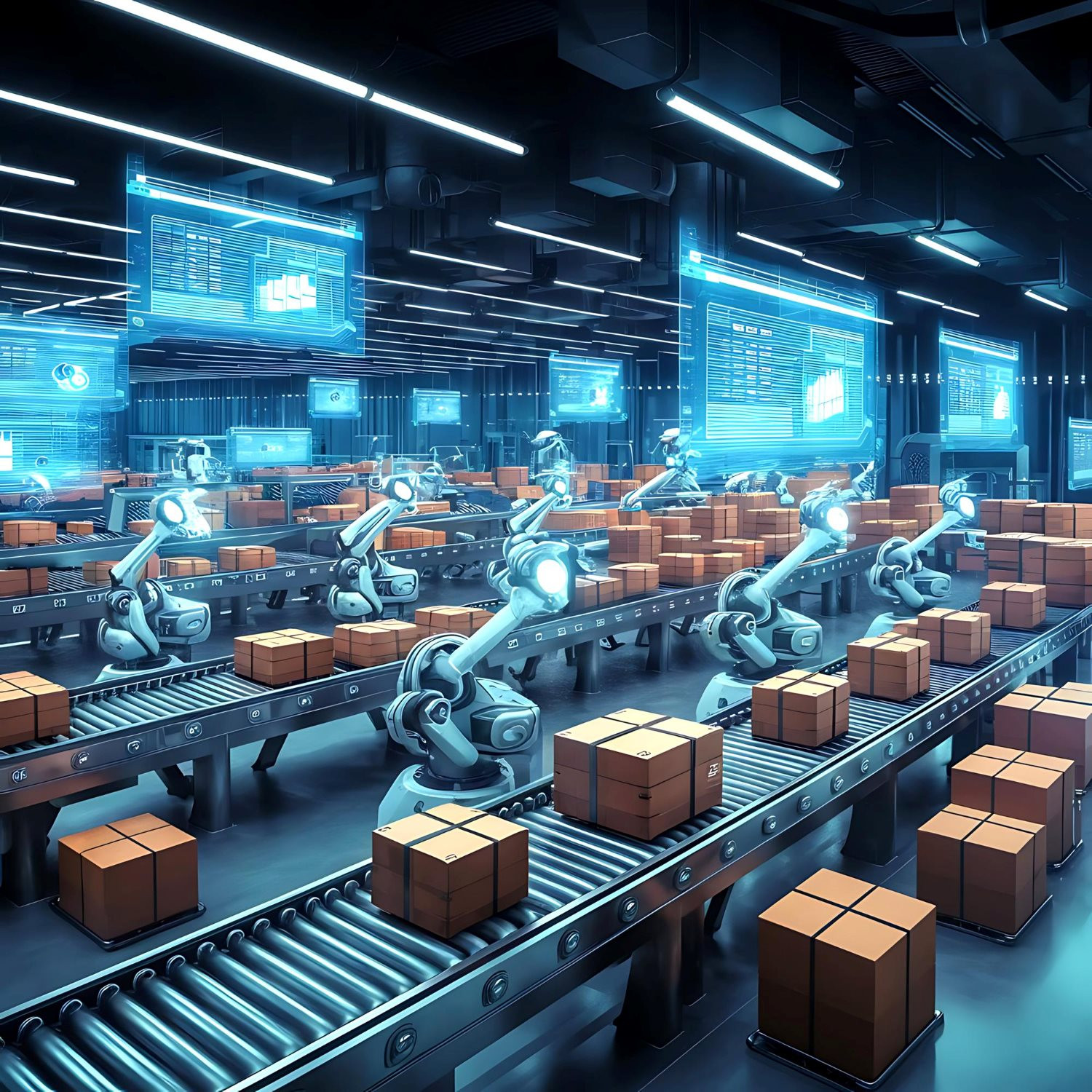
Smart warehouses emerge from this need. They are not simply warehouses with more machines. A smart warehouse can see, measure, analyse and optimise operations through data. The ultimate goal is not to look more modern, but to operate more accurately, faster, with less waste and greater adaptability to market fluctuations.
From storage to flow coordination
Traditional warehouses focus on two questions: how much stock remains, and where is it located? Smart warehouses must answer many more questions: which products turn over fastest, which orders should be prioritised, which storage locations are optimal, which staff members are overloaded, which equipment may fail, where energy is consumed, where errors occur, how returns affect inventory and what the handling cost per order is.
This turns the warehouse from a storage space into a flow coordination centre. These flows include goods, orders, data, labour and cost. A smart warehouse does not only know “which shelf the product is on”. It knows “where the product should be placed to reduce walking distance, shorten handling time and improve on-time delivery”.
Core technologies include warehouse management systems, barcodes, QR codes, RFID, IoT sensors, sorting systems, conveyors, automation equipment, dashboards, AI demand forecasting, slotting optimisation, OMS/TMS/ERP integration and, in some models, mobile robots or automated storage and retrieval systems.
However, technology is only a tool. A smart warehouse must first have smart processes. If item codes are inconsistent, packaging specifications are unclear, employees enter data freely, or storage locations change without being updated, even expensive systems can produce wrong data.
A smart warehouse does not begin with robots. It begins with accurate inventory data, standardised item codes, clear storage locations, stable inbound and outbound processes and measurable performance. Once this foundation is strong, automation and AI can create real value.
Five core capabilities of a smart warehouse
The first capability is real-time inventory visibility. This is the most important foundation. Companies need to know where goods are, how many are available, what condition they are in, which batches are near expiry, which are under inspection and which have been allocated but not dispatched. In e-commerce, real-time inventory reduces overselling, cancellations and customer frustration.
The second capability is storage location optimisation. Not every product should be placed in the same zone. Fast-moving goods should be close to picking areas. Bulky items require suitable equipment access. Cold-chain goods need stable temperature zones. High-value items require security control. Returns need separate inspection and reintegration areas. Smart warehouses use data to decide layouts, not habit.

The third capability is productivity measurement. Warehouses need to know inbound time, picking time, error rates, orders processed per hour, packing time, labour utilisation, on-time dispatch and cost per order. Without metrics, assessments are subjective. With metrics, companies can improve each bottleneck.
The fourth capability is integration with transport and sales. Warehouses cannot operate in isolation. If sales teams do not share promotion plans, warehouses are surprised by demand spikes. If transport providers lack clear pickup schedules, packed goods may still wait. If return data does not flow back into the warehouse, inventory becomes inaccurate. A smart warehouse must be a connected node in the supply chain.
The fifth capability is risk control. Warehouses must manage fire, workplace safety, temperature, humidity, security, expiry, damage, counterfeit goods, loss and system disruption. In industries with high standards, warehouses are not only storage spaces; they protect product quality and business reputation.
Smart warehouses are not only for large companies
A common misconception is that smart warehouses are only for large corporations with major investment budgets. In reality, small and medium-sized businesses can start layer by layer. The first layer is standardising item codes, warehouse locations, inbound and outbound procedures and inventory data. The second is using a WMS suitable for their scale. The third is connecting sales, warehouse and transport data. The fourth is adding support tools such as scanners, scales, cameras, sensors and better racking. Only the fifth layer involves deeper automation.
This layered approach helps companies avoid overinvestment or unsuitable technology. A small warehouse with accurate data, clear processes and trained staff may operate more effectively than a large warehouse with fragmented operations. The key is identifying the biggest bottleneck: inaccurate inventory, slow picking, lack of space, high return volume, labour cost or late dispatch.
In Vietnam, demand for smart warehouses will grow alongside e-commerce, omnichannel retail, cold chains, pharmaceuticals, fast-moving consumer goods, electronics components and SME logistics. Fulfilment centres, cold storage facilities, bonded warehouses, urban distribution warehouses and warehouses near industrial zones will be areas of strong transformation.
People remain central to smart warehouses
A smart warehouse does not mean removing people. On the contrary, it requires people with higher skills. Warehouse workers must not only move and count goods, but understand data, processes, equipment, safety, software and exception handling. Warehouse managers must not only allocate labour, but read dashboards, analyse productivity, design layouts and coordinate with sales, transport and finance.
This creates a need to reskill the logistics workforce. As warehouses change, skills must change. Companies need to train staff in item coding, standard procedures, WMS use, equipment safety, error analysis and continuous improvement. If businesses invest only in machines and not in people, smart warehouses will not deliver their potential.
According to McKinsey, the warehouse automation market is growing rapidly, with some expert sources expecting robot shipments to increase by up to 50% annually through 2030, while warehouse automation grows by more than 10% per year. This shows a clear direction, but companies still need to implement carefully and link technology to specific operational strategy.
Smart warehouses are not a technology trend. They are a necessary transition as supply chains require greater speed, accuracy, transparency and efficiency. In the era of e-commerce, fast delivery, tight inventory control and real-time data, warehouses have become strategic operating centres.
For Vietnamese companies, the question is not whether to build smart warehouses. The better question is where to start, what to standardise first, which indicators to measure and which technologies are appropriate. The smarter the warehouse, the clearer the company can see its supply chain. In modern logistics, visibility is the first step toward stronger competitiveness.