

BSR Opens a New Value Path with White Spirit
English - Ngày đăng : 09:57, 05/10/2026
The White Spirit initiative shows that added value can come not only from higher throughput, but also from converting existing refining capability into specialized products for industrial markets.
From Refinery Fraction to a New Commercial Product
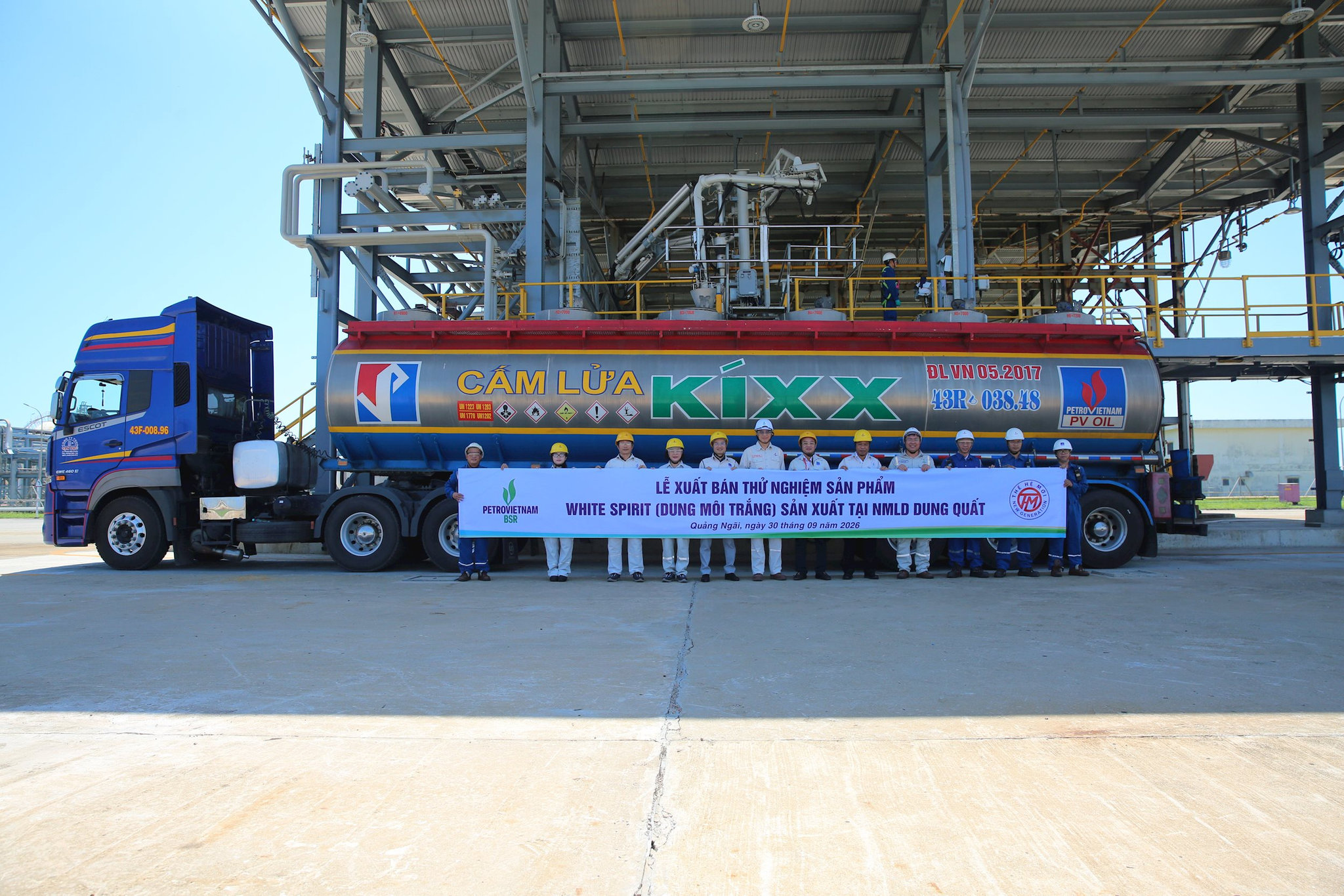
On September 30, at the road-loading station of the Dung Quat Oil Refinery, BSR conducted a trial sale of 40,000 litres of White Spirit to Son The He Moi Co., Ltd. BSR had previously supplied samples to the company and several other businesses for evaluation. Following initial testing, the customer proposed further cooperation to assess applicability, quality and market response before considering broader commercial use.
White Spirit is a hydrocarbon solvent widely used in paints, cleaning, degreasing and other industrial applications. For BSR, its importance goes beyond adding another product code. It offers a way to extract more value from existing refining capability and create a more flexible outlet for streams with characteristics close to the Jet A-1 fraction.
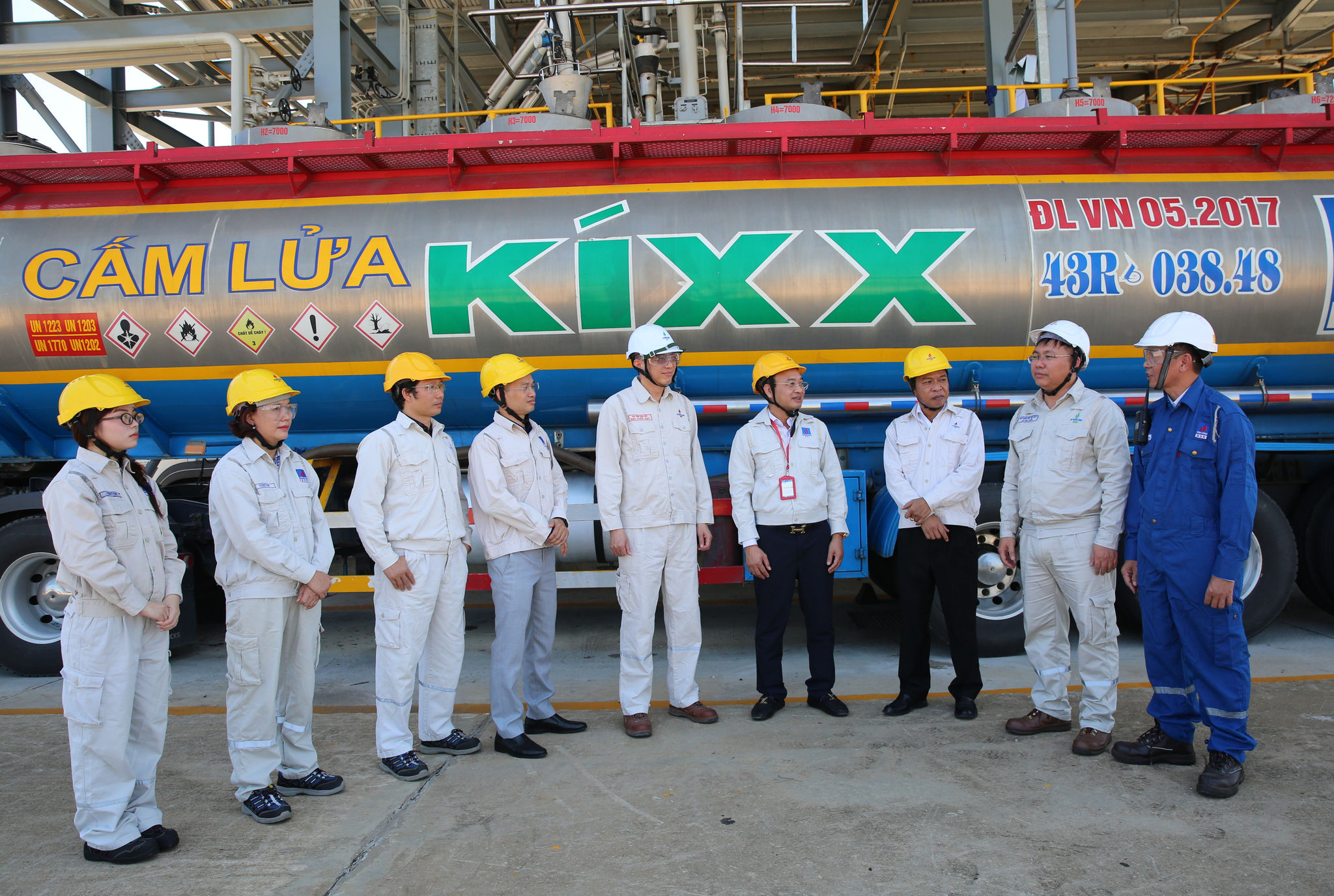
As Jet A-1 demand fluctuates with air-transport activity, developing products from a similar fraction can reduce dependence on a single outlet. Instead of adjusting production only to aviation-fuel demand, BSR gains an additional option to direct part of the stream toward industrial solvent markets, improving product balancing and operating flexibility.
BSR conducted a trial sale of 40,000 litres of White Spirit to Son The He Moi Co., Ltd. Trial demand from September through December 2026 is expected at approximately 40,000–250,000 litres per month. If market response is positive, supply could reach about 40,000–500,000 litres per month, creating the basis for a new sales channel from the Dung Quat refinery.
Diversification to Strengthen Commercial Flexibility
A notable feature of the White Spirit project is the connection between technical research and customer demand. BSR did not develop the product solely inside the laboratory; it worked from practical requirements, supplied samples, gathered feedback and refined the production approach. This market-linked process shortens the distance from idea to commercialization and reduces the risk of launching a product without a clear application.
BSR’s Hanoi Branch has been assigned to continue identifying customers, coordinating trials and developing the White Spirit distribution network. This indicates a shift from simply selling what the refinery already produces toward actively building markets for products capable of generating new value. Over time, the ability to identify niche demand and build specialized sales channels could become an important competitive advantage.
White Spirit also fits BSR’s 2026 and 2026–2030 direction: developing new products, expanding business, reducing exposure to oil-price volatility and strengthening the role of science, technology and innovation. BSR has already commercialized sustainable aviation fuel, advanced E10, developed B5/B10 and researched other new fuels, giving its portfolio additional layers of flexibility.
White Spirit allows BSR to use a fraction related to Jet A-1 more flexibly while reaching industrial customers outside traditional fuel markets. When R&D, production, quality control and market development are connected as one chain, the company can make better use of existing refining assets and generate additional value from the same industrial platform.
From Technical Innovation to Long-Term Competitiveness
For White Spirit to become a stable business line, the next challenges are market scale, consistent quality and logistics efficiency. Industrial buyers typically require tight technical specifications, batch consistency and reliable delivery schedules. BSR therefore needs to continue refining product standards, storage plans, transport arrangements and customer service alongside the production process.
Another priority is building a sufficiently broad customer base to avoid dependence on a small number of initial buyers. The paint, chemicals and cleaning sectors operate differently from conventional fuel markets. Entering these segments requires stronger B2B marketing, demand forecasting, contract management and a deeper understanding of application standards in each industry.
.jpg)
Strategically, White Spirit is a practical example of how BSR can convert science and technology into new revenue. When technical innovation is linked directly to customer demand, R&D can move beyond operational improvement and create new markets. This is consistent with BSR’s broader objective of making technology, innovation and digital transformation core drivers of sustainable growth.
The approach will become even more relevant as the Dung Quat refinery moves through its expansion and upgrade. Higher processing capacity will increase the need to optimize the product slate and identify higher-value outlets. Preparing new products early can help BSR capture more value from future capacity and reduce dependence on traditional fuel categories.
The 40,000-litre White Spirit batch therefore carries meaning beyond a single trial sale. It reflects a business approach that uses technology as the foundation, market demand as the destination and innovation as the bridge between them. If BSR can build a stable customer base, maintain consistent quality and continue expanding specialized product lines, Dung Quat can evolve from a fuel-producing refinery into a platform that creates multiple layers of value for Vietnam’s refining and petrochemical industry.