

YM WAYFINDER Calls at TCIT: As Seaports Embrace the Green Transition
English - Ngày đăng : 16:56, 23/10/2026
A New-Generation Vessel Makes Its Mark on International Shipping Routes
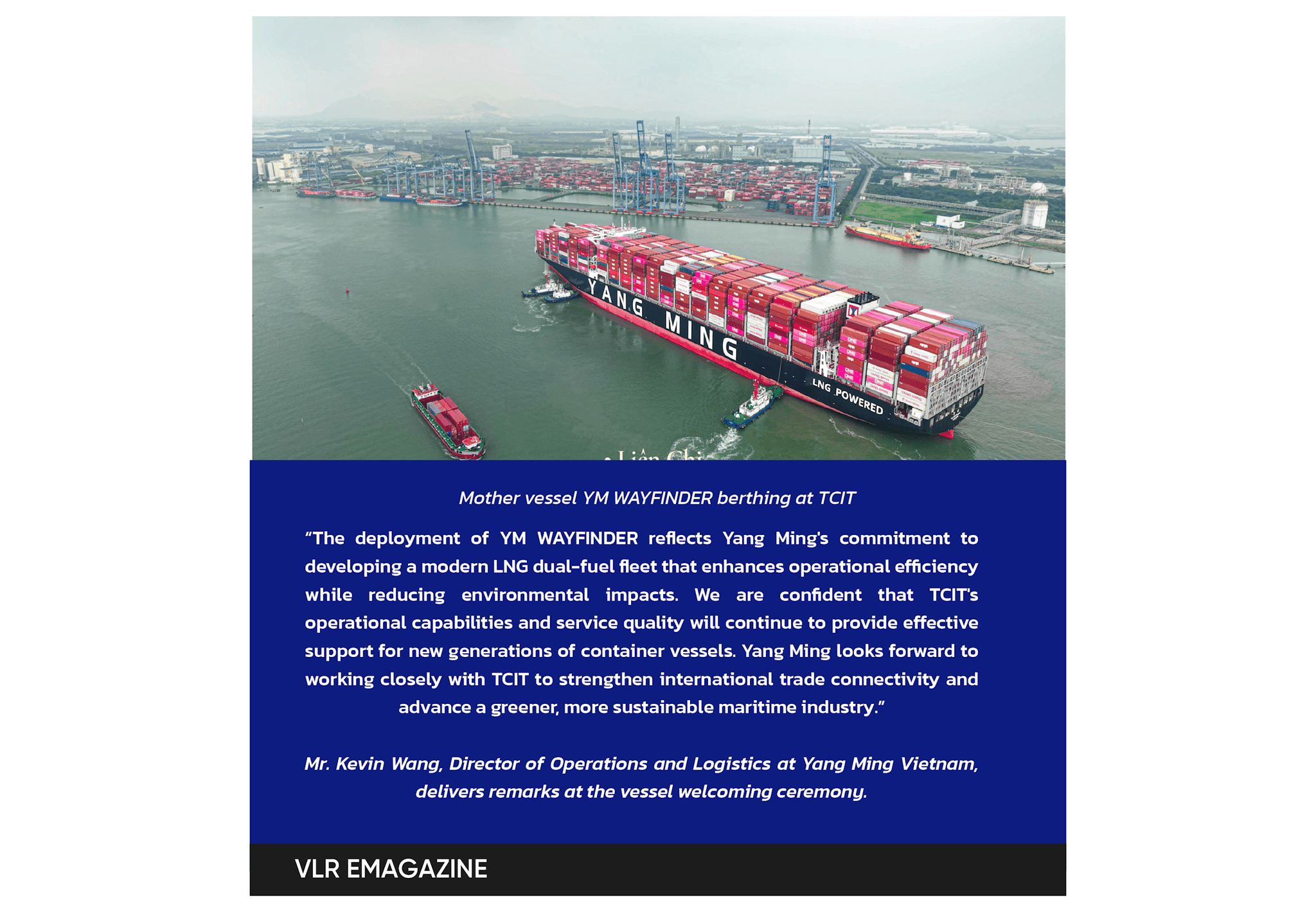
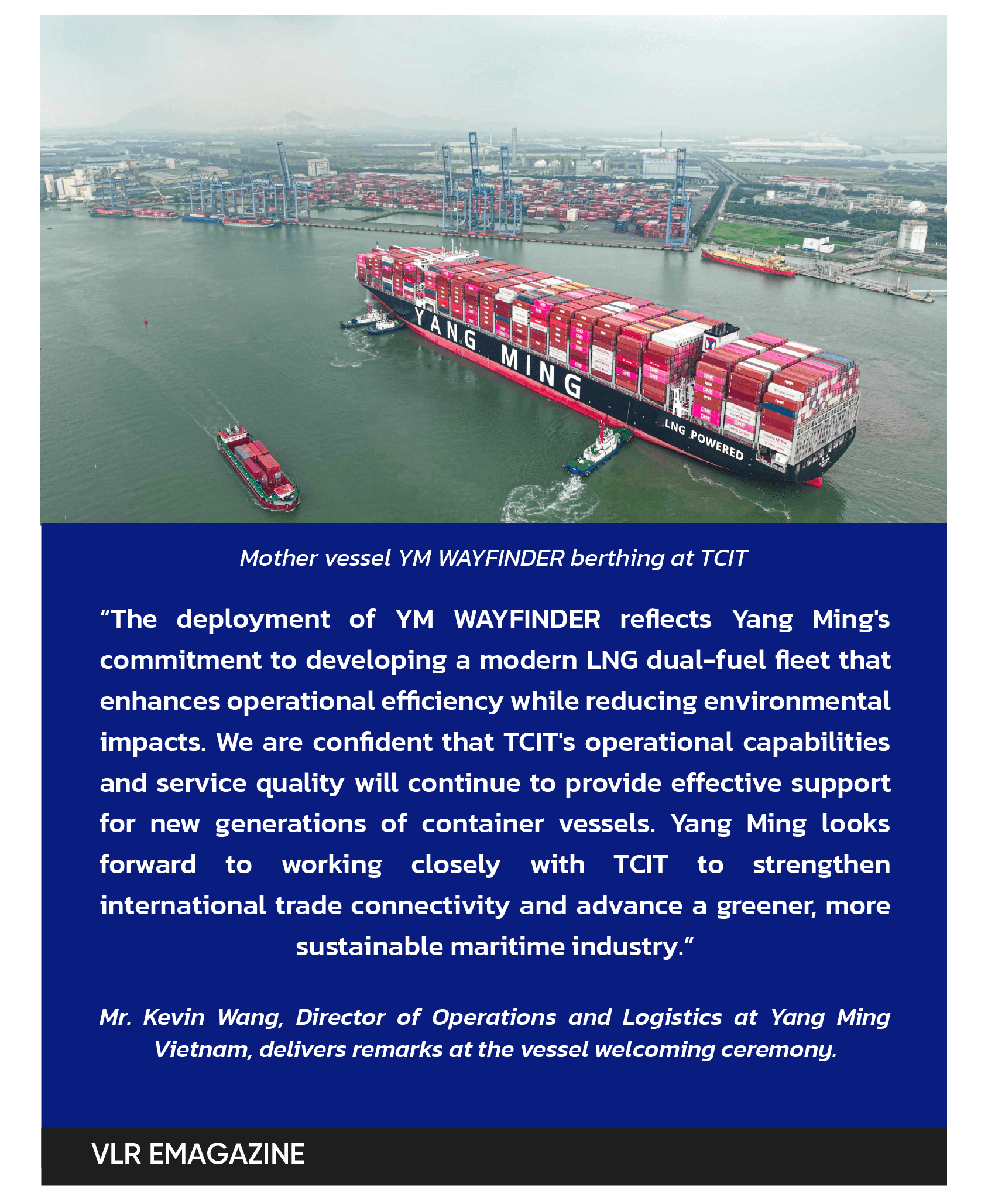
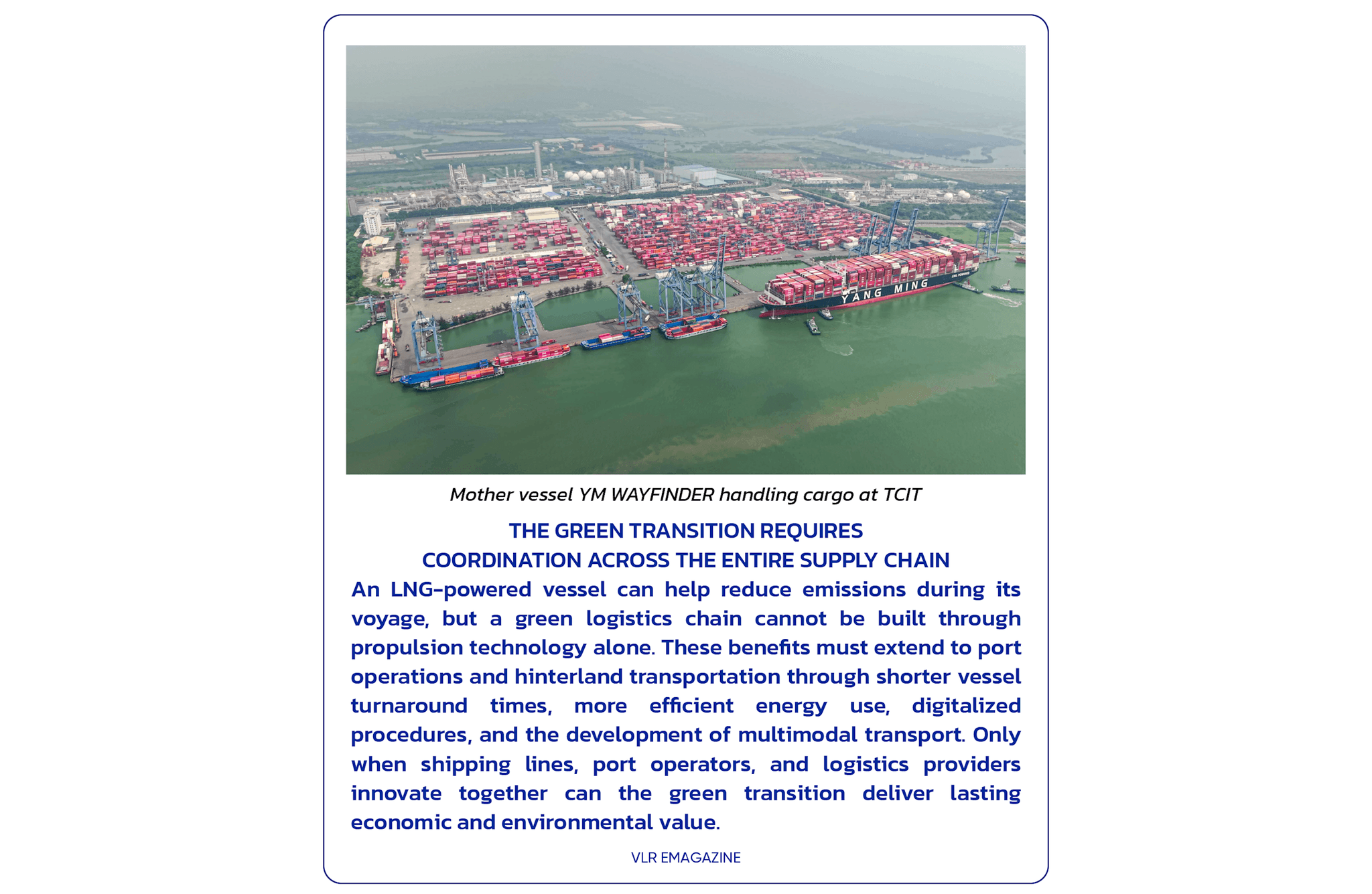
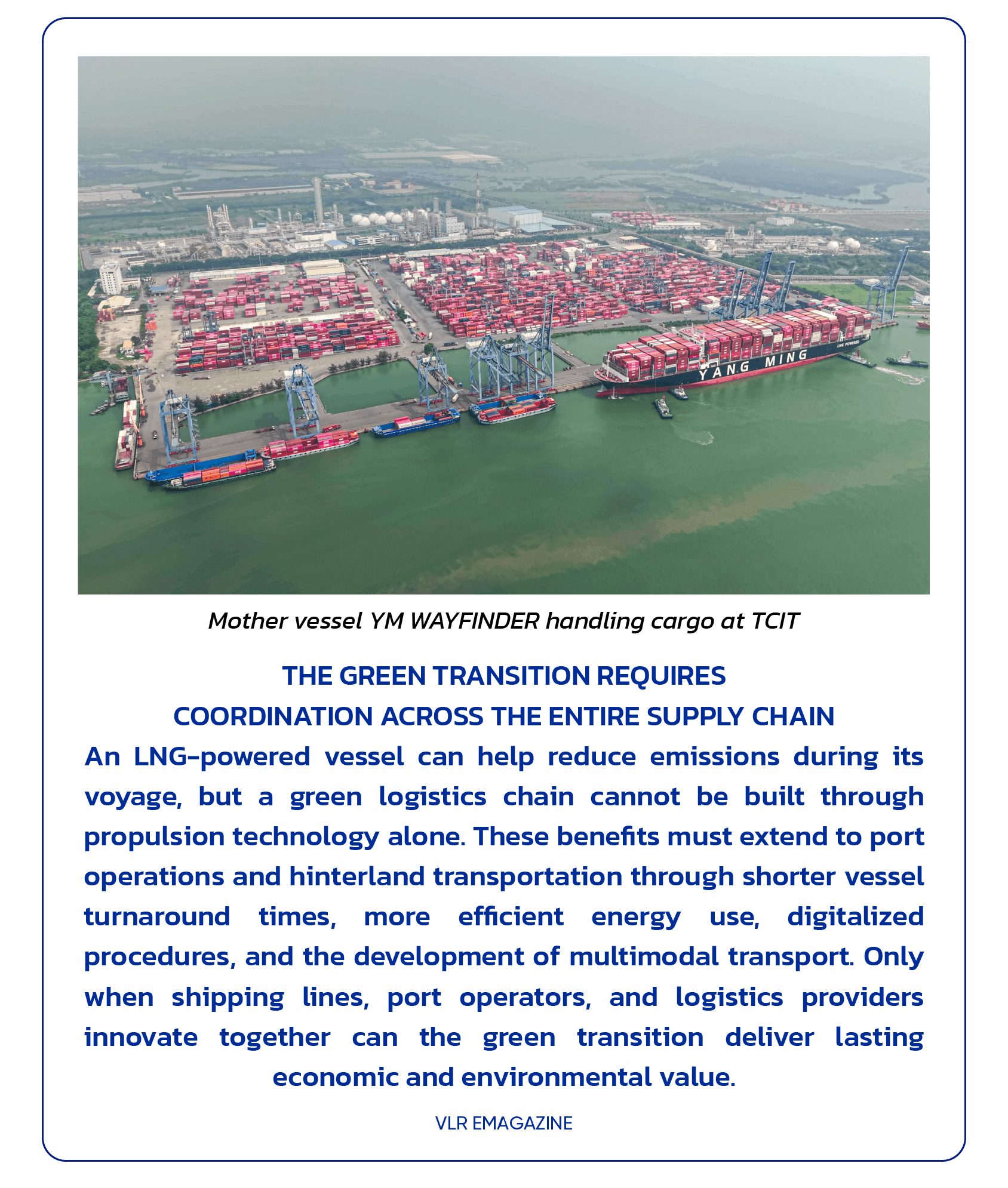
Amid the bustling operations of the Cai Mep - Thi Vai deep-water port complex, the arrival of YM WAYFINDER carries particular significance. The vessel stands out not only for its impressive size but also for its advanced propulsion technology, reflecting the changes reshaping the international shipping industry.
Built by HD Hyundai Heavy Industries in South Korea, YM WAYFINDER measures nearly 365 meters in length, has a deadweight tonnage of 159,374 DWT, and offers a carrying capacity of approximately 15,500 TEUs. The vessel is equipped with a high-pressure dual-fuel engine capable of operating on either liquefied natural gas (LNG) or low-sulfur fuel oil, alongside advanced monitoring and energy-saving systems.
This technology provides greater flexibility in fuel selection, improves operational efficiency, and helps reduce environmental impacts. According to information released by Yang Ming regarding its LNG dual-fuel vessel series, greenhouse gas emissions can be reduced by approximately 20% compared with conventional marine fuels, depending on operating conditions and calculation methodologies.
YM WAYFINDER is part of Yang Ming's investment program involving five LNG dual-fuel container vessels, each with a capacity of approximately 15,500 TEUs, which the shipping line began taking delivery of in 2026. Yang Ming is also investing in seven additional vessels of approximately 16,000 TEUs, scheduled for delivery between 2028 and 2029, with designs prepared for the potential use of ammonia as a marine fuel in the future.
YANG MING REPRESENTATIVE'S REMARKS
These investments demonstrate that the green transition is becoming an integral part of fleet development strategies rather than a standalone environmental objective. Shipping lines must simultaneously address fuel efficiency, operating costs, customer expectations, and increasingly stringent emissions standards.
YM WAYFINDER operates on the EC2 service within the Premier Alliance network, connecting Cai Mep with ports across Asia and North America. Its port rotation includes Yantian, Ningbo, Shanghai, Pusan, Manzanillo, Savannah, Charleston, Norfolk, Halifax, and Singapore.
On these transoceanic shipping routes, every voyage represents a vital link in the global flow of goods. Behind each port call lies an increasingly demanding set of requirements involving cargo-handling productivity, reliability, safety, and effective coordination between shipping lines and port operators.
TCIT and Its Capacity to Welcome the Vessels of Tomorrow
If YM WAYFINDER represents the modernization of the global shipping fleet, its arrival also reflects the ability of seaports to adapt to new operational demands.
Container vessels are becoming larger, their technologies more sophisticated, and their operating schedules increasingly demanding. To participate effectively in international shipping networks, a deep-water port needs more than favorable natural conditions. It must also provide integrated infrastructure, efficient cargo handling, reliable service quality, and maritime safety.
Officially commencing operations in January 2011, TCIT is one of the key deep-water container terminals within the Saigon Newport Corporation (SNP) system. The terminal has a combined quay length of 890 meters and a water depth alongside of 16.8 meters, enabling it to accommodate international mainline services directly connecting Vietnam with major import and export markets.
This capability has been demonstrated through several operational milestones. In 2021, TCIT handled 15,615 TEUs aboard MONACO BRIDGE and achieved a vessel-handling productivity rate of 238 containers per hour for ONE COLUMBIA.
In May 2025, the terminal also welcomed ONE FUTURE, a vessel with a deadweight tonnage of approximately 172,000 DWT. Under its official operating permit, TCIT is authorized to accommodate container vessels of up to 173,724 DWT, enabling direct connections to long-haul mainline services serving Europe, North America, South America, and intra-Asian markets.
REMARKS BY TCIT'S GENERAL DIRECTOR
These figures demonstrate not only TCIT's capacity to accommodate large vessels but also the importance of operational efficiency in maintaining the attractiveness of a gateway port. For shipping lines, shorter vessel turnaround times mean better control over schedules, costs, and service quality.
Alongside investments in operational capabilities, TCIT received the Green Port Award from the APEC Port Services Network in 2020, recognizing its efforts in environmental management and the sustainable development of port operations.
As the shipping industry seeks solutions to reduce emissions, this commitment has become increasingly relevant. A vessel powered by advanced fuel technology needs to be served by a port system capable of delivering stable operations, efficient procedures, and adaptability to evolving standards.
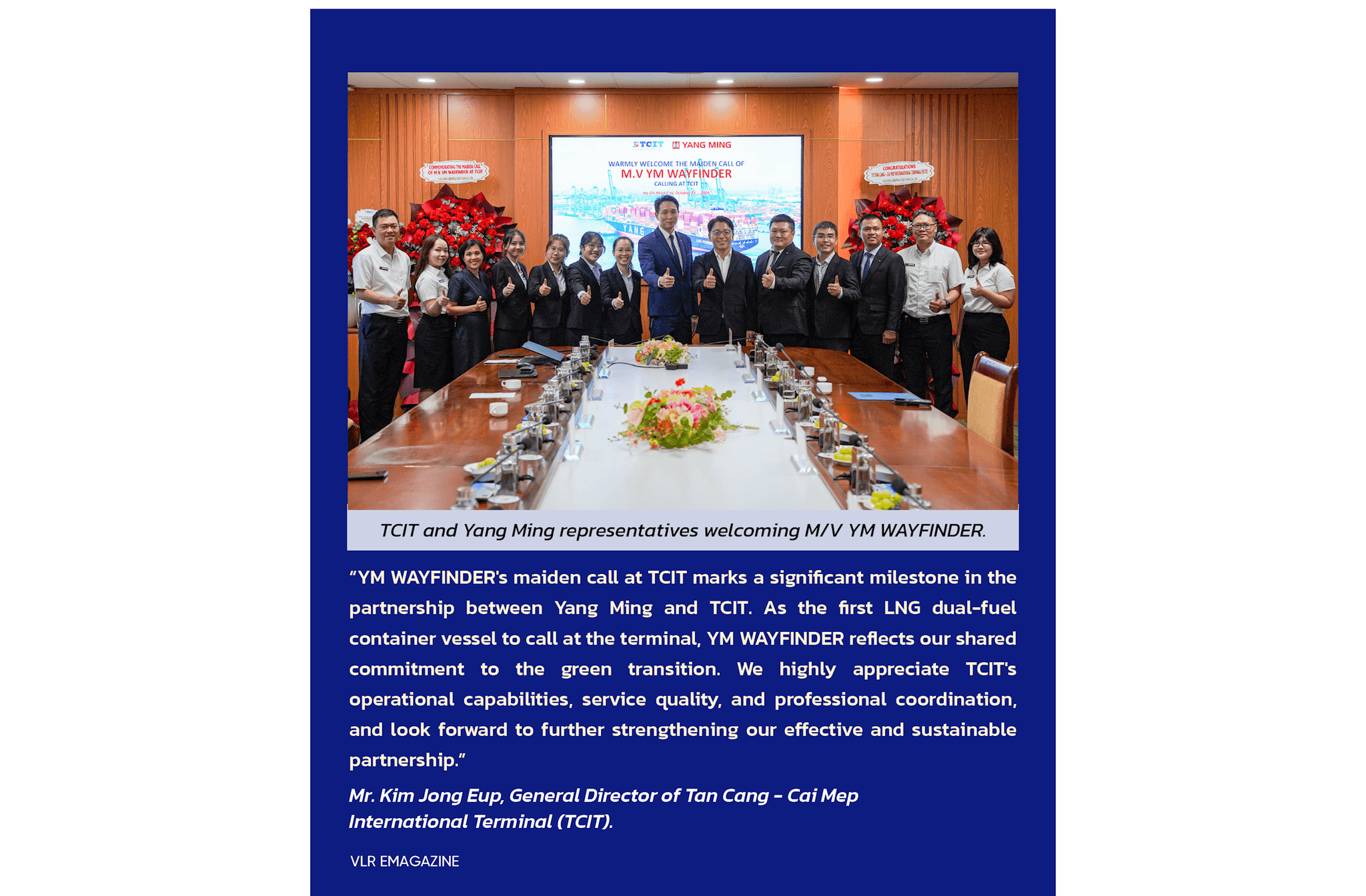
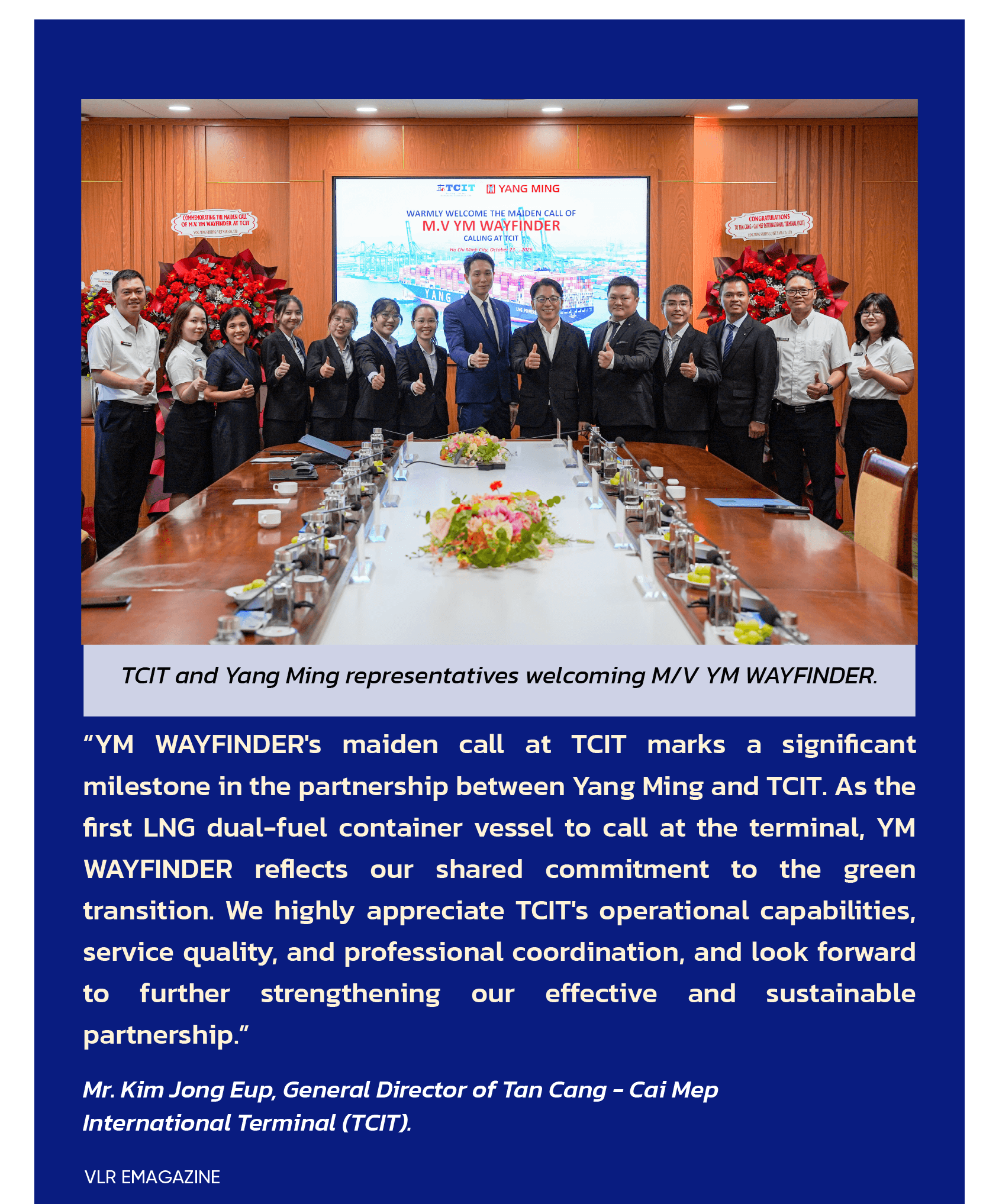
Welcoming YM WAYFINDER therefore means more than adding another vessel call to TCIT's operating schedule. It also reaffirms Yang Ming's confidence in the terminal's service quality while further strengthening the partnership between the two organizations as the maritime industry advances toward a more modern future.
From a Single Port Call to the Competitiveness of the Logistics Supply Chain
For many years, the competitive advantages of Vietnam's deep-water ports have largely been associated with their geographical locations, navigational channel depths, and ability to accommodate large vessels. However, as international trade places greater emphasis on energy efficiency and environmental responsibility, the definition of port competitiveness is evolving.
Customers are no longer concerned solely with how quickly cargo can be handled. They increasingly value schedule reliability, transport connectivity, data transparency, and the efficiency of the entire supply chain.
In this context, TCIT benefits from its position within the integrated port and logistics ecosystem developed by Saigon Newport Corporation. Connections among seaports, inland container depots, warehousing facilities, and various transport modes facilitate the movement of goods from manufacturing centers to international gateway ports and onward to overseas markets.
In particular, developing inland waterway transport and multimodal transportation can help ease pressure on road networks, optimize infrastructure utilization, and improve logistics efficiency. Combined with modern management technologies, these solutions also provide a foundation for businesses to progressively improve cost control and reduce their environmental impacts.
Nevertheless, the green transition is not a journey that can be completed through a handful of investment projects. It requires financial resources, technology, skilled personnel, and coordination among multiple stakeholders. Receiving a dual-fuel vessel does not mean that an entire port operation has become green. What matters most is the capacity for preparation, adaptation, and continuous improvement.
For Yang Ming, cooperation with TCIT helps maintain Vietnam's cargo connectivity with international shipping networks. For TCIT, the presence of YM WAYFINDER further demonstrates its ability to serve modern vessel generations while creating opportunities to enhance cooperation and service quality.
From a broader perspective, this occasion highlights the opportunities available to Vietnam's seaport system as it becomes more deeply integrated into global supply chains. Geographical advantages and infrastructure remain important, but operational efficiency, technological capabilities, connectivity, and environmental responsibility will increasingly determine competitiveness.
As YM WAYFINDER berths at TCIT, the containers aboard will continue their journeys to distant markets. Yet beyond this single voyage lies a broader message: The future of green shipping will not be shaped by modern vessels alone, but by the coordinated transformation of the entire logistics ecosystem. For TCIT and Saigon Newport Corporation, this represents both an opportunity to demonstrate their capabilities and a continuing journey toward strengthening the position of Vietnam's seaports in international trade.