According to the November 18 release, the 10th anniversary edition of Hong Kong Maritime Week (HKMW), running from November 15 to 21, expects more than 18,000 policymakers, business leaders and experts. More than 80 organisations from Hong Kong, the Chinese Mainland and overseas are organising over 60 events.
Port partnerships support the green agenda
At the opening ceremony on November 16, HKSAR Chief Executive John Lee highlighted the need for certainty amid geopolitical shifts, fragmented supply chains and market volatility. This year's theme focuses on trusted resilience in global maritime trade.
Mr Lee announced a task group to support development of a green maritime fuel trading platform. The release says experts will advise on strategic direction, infrastructure and price discovery. This is a development step, rather than confirmation that the trading platform is operational.
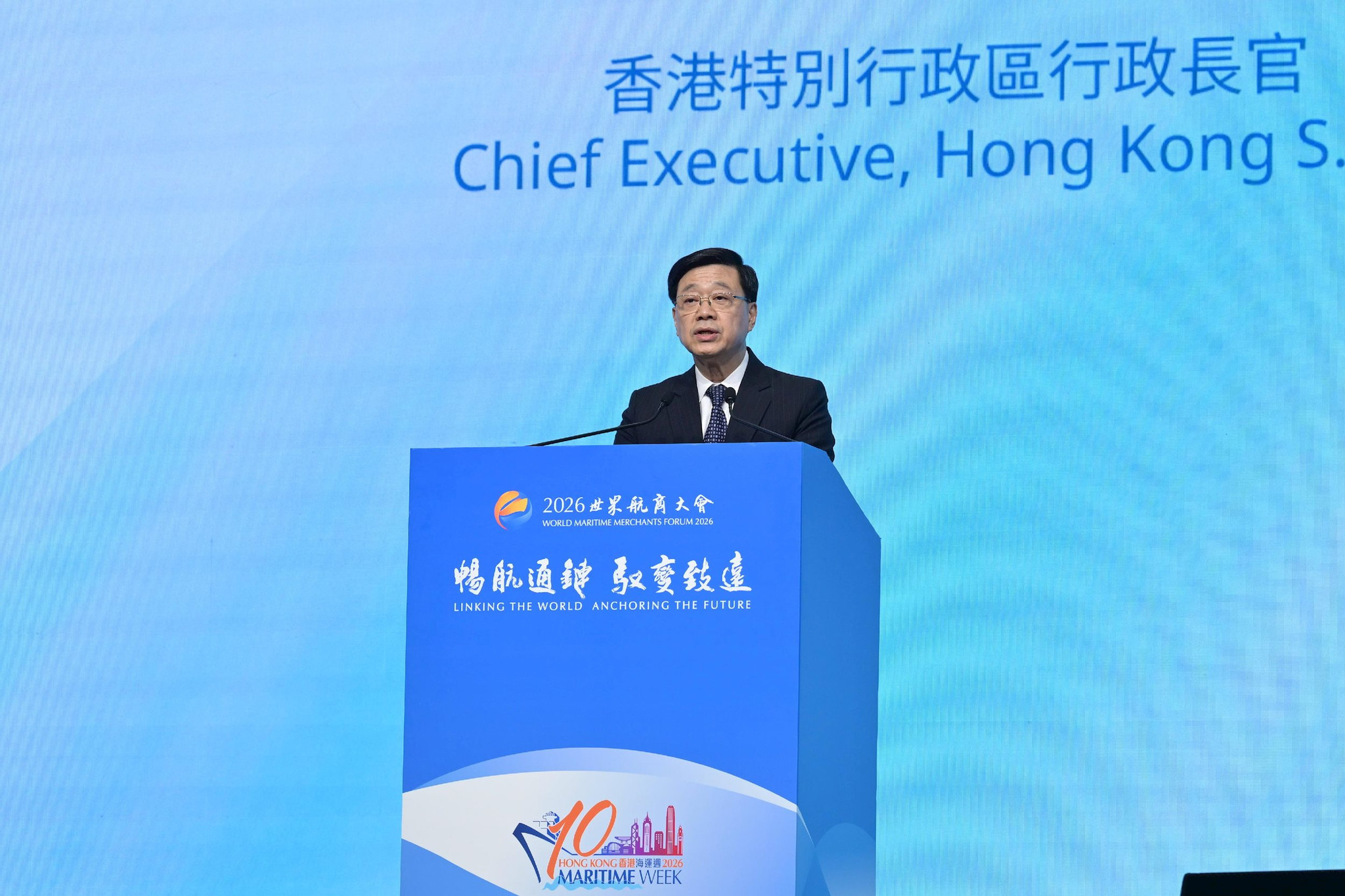
HKSAR Chief Executive John Lee speaks at the opening of Hong Kong Maritime Week and the World Maritime Merchants Forum on November 16, 2026. Photo: HKSAR Government.
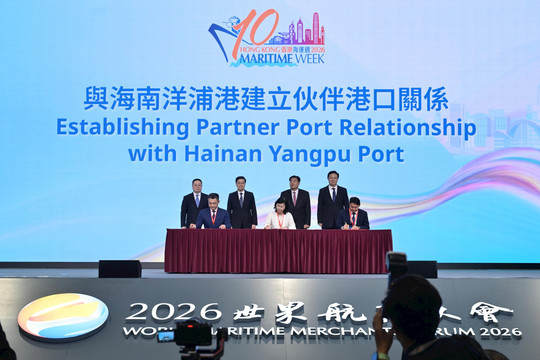
Opening-ceremony outcomes included an MOU with Hainan Yangpu Port establishing a partner port relationship; an agreement with Zhanjiang, Guangdong, to develop Hong Kong's first Green Energy Corridor; and an agreement with Greece's Port of Piraeus to establish its first Green Shipping Corridor and a partner port relationship.
The first protection and indemnity insurance policy of the Hong Kong Shipowners Mutual Assurance Association was also issued. Secretary for Transport and Logistics Mable Chan emphasised Hong Kong's connection between the Chinese Mainland and international markets, supported by maritime finance, insurance and legal services.
Cargo-flow data meets trade finance
Speaking on November 16, Financial Secretary Paul Chan identified three trends: regionalisation of trade, green transition and artificial intelligence.
His official speech states that close to 10,000 enterprises had registered with the Port Community System (PCS) since its January rollout. Some had begun obtaining trade finance using cargo-flow data.
Under Project CargoX, led by the Hong Kong Monetary Authority, 21 banks are testing transaction verification using data shared on a common digital platform with the owner's consent. The initiative illustrates an emerging link between logistics records and financing decisions. Registration with PCS should not be read as confirmation that every participating enterprise has secured finance.
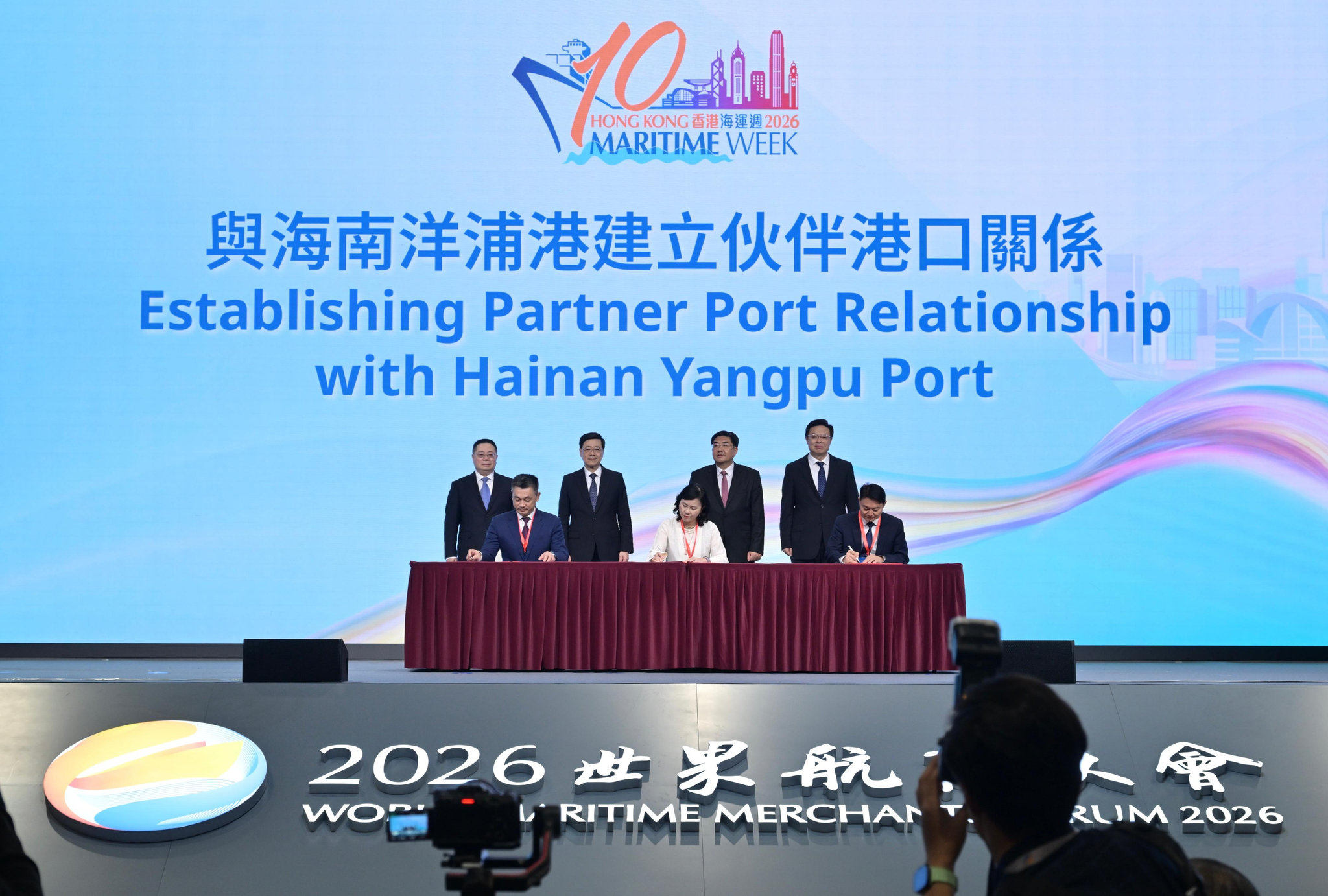
Mable Chan and representatives from Hainan and Yangpu sign an MOU to establish a partner port relationship on November 16, 2026. Photo: HKSAR Government.
A corridor initiative involving Vietnam
The Asian Logistics, Maritime and Aviation Conference on November 16–17 announced three MOUs and a co-operation initiative. The areas covered include local sustainable aviation fuel blending facilities, green maritime fuels and certification standards, partner port expansion and a Vietnam–Guangxi–Hong Kong land–air logistics corridor.
For Vietnamese businesses, the potential connection between road transport and Hong Kong's air cargo capacity warrants attention. The release, however, does not specify operating dates, service providers, transit times or tariffs. A commercial assessment will require those implementation details.
BIMCO also participated in HKMW for the first time, partnering with the International Organization for Mediation on a November 18 seminar addressing contractual developments during the green energy transition and maritime decarbonisation.
Taken together, the announcements place network development alongside fuels, data and specialist services. Their practical value for Vietnamese companies will depend on implementation, access to services and operating commitments that can be verified.