Sustainability as the “backbone” of SAPUWA’s operating strategy

From its early days, SAPUWA has identified that business growth must go hand in hand with environmental and social responsibility. This orientation has been embedded across its production and business operations through priorities such as conserving resources, minimizing environmental impact in day-to-day operations, investing in technologies aligned with green transformation, and building a business model that balances economic efficiency with social responsibility. These pillars have served as the foundation for SAPUWA’s stable and sustainable growth over many years.

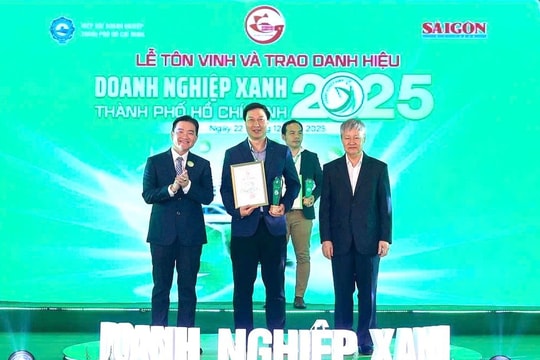
Three consecutive years as a Green Business of Ho Chi Minh City: a milestone of consistent commitment
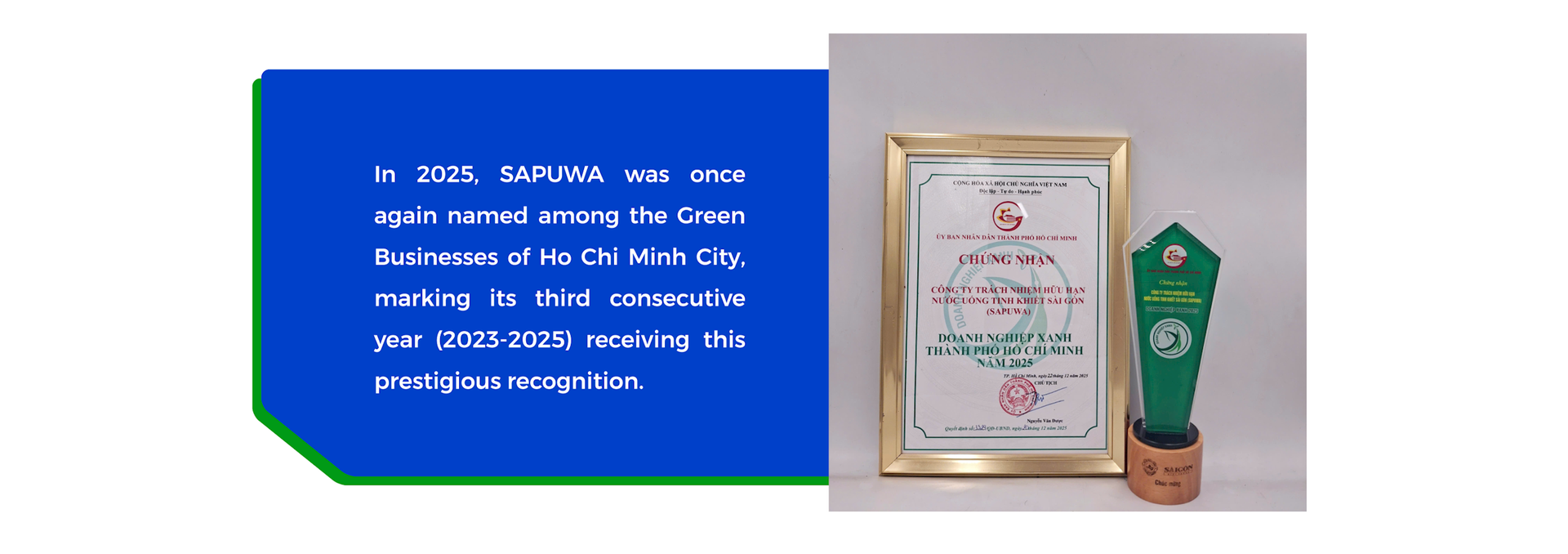
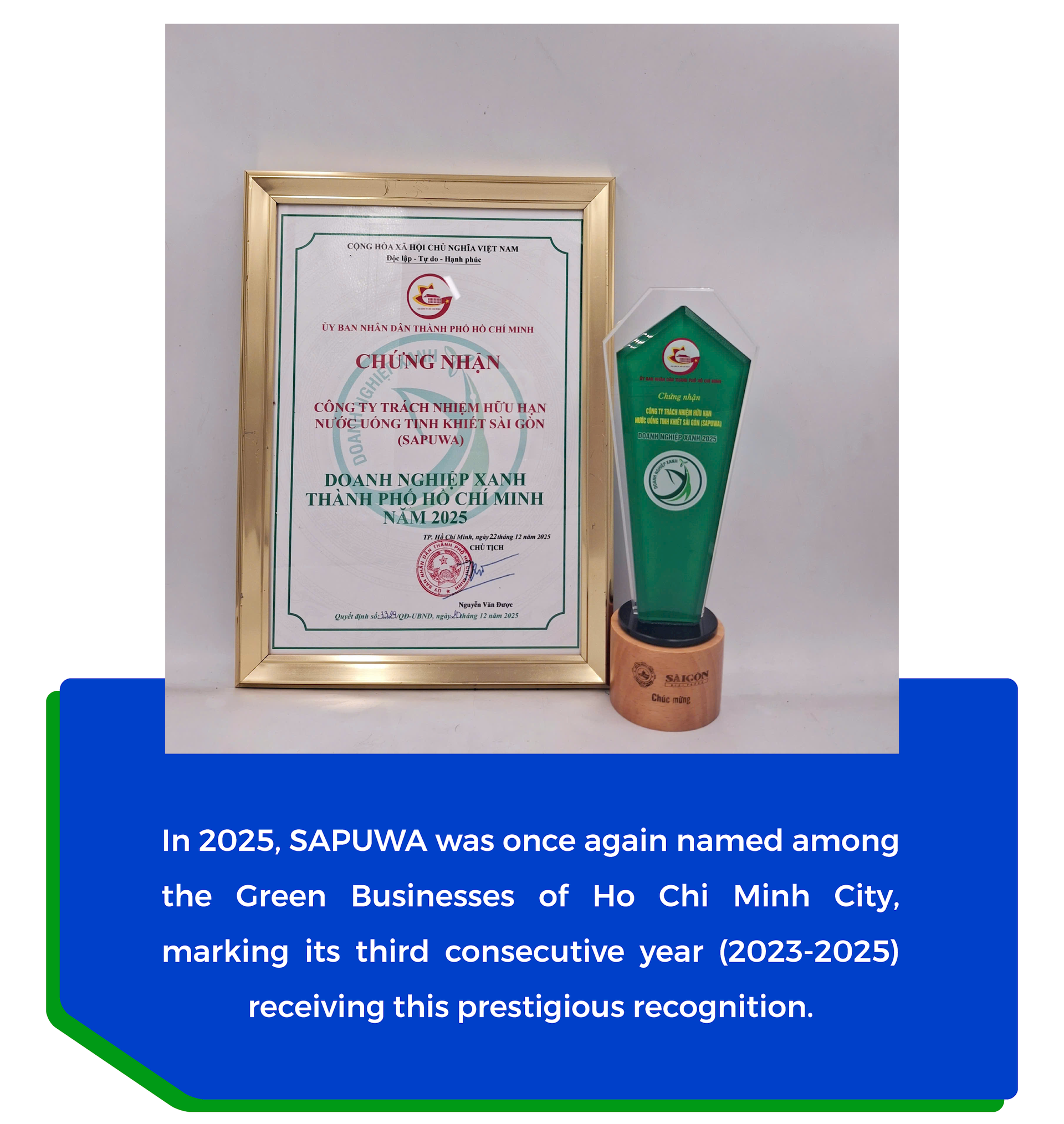
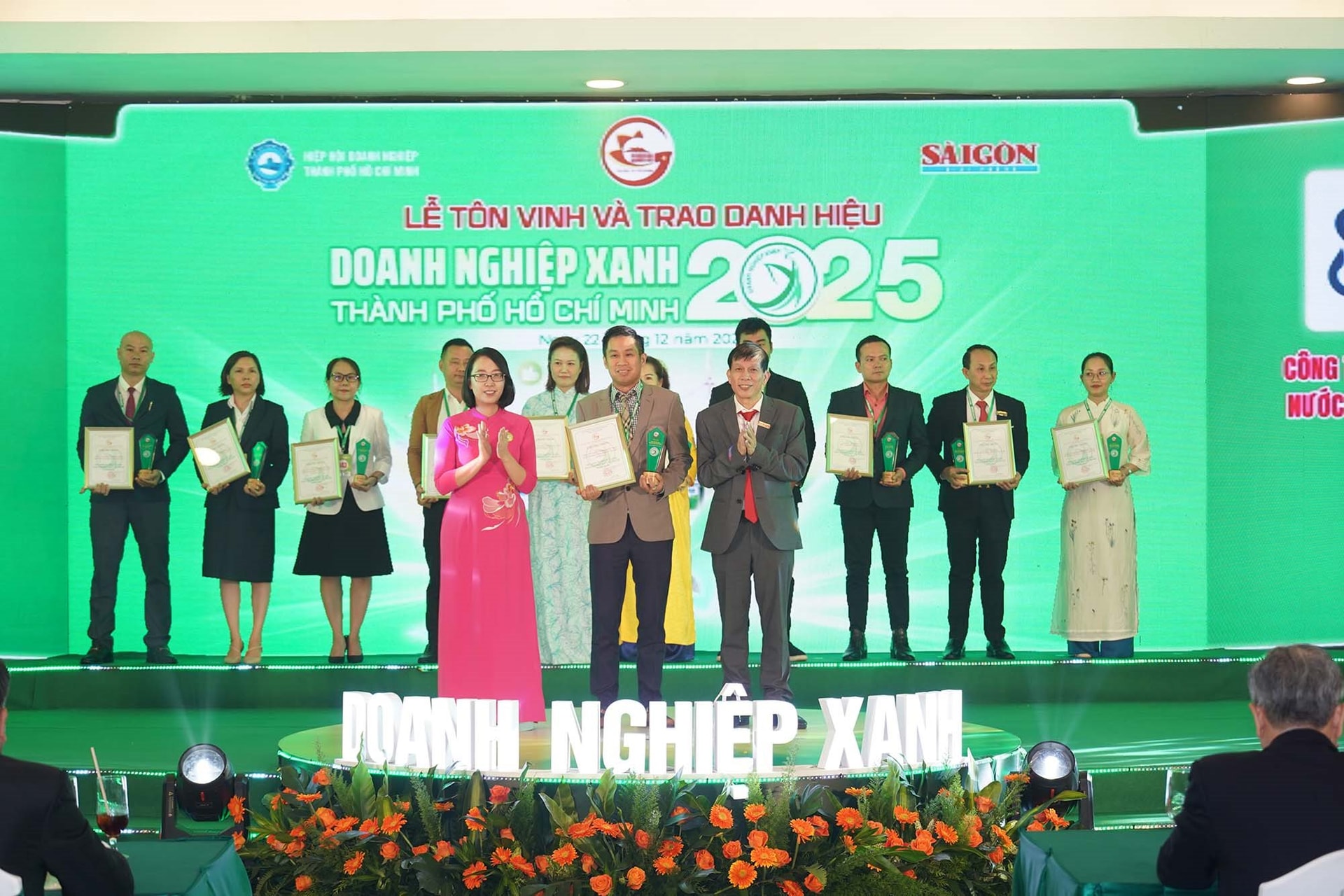
The Green Business of Ho Chi Minh City program - organized by the Ho Chi Minh City People’s Committee in coordination with relevant agencies - honors pioneering enterprises that promote green transformation and integrate environmental protection into their production and business practices.

Being recognized for three straight years is a strong testament to SAPUWA’s long-term and consistent environmental commitment, its ongoing efforts to improve processes and raise operational standards, and its development approach that harmonizes economic growth with social responsibility. Beyond acknowledgment, the title serves as a powerful motivation for SAPUWA to further refine its sustainable development model in the years ahead.

From the factory to the community: turning green values into practical action

Alongside its business activities, SAPUWA actively participates in community programs - especially initiatives that protect the environment and raise public awareness about sustainability.

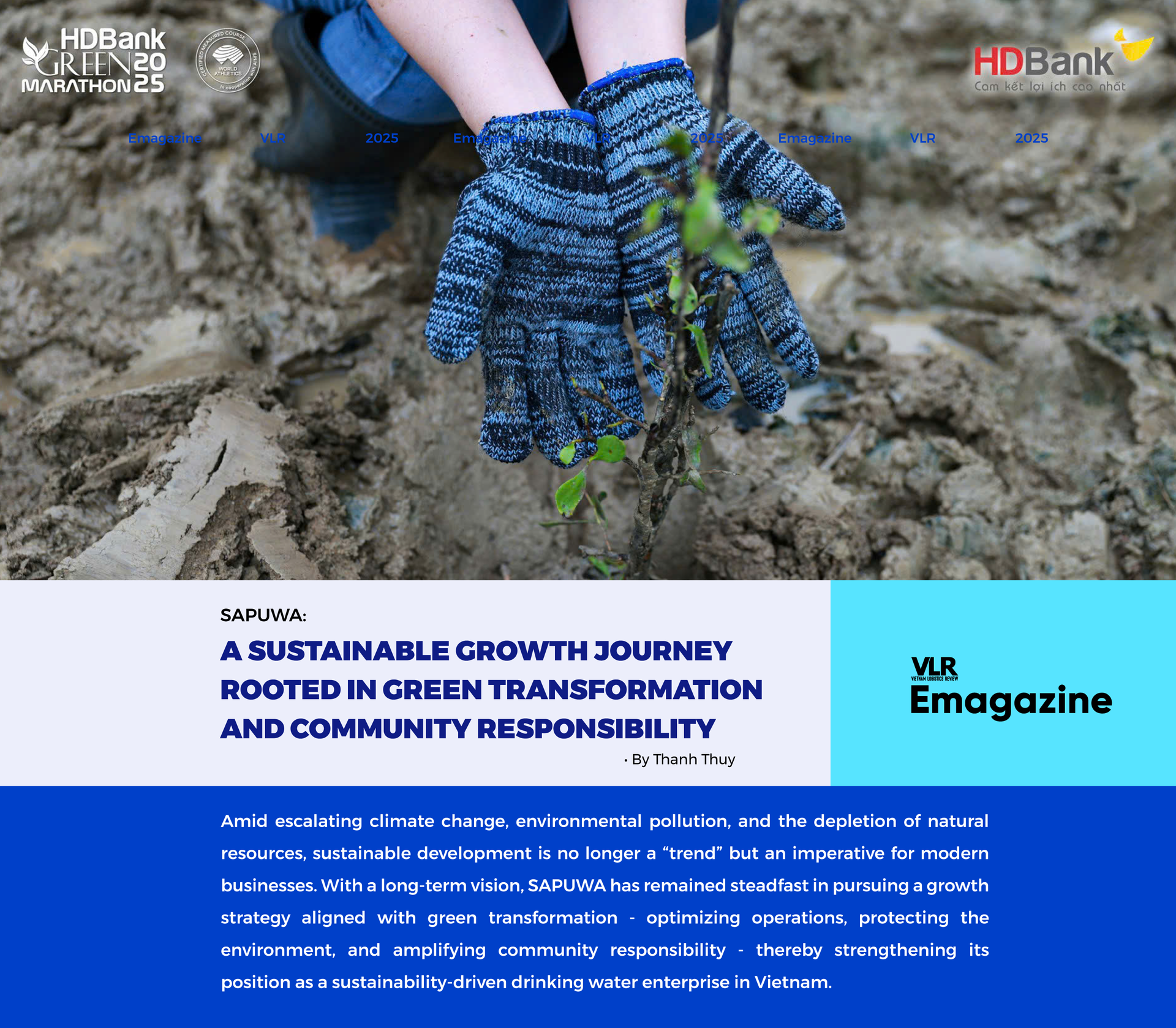
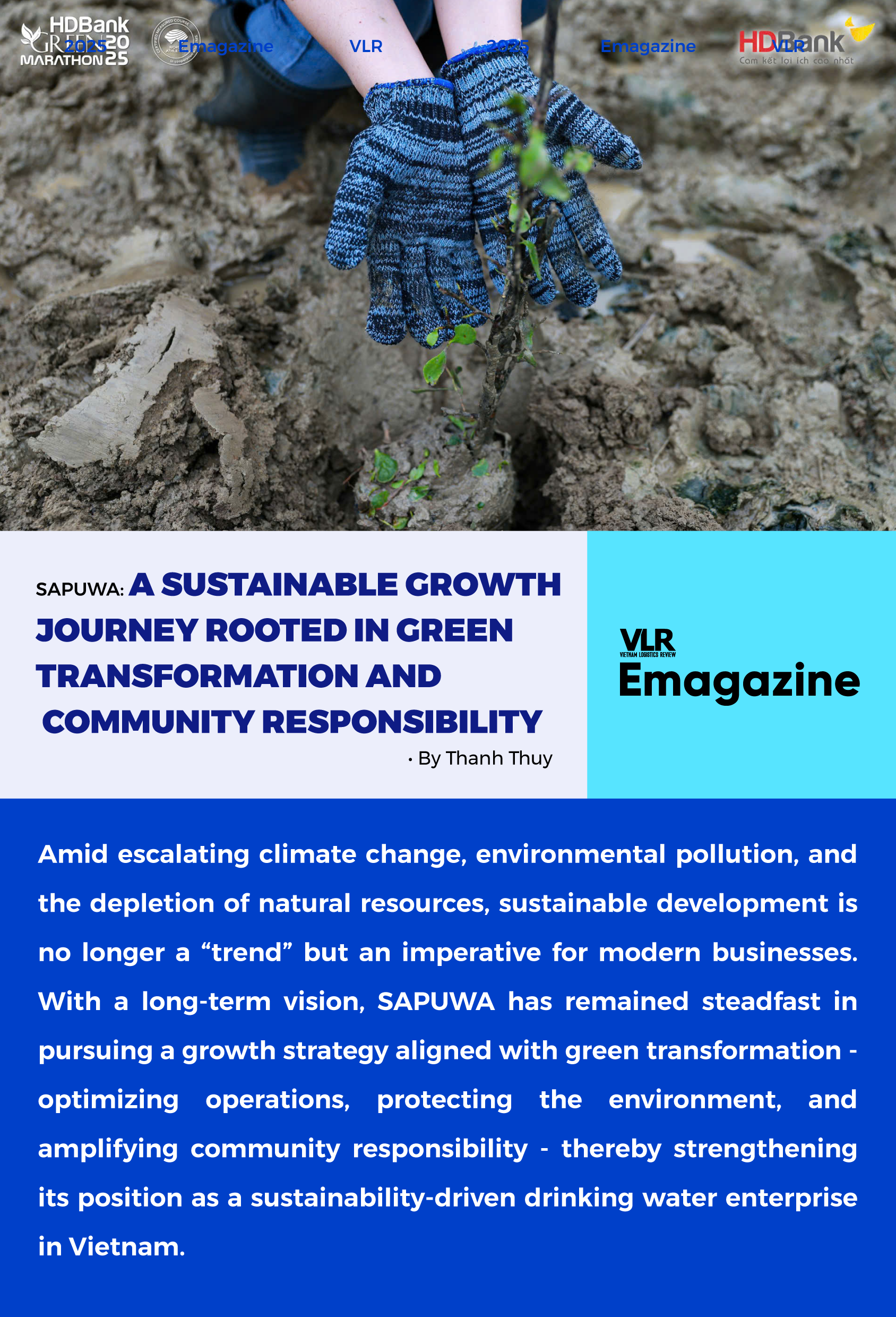
In 2025, SAPUWA was honored to take part in mangrove planting activities under the framework of HDBANK Green Marathon 2025 - a sports-and-environment event with strong social significance. The program aims to spread a green lifestyle and encourage communities to join hands in protecting the environment and responding to climate change.

Mangrove forests are often described as a “green shield” for coastal ecosystems, playing a critical role in reducing the impact of erosion and landslides, absorbing CO₂ and helping cut greenhouse-gas emissions, conserving biodiversity, and supporting sustainable livelihoods for local communities. Through mangrove planting, SAPUWA not only contributes directly to the environment but also extends its message of environmental responsibility to partners, customers, and the broader public.

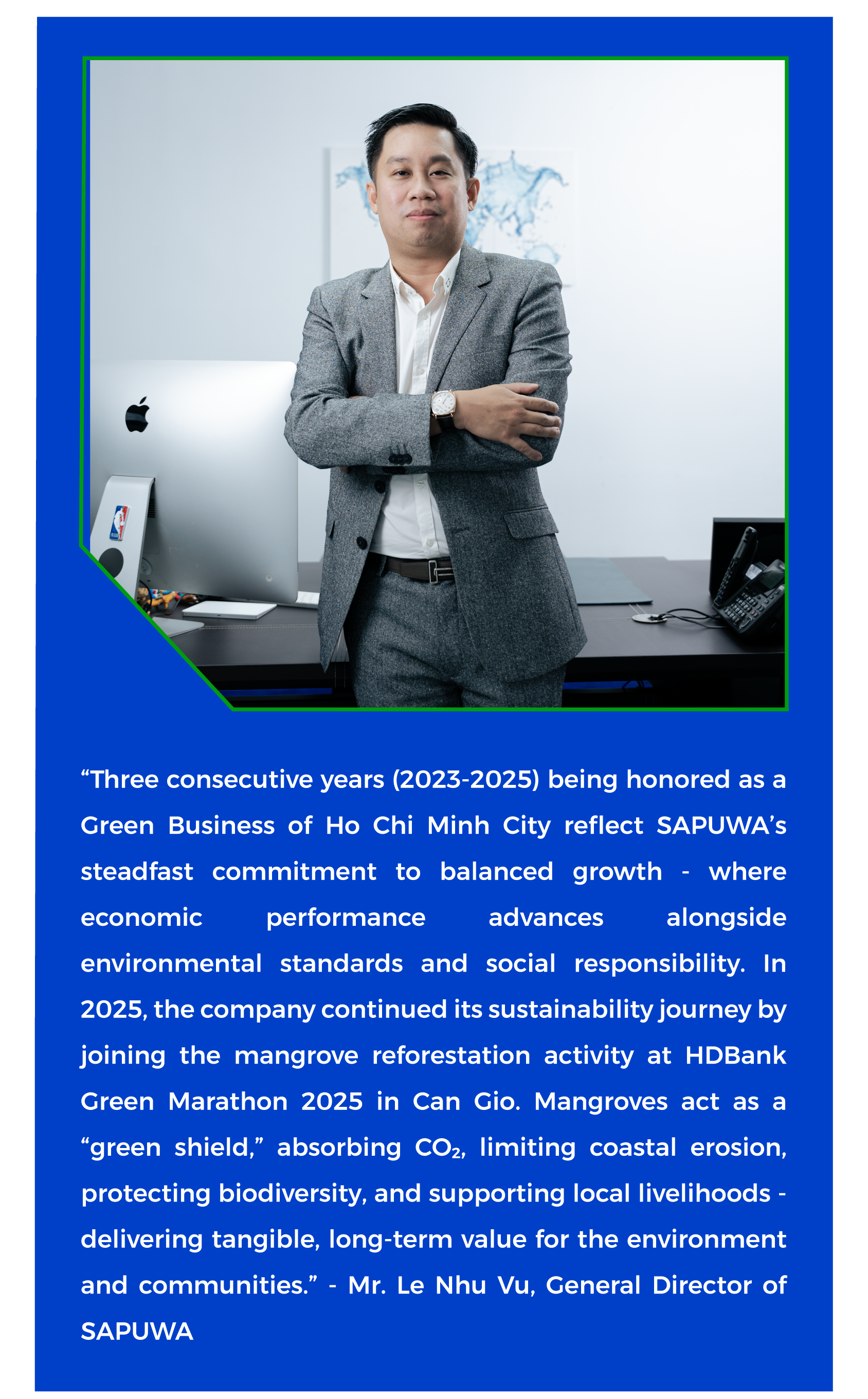
Looking ahead, SAPUWA remains committed to its green transformation roadmap by investing in environmentally friendly technologies, strengthening solutions that conserve resources and energy, expanding social responsibility programs for the environment, and partnering with stakeholders and communities to advance green initiatives.

Three consecutive years recognized as a Green Business of Ho Chi Minh City, together with SAPUWA’s participation in mangrove planting at HDBANK Green Marathon 2025, mark meaningful milestones in the company’s sustainable growth journey. These achievements are not only outcomes - but a clear affirmation of SAPUWA’s long-term commitment to building a business model that balances the economy, the environment, and society. SAPUWA believes that sustainable development today is the firm foundation for a stronger, greener future.
Bài liên quan
  • From Data to Net Zero: ASL Logistics’ Green Transition
    On 22 December 2025, at the “Ho Chi Minh City Green Enterprise 2025” Recognition Ceremony jointly organised by the Ho Chi Minh City People’s Committee, the Ho Chi Minh City Business Association and Saigon Giai Phong Newspaper, ASL Logistics was named among the city’s exemplary enterprises. The title recognises a carefully implemented green-transition strategy that links innovation in logistics technology with environmental responsibility and sustainable development.

(0) Bình luận
  • Smart Warehousing Begins with Reliable Data
    Robots, conveyors and software often dominate discussions about smart warehouses. Yet advanced equipment cannot rescue inconsistent master data. Duplicate item identifiers, conflicting units, unrecorded location moves and differences between system stock and physical stock can turn automation into a faster way of repeating errors.
  • Steel Coils and Quality Preservation During Transport
    Steel coils can arrive at the correct total weight yet fail to meet the intended use when edges are deformed, surfaces are scratched or corrosion appears. Quality preservation needs to begin before loading and continue through each transfer. Steel producers and transport providers need to connect product information, the transport arrangement and condition records into a process that can be checked.
  • Port concessions and investment responsibilities
    Granting a business the right to operate a port can mobilize capital and operational expertise. The outcome depends on identifying who invests, who maintains the assets and who is accountable when infrastructure deteriorates or services are interrupted. A sound agreement connects operating rights with specific obligations and protects customers' ability to use the port throughout the operating term.
  • Measuring shipment emissions across the transport chain
    A shipment may move through trucks, ports, vessels and several transfer points before reaching its consignee. Quantifying the emissions associated with that journey requires an agreed boundary, suitable data and a clear allocation approach. A useful result should explain how it was calculated. That transparency allows customers to compare transport options and helps operators identify where better information or operational changes would have the greatest value.
  • Prefabricated Housing and Delivery in Construction Sequence
    Prefabricated housing moves part of construction from the site to the factory, but installation progress still depends on how components are delivered. Correct quantities cannot sustain work when an item needed first arrives later, or when the site is unprepared to receive it. For residential projects, transport planning should start from the approved erection sequence, connecting production schedules with unloading capacity and the installation position of each component.
  • Managing Returns in Domestic E-commerce
    A returned parcel is not a closed case. The customer’s request still needs a decision, while each item needs an authorized destination and an accurate stock status. When parcels reach a warehouse but wait unexamined, both merchandise and money remain tied up between processes. For domestic e-commerce, returns should be designed as part of normal operations, with clear ownership from the initial request to the final inventory and financial entries.
Nổi bật Tạp chí Vietnam Logistics Review
Đừng bỏ lỡ
SAPUWA: A Sustainable Growth Journey Rooted in Green Transformation and Community Responsibility
POWERED BY ONECMS - A PRODUCT OF NEKO