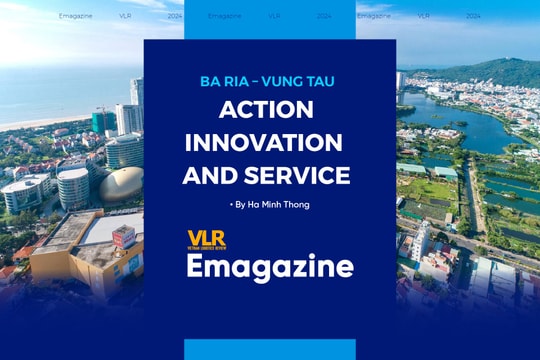
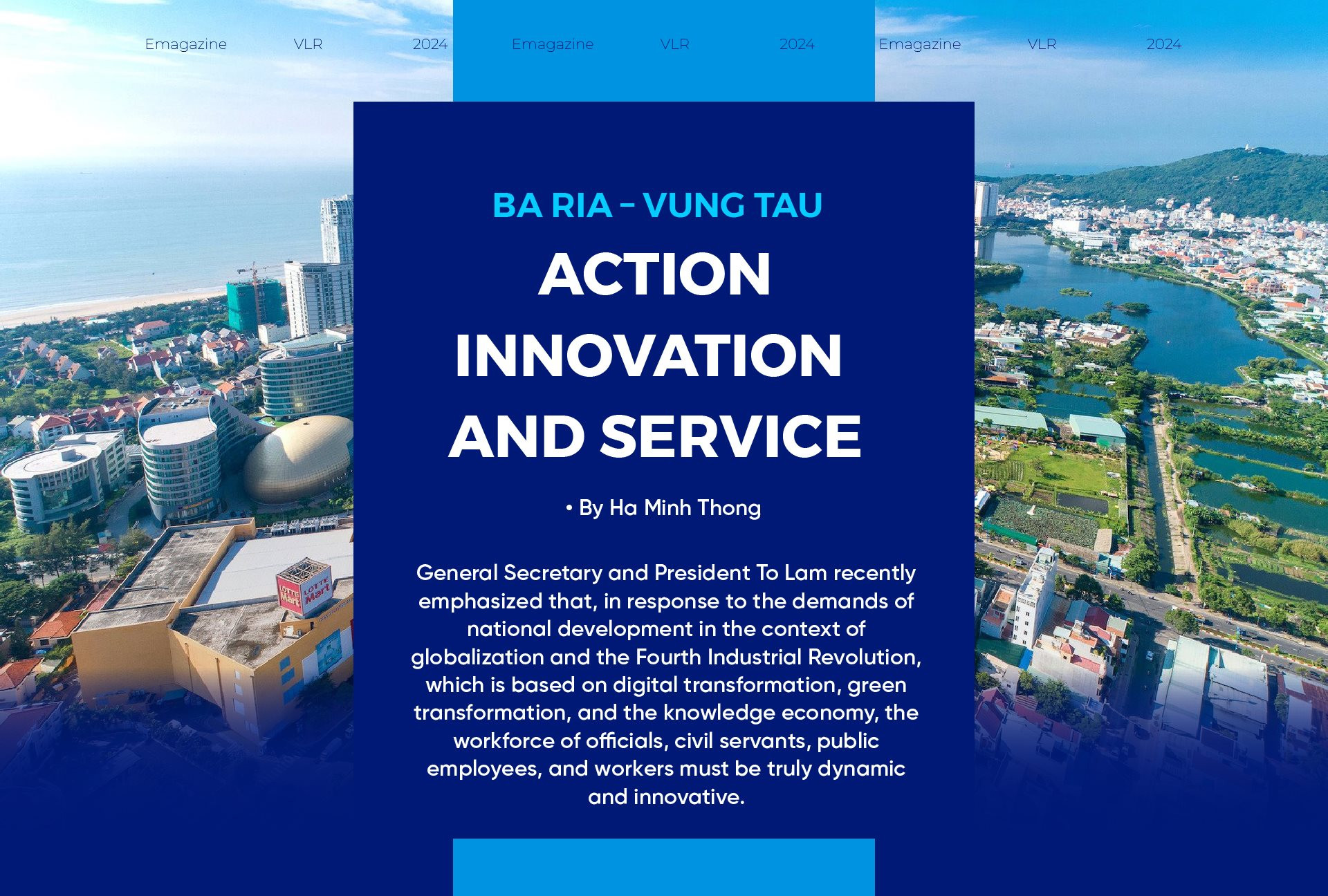

General Secretary and President To Lam recently emphasized that, in response to the demands of national development in the context of globalization and the Fourth Industrial Revolution, which is based on digital transformation, green transformation, and the knowledge economy, the workforce of officials, civil servants, public employees, and workers must be truly dynamic and innovative.
The motto "Action - Innovation - Service" reflects the dynamic, innovative, and creative spirit of the government of Ba Ria – Vung Tau (BRVT) over the past 30 years.
"Action - Innovation - Service"
In recent years, BRVT has identified administrative reform as one of the key tasks for social development, aiming to enhance the satisfaction of both citizens and businesses. As a result, the provincial leadership has continuously introduced innovative models and approaches in handling administrative procedures for the public.

In the digital era, the leadership has also implemented modern, fast, and efficient methods of communication, such as creating Zalo groups to quickly address priority issues and report daily tasks. These measures not only maximize support for the public but also provide significant assistance to businesses in BRVT by facilitating legal procedures.
The Provincial People's Committee has implemented various solutions to promote administrative reform in all areas, with a continued focus on reform efforts tied to building e-government and digital governance; improving the business environment; and enhancing the province's competitiveness.
Additionally, the Provincial People's Committee requires departments, agencies, and district-level People's Committees to hold quarterly dialogues with businesses and investors at their workplaces, listening to and promptly addressing their concerns to improve the business environment. A special task force has been established by the province to address obstacles, providing effective support for businesses, investors, and investment projects in BRVT.

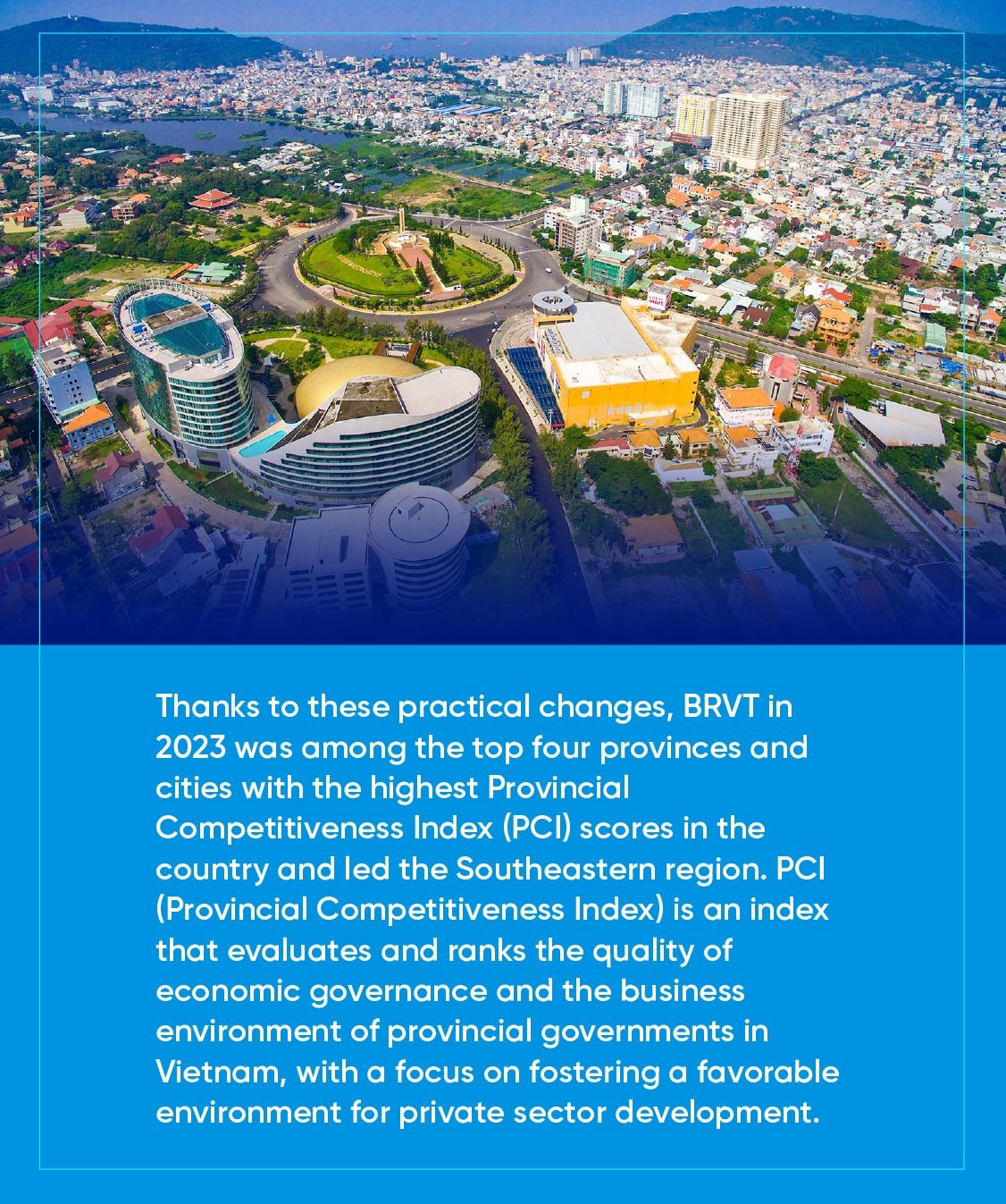
BRVT continues to focus on key tasks such as reviewing and addressing deficiencies; enhancing the role of leadership in implementing duties; training and developing a team of officials, civil servants, and public employees to improve public service performance, ensuring no inconvenience or corruption affects the public; utilizing modern administrative services; strengthening inspection and self-inspection efforts; and timely rewarding individuals and collectives with innovative initiatives to improve the administrative reform index. The province is also committed to furthering administrative reform in connection with digital transformation.
Streamlining the Administrative Apparatus in the 4.0 Era
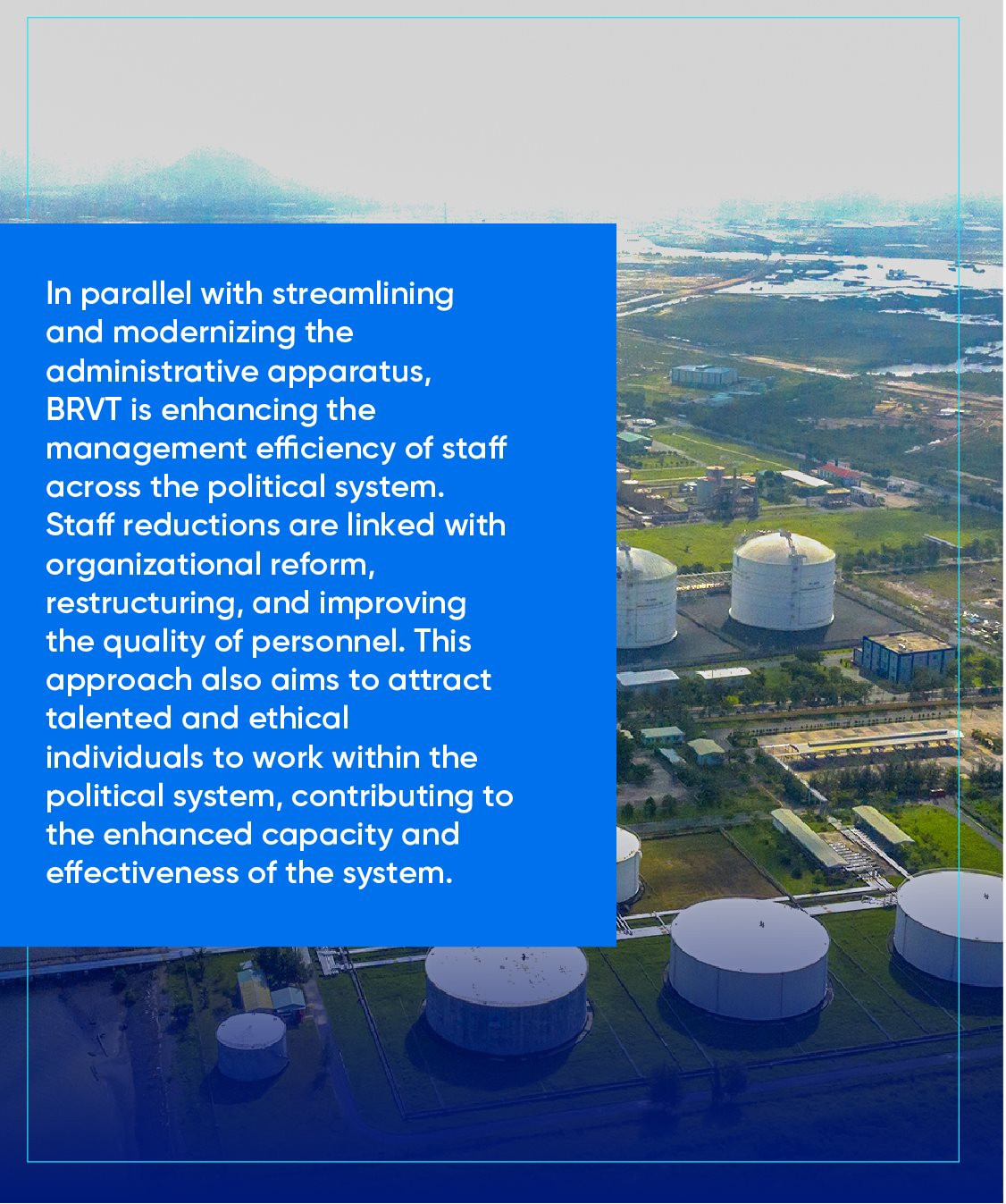
Streamlining the administrative apparatus and reducing staff will help improve quality and ensure the effective use of officials, civil servants, and public employees. In Action Plan No. 58/KH-UBND, which implements Resolution No. 24-NQ/TW, BRVT has set the task of "effectively implementing policies on reforming and restructuring a streamlined organizational apparatus; enhancing the efficiency and effectiveness of the government apparatus; and promoting decentralization and delegation in state management. Strengthening the revolutionary ethics of the team of officials, civil servants, and public employees; persistently and resolutely fighting against corruption, negative phenomena, practicing thrift, and combating wastefulness."
Since the end of 2021, the entire province of BRVT has reduced three provincial-level departments, 91 divisions and equivalent units at provincial and district levels, four sub-departments and equivalent units under provincial specialized agencies, 32 divisions under sub-departments and equivalent units, 20 units under public service departments affiliated with the provincial People's Committee and specialized agencies, and 19 units under district-level public service departments.
BRVT has implemented the dual-role model where the Head of the Mass Mobilization Committee concurrently serves as the Chairman of the Vietnam Fatherland Front at the district level in 3 out of 8 localities. The province has also rationalized the organization of commune-level administrative units and reduced 153 hamlets and residential groups. Additionally, BRVT is piloting four new organizational models and combining positions to streamline units and enhance operational efficiency. The number of leaders and managers in provincial-level administrative agencies has decreased by 136 people, and the number of department heads and deputy heads in provincial public service units has decreased by 47 people.

Civilized Government, Happy Citizens
The documents of the 13th Party Congress emphasize the principle that "the people are the root," "the people are the masters"—placing the people at the center and making them the key drivers of the development process.
With the motto of focusing on the quality of life and happiness of the people as the center of action, BRVT is implementing comprehensive solutions to raise the quality of life to the level of developed countries by 2045. This includes improving the quality of education and training, developing comprehensive human capabilities and qualities; enhancing the quality of healthcare services through the application of scientific and technological advances; effectively investing in and managing cultural and social facilities; enhancing the quality and scale of cultural, artistic, and sports activities while also attracting tourists; and implementing three national target programs focused on sustainable poverty reduction, building new rural areas, and socio-economic development for ethnic minority communities.
Upholding the traditional value of "Remembering the source while drinking the water," BRVT's Party Committee and government always prioritize taking care of war invalids, sick soldiers, martyrs' families, and individuals who contributed to the revolution within the province.
The province has implemented a wide range of initiatives to care for and support these individuals, demonstrating profound gratitude and responsibility. Meaningful efforts include building homes for families of martyrs, caring for Vietnamese Heroic Mothers, ensuring that veterans receive the appropriate allowances, mobilizing resources to address housing issues, providing financial assistance, supporting job creation, and offering medical care. Policy entitlements for families of those who contributed to the revolution have also been promptly addressed.
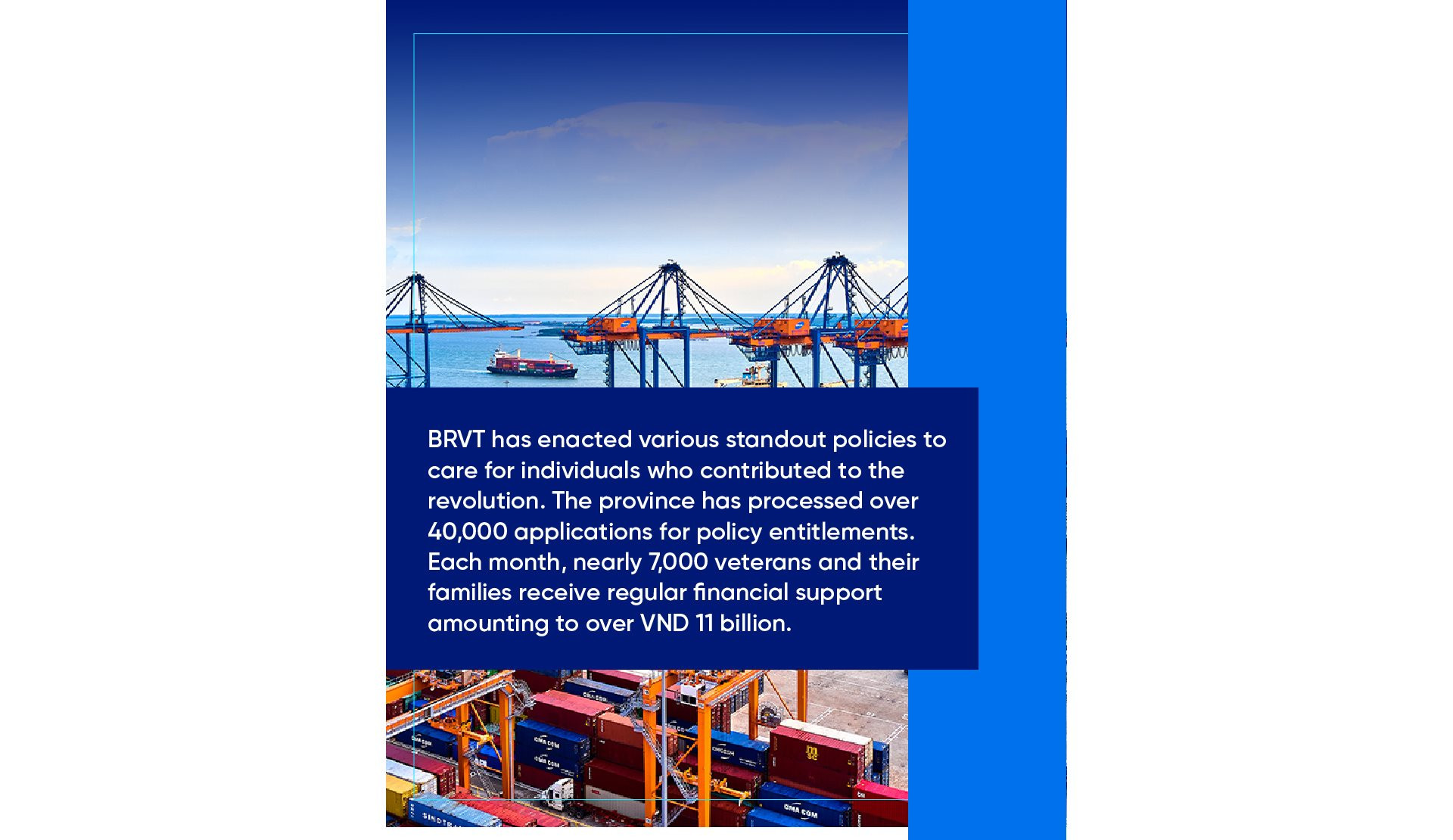
As of now, 99.8% of households of individuals who contributed to the revolution have a living standard that is equal to or higher than the average standard of their residential area. There are no longer any poor households with members who contributed to the revolution under the provincial poverty standard, and the material and spiritual lives of these individuals have significantly improved. BRVT no longer has households classified as poor under the national standard.
In addition to building a modern, citizen-friendly administrative model, the BRVT government regularly organizes community programs, such as cleaning beaches and planting flowers in local areas, fostering a sense of closeness and practical action to develop a green, clean, and beautiful locality. Vung Tau City, in particular, is now regarded as one of the most livable cities in Vietnam, thanks to its modern infrastructure, excellent welfare policies, and a stable, thriving quality of life for its citizens.