
From demonstration videos to real shifts
Warehousing is emerging as one of the earliest commercial proving grounds for humanoids. The reasons are practical: repetitive workflows, measurable KPIs, persistent labor pressure and infrastructure already designed around human reach, aisle widths and workstation heights. A mobile manipulator with legs and arms can potentially use that environment without requiring a complete facility redesign.
The most closely watched example is Agility Robotics’ Digit at a GXO facility in Flowery Branch, Georgia. Since 2024, GXO has deployed Digit commercially under a Robots-as-a-Service model. The workflow is deliberately narrow: autonomous mobile robots deliver totes to Digit, which unloads and transfers them onto a conveyor for the next fulfillment step. By 2026, Agility reported that Digit had moved more than 100,000 totes at the site, maintaining about 98% accuracy while on task.
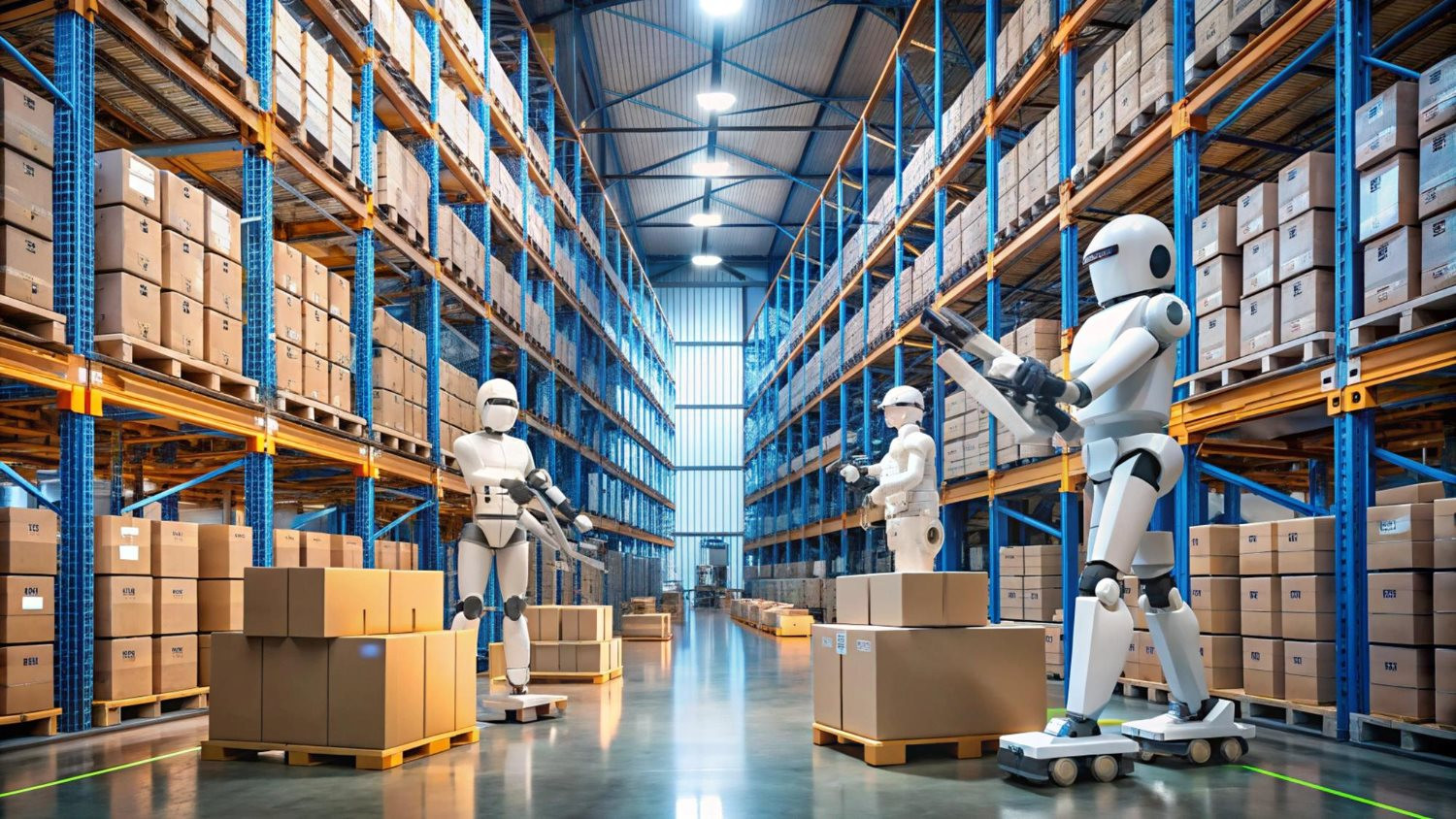
The importance of that milestone is less about the absolute number than about repetition in live operations. A robot must perform thousands of cycles amid real floor conditions, system interactions and operational variation rather than complete a choreographed demo once. Agility says the previous Digit generation has accumulated more than 65,000 hours of operation across customer deployments in North America. In February 2026, Toyota Motor Manufacturing Canada signed a commercial agreement after a pilot, another sign that the market is beginning to test the path from experimentation to operational contracts.
GXO itself is not betting on one humanoid platform. It has worked with Agility, Reflex Robotics and Apptronik, using live warehouses as an “operational incubator” to evaluate battery life, load capacity, floor stability, dexterity and integration. That approach is revealing: humanoids are not yet a default automation category. They are a new layer of physical AI that must earn a place workflow by workflow.
Humanoids will not replace AMRs - they may bridge the gaps
Modern warehouses already have mature automation options: conveyors, AS/RS, robotic arms, autonomous mobile robots, AGVs, shuttle systems and goods-to-person solutions. The relevant question is therefore not whether humanoids will replace all of them. It is which tasks humanoids can perform economically where existing systems remain inflexible or expensive to reconfigure.
AMRs excel at transporting goods over distance. Robot arms dominate fast, repetitive manipulation at fixed stations. High-density storage systems are difficult to beat for space efficiency. Humanoids offer a different proposition: mobility plus manipulation in human-designed spaces. They may walk to a workstation, reach human-height interfaces, grasp a tote and transfer material between separate automation systems. If reliable, that makes them a flexible connector rather than a replacement for every specialist machine.
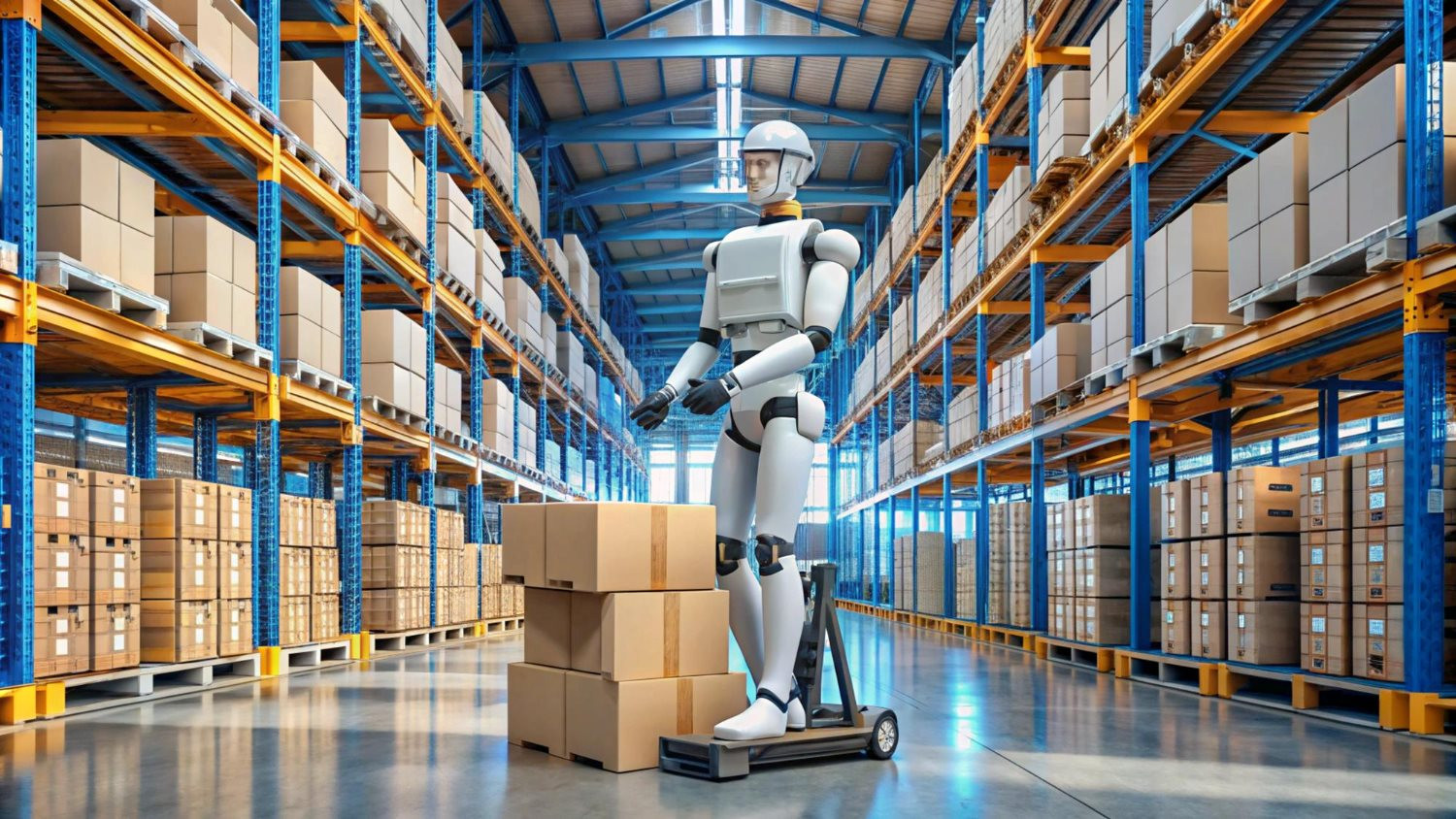
Gartner lists physical AI among its major supply chain technology trends for 2026. Physical AI combines AI models, sensors, robotics and automation so systems can sense, reason and act in the physical world. Yet a humanoid becomes useful only when it connects to warehouse management and execution systems, conveyors, AMRs and safety controls. A stand-alone humanoid that cannot exchange data or coordinate work would simply create another automation silo.
This also explains the appeal of Robots-as-a-Service. Instead of purchasing a rapidly evolving machine outright, an operator can buy a service that includes robot capacity, software, maintenance and operational support. The model transfers part of the technology risk to the provider and makes uptime, throughput and service performance more central to the commercial relationship than the novelty of the hardware.
Humanoids create value only when they occupy the right gap between human labor and purpose-built automation. Today’s strongest use cases tend to share three features: the work is repetitive and physically demanding; the environment was originally designed for people; and the task requires both mobility and manipulation. If an AMR, conveyor or fixed robot arm already performs the job faster and cheaper, choosing a humanoid simply because it is new is unlikely to produce a convincing return.
ROI and safety will decide whether humanoids scale
On September 15, 2026, Agility unveiled Digit 5, a new generation designed around “cooperative safety” - the goal of operating near people without the physical barriers used in many earlier deployments. The company lists a payload of roughly 23 kilograms, a 10:1 run-to-charge ratio and a design target of more than 20 working hours in a 24-hour period. Agility also reported more than USD 300 million in multi-year orders subject to contractual milestones, with early access expected in the first half of 2027.
Yet the announcement highlights the biggest constraint to scale: safety. Earlier Digit deployments generally operate inside controlled workcells, while the fenceless safety features planned for Digit 5 are still being completed ahead of broader commercial availability. Standards are evolving as well. ISO 25785-1 is under development for actively stable mobile robots, while U.S. industrial mobile robot standards such as the R15.08 series continue to expand guidance for safe use across the machinery lifecycle.
McKinsey describes four bridges that humanoids must cross to move from pilots to scale: fenceless safety, sustained uptime, improved dexterity and mobility, and major cost reduction. These are also the foundations of real ROI. A robot may lift a useful payload, but if it stops frequently, requires constant engineering supervision or remains limited to one narrow task, a conventional automation solution may still be economically superior.
For logistics operators in Vietnam, the sensible lesson is not to buy humanoids as early as possible. It is to identify measurable pain points: hard-to-staff night shifts, repetitive lifting, high-turnover positions, or a handoff between an AMR and a conveyor that still requires manual labor. A pilot should begin with predefined KPIs: cycles per hour, uptime, task errors, intervention time, near misses, integration cost and cost per unit of work.
Humanoid deployment should also be treated as an operating-model project, not merely a technology purchase. Operations, occupational safety, IT, HR and finance all need a role. Once a robot moves through human workspaces, the key questions expand beyond whether it can perform a task. Workers must understand how to interact with it, systems must know when to stop it, and the organization must have clear responsibility for exceptions and failures.
Humanoids have entered the warehouse, but they have not entered an era of mass worker replacement. The strongest deployments remain structured, repetitive and measurable tasks where robots can take on physically demanding or difficult-to-staff work while coordinating with existing automation.
The real value of the humanoid form is therefore not resemblance to a person. It is the possibility of adapting to infrastructure built for people while still meeting industrial requirements for safety, reliability and cost. If those three conditions converge, warehouses may not need to be rebuilt for robots; robots may instead learn to fit into the workflows warehouses already have.