
From labor-cost advantage to capability advantage
The International Federation of Robotics says the world installed about 542,000 industrial robots in 2024, the fourth straight year above the half-million mark. China alone accounted for 295,000 new installations, or 54% of the global total, and now operates roughly 2 million robots in factories. That means manufacturing competition is shifting rapidly away from wages and toward operating data, quality stability, and the speed with which production lines can be redesigned.
Measured by robot density, South Korea leads the world with 1,220 robots per 10,000 manufacturing workers; Singapore stands at 818; Germany at 449; and the United States at 295. China does not lead on density, but it dominates in absolute installations and total stock. That matters because a large installed base generates vast volumes of physical-world data — force, friction, error patterns, cycle times and maintenance behavior — that can feed the next generation of intelligent robotics.
In that context, Vietnam is still at the starting line. IFR has not published an independent robot-density figure for Vietnam, including for electronics. Yet that is not a permanent disadvantage. It means the policy window is still open, provided Vietnam moves quickly from a low-cost labor model to a capability model built on system integration, technician depth, production data and logistics support for high-speed manufacturing.
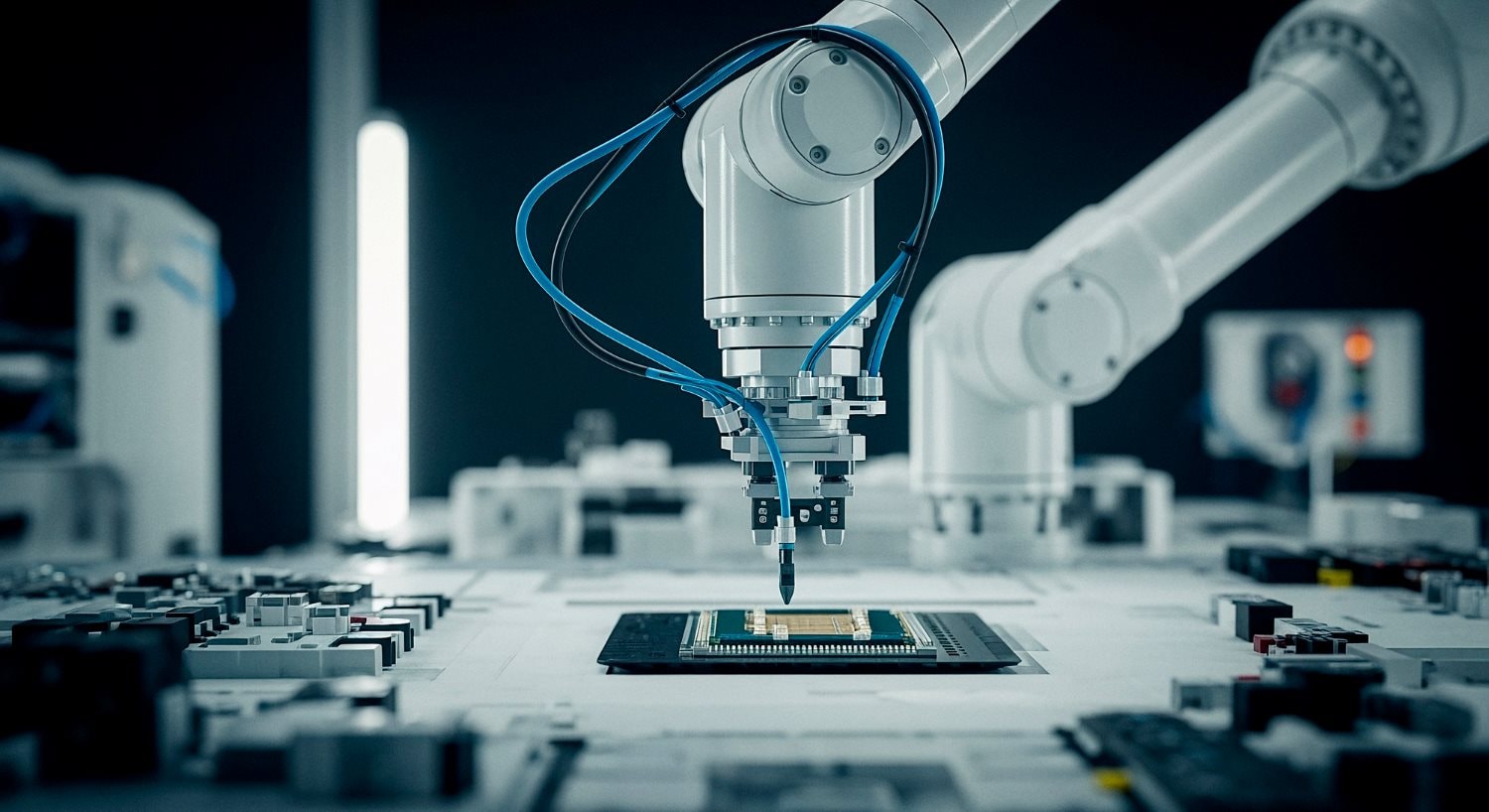
First, robotics is steadily eroding the traditional advantage of low-cost labor. Second, global buyers are raising expectations on quality, data visibility and traceability. Third, the largest value does not lie in buying robots, but in integrating and optimizing them inside real supply chains. Those three signals suggest Vietnam has little time left to hesitate.
Every robot is a supply-chain event
A common mistake is to treat robotics as an internal factory decision. In reality, every robot installation is a supply-chain event. When a line can run 24/7, manufacturing lead times shrink. When machine-based inspection replaces manual inspection, the acceptable defect threshold changes. When operating data is captured in real time, global buyers demand deeper system integration from suppliers.
Those effects spread across the chain. Raw-material suppliers must deliver faster. Intermediate warehouses must become more flexible. Logistics providers must offer higher precision and better traceability. A Vietnamese company that automates too slowly may keep today’s orders, but lose its place on tomorrow’s preferred supplier list when global customers tighten operating standards.
This is also where the logic of nearshoring changes. In the past, manufacturers often moved capacity to Southeast Asia for cheaper labor. But as robots replace routine labor in food, textiles and electronics assembly, the new question is no longer simply where production is cheaper. It is where production is closer to the market, less exposed to geopolitical risk, and embedded in a more reliable manufacturing-logistics ecosystem.
Vietnam’s real opportunity lies in system integration
The wave of electronics FDI into Vietnam has brought some of the world’s most advanced robotic production lines into the country. Facilities run by Samsung, LG, Foxconn and other investors are already operating technologies that Vietnamese engineers can observe, learn from and gradually master at the integration level. This is the path previously taken by Japan, South Korea and Taiwan: not necessarily leading first in invention, but advancing by integrating imported technologies better into local production conditions.
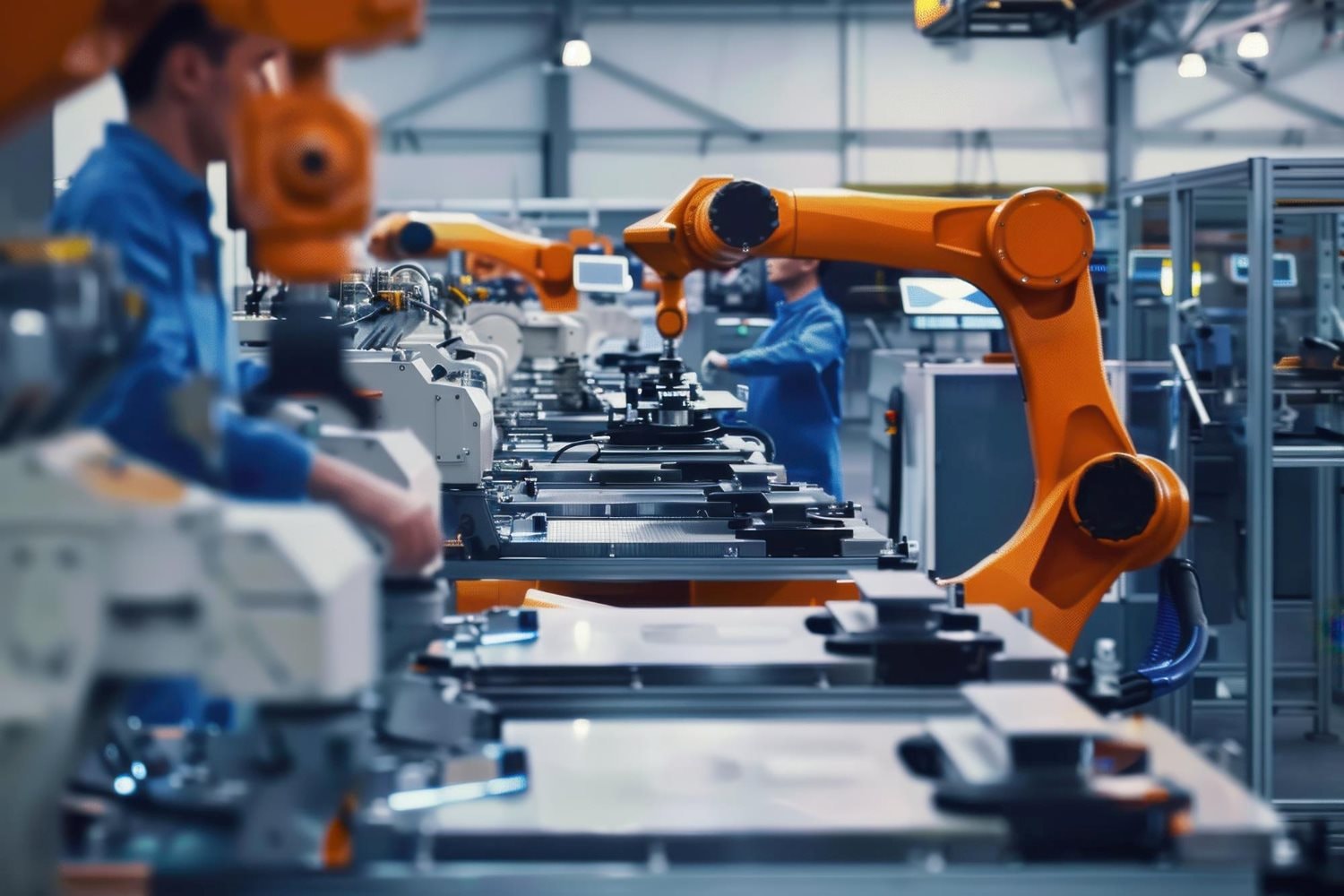
That is why Vietnam’s practical opportunity is not to compete immediately with China in building complete robot systems. The more realistic opportunity is to build a strong layer of system integrators: firms and teams capable of connecting imported robots with MES, WMS, quality-control systems, predictive maintenance and plant-level data platforms. If Vietnam succeeds here, local companies will not merely operate robots more efficiently; they will also create higher-value industrial services.
This is the market link that remains underdeveloped. In processed food, textiles, cold-chain warehousing, high-tech agriculture and domestic logistics, robots are starting to appear, but local integration services are still thin. If Vietnam moves too slowly, foreign hardware suppliers will bring along their own software, maintenance and advisory ecosystems, creating a long-term form of technological lock-in.
Not every estimate should be presented as an official statistic. IFR has not published an independent robot-density figure for Vietnam. Forecasts on humanoid robots or the spread of lights-out manufacturing should be clearly labeled as projections. In serious journalism, the line between audited data and forward-looking estimates must remain explicit.
2026 must be a year of decisions, not experiments
The immediate challenge is not to chase every trend, and certainly not to pour money into humanoid robots simply because they attract headlines. Even within research and industry circles, humanoids are still seen as a fast-moving segment, but not yet the main commercial answer for most factories in the next few years. By contrast, industrial robots, cobots, machine vision and AMRs in warehousing already offer clearer investment cases.
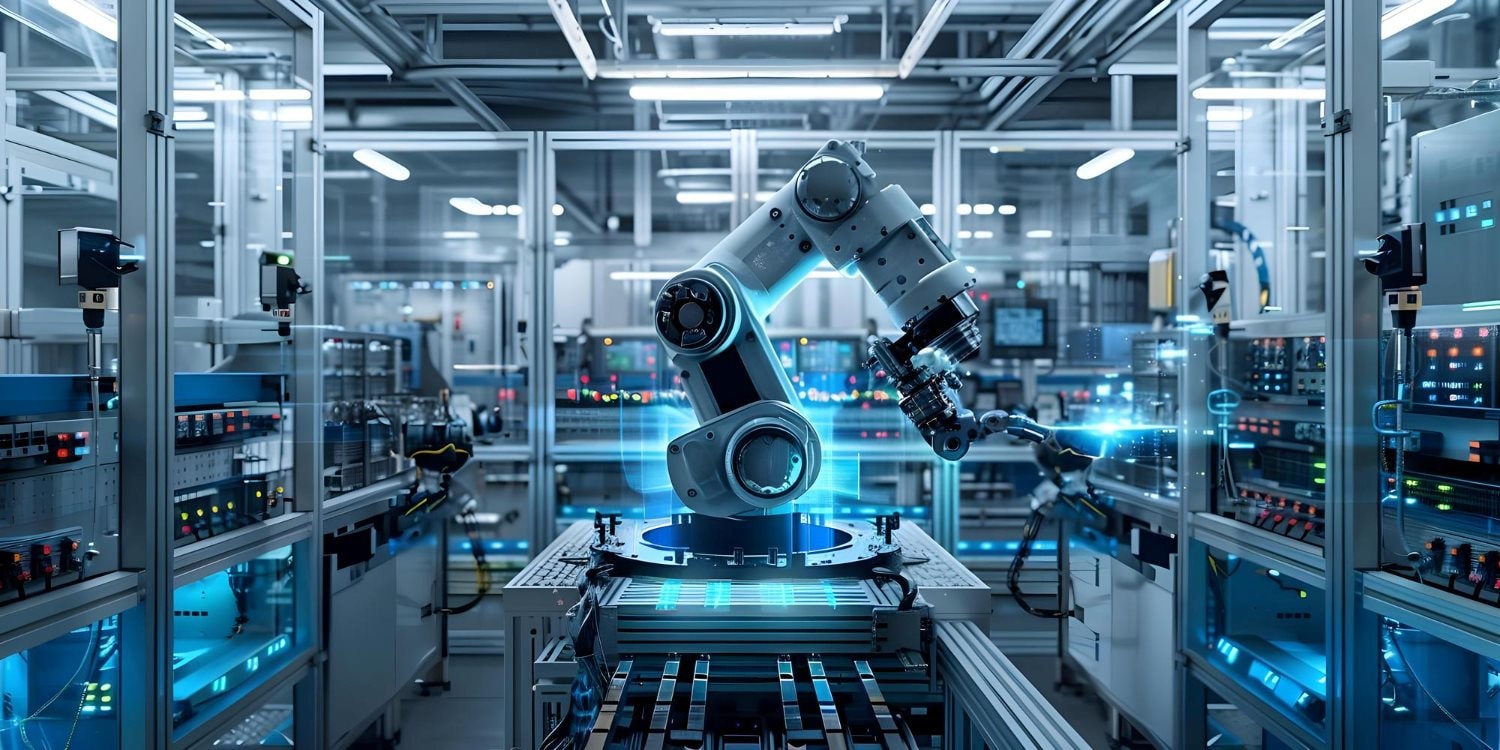
That is why the smart decision for Vietnamese businesses and policymakers in 2026 is to set the right order of priorities. First, deploy robots in repetitive, hazardous or bottleneck tasks. Second, invest in people before overinvesting in hardware: automation engineers, operators, production-data specialists and system integrators. Third, diversify suppliers and technology standards to avoid long-term dependence on a single ecosystem.
At the policy level, the question is broader: what kind of FDI does Vietnam want in the next industrial phase? If “lights-out” facilities are built without skills transfer, without local supplier development and without links to vocational training, the spillover into the domestic economy will remain limited. But if investment agreements are tied to workforce development and to the emergence of local integrators, automation can become a lever for industrial upgrading rather than a simple labor-replacement story.
The most important issue today is not whether Vietnam will buy more robots. It is what role Vietnam wants to play when automation accelerates. An economy that merely operates other people’s robots may preserve some output, but not necessarily higher-value capability. An economy that learns to integrate, optimize and train for automation — while linking it to logistics, data and supply-chain management — has a chance to move higher. In that sense, the lights-out factory is not only a technology story. It is a test of Vietnam’s industrial vision in 2026.
--------------------------
Reference notes:
- International Federation of Robotics (IFR), World Robotics 2025 and robot-density releases published in 2025–2026.
CSIS ChinaPower analysis on Chinese industrial-robot subsidies and ecosystem dynamics, February 2026. - World Economic Forum, Davos 2026 materials on scaling AI and value creation.
.png "From production capacity to market positioning: WEPACK 2026 as Vietnam packaging's moment to move beyond contract manufacturing")

.png "More than a trade show visit: a WEPACK 2026 program designed for Vietnamese businesses to see better, meet better, and decide better")