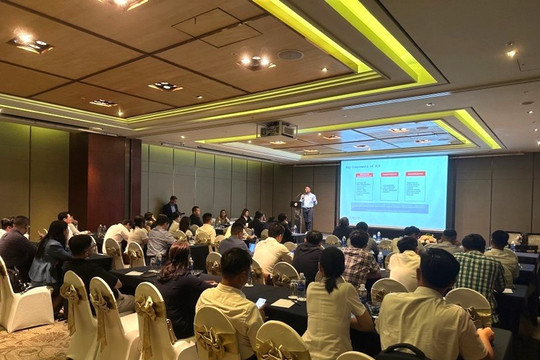
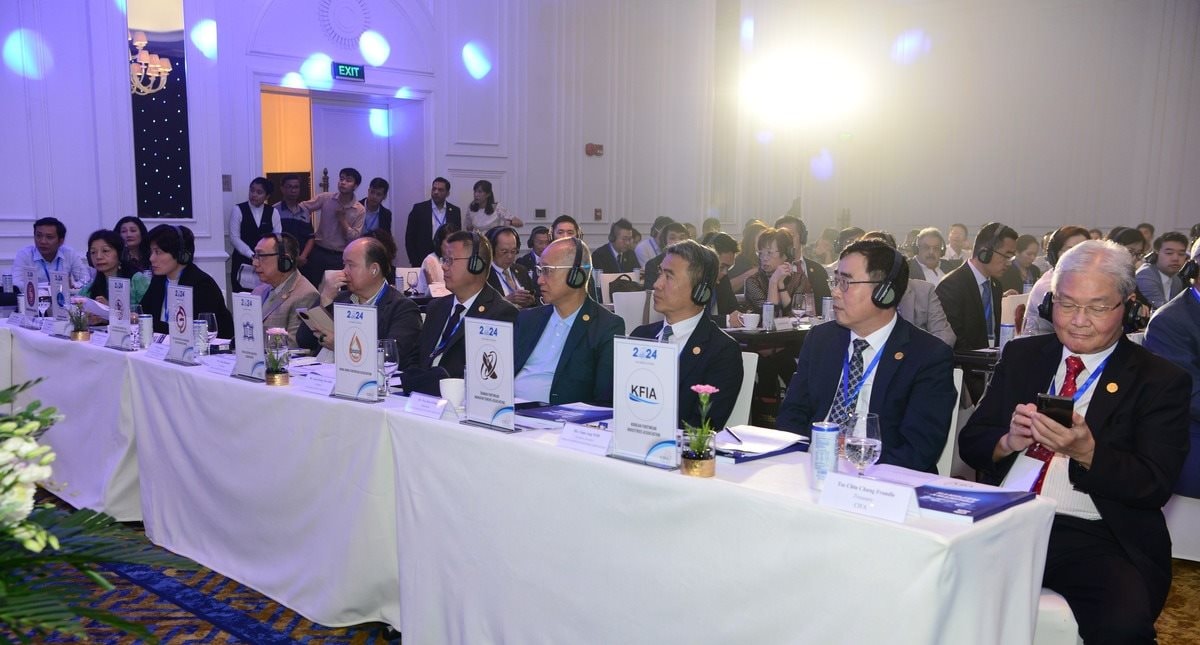
At this conference, leaders from associations of 17 CIFA member countries and nearly 200 manufacturing and exporting enterprises, members of LEFASO, and other countries presented and discussed issues related to investment, production, and the import-export market of this sector.
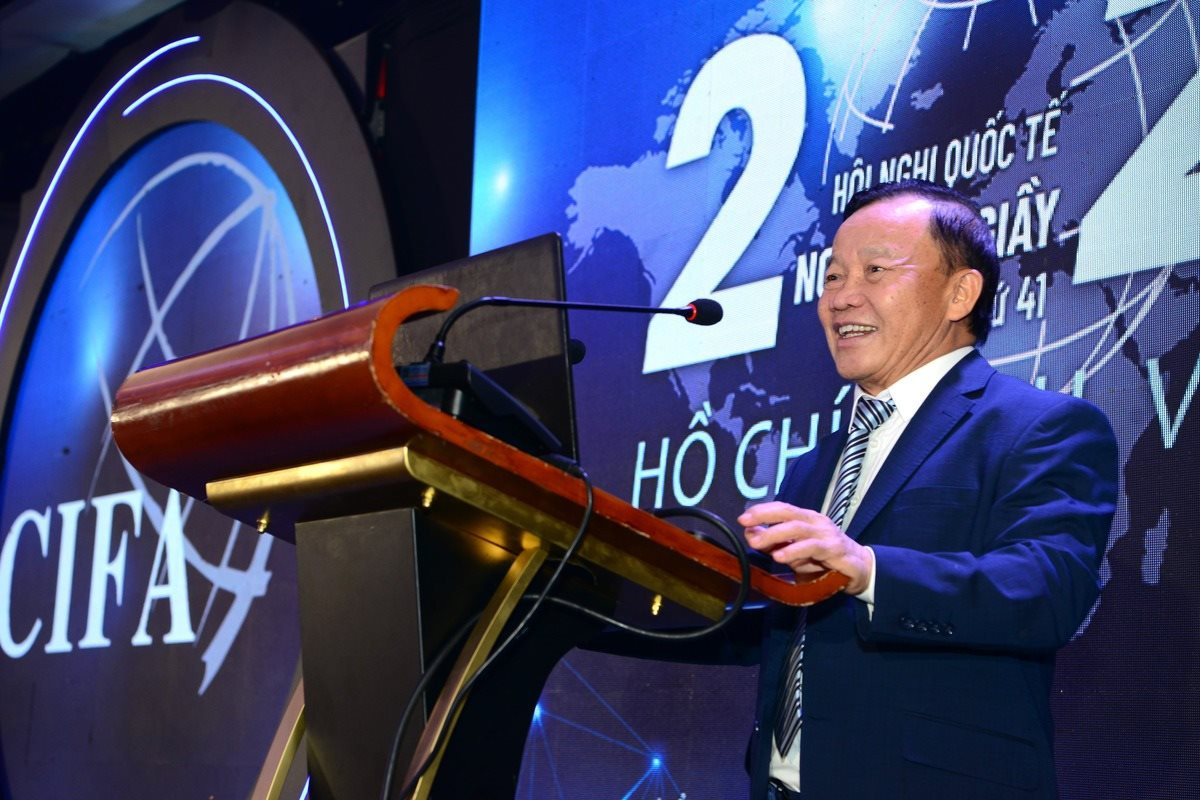
Mr. Nguyen Duc Thuan, Chairman of the Vietnam Leather, Footwear, and Handbag Association (LEFASO) and current Chairman of CIFA for 2024, stated that the global footwear supply chain is currently facing many challenges, greatly affected by the pandemic, geopolitical conflicts, trade wars between major countries, and differing policies among nations regarding the leather and footwear manufacturing-exporting sector.
Mr. Nguyen Duc Thuan believes these challenges have altered the structures and business methods of the global footwear industry. Thus, he called on the leaders of footwear associations and businesses in CIFA and worldwide to enhance cooperation and establish timely and effective connections to stabilize the supply chain towards sustainable development in line with global economic trends.
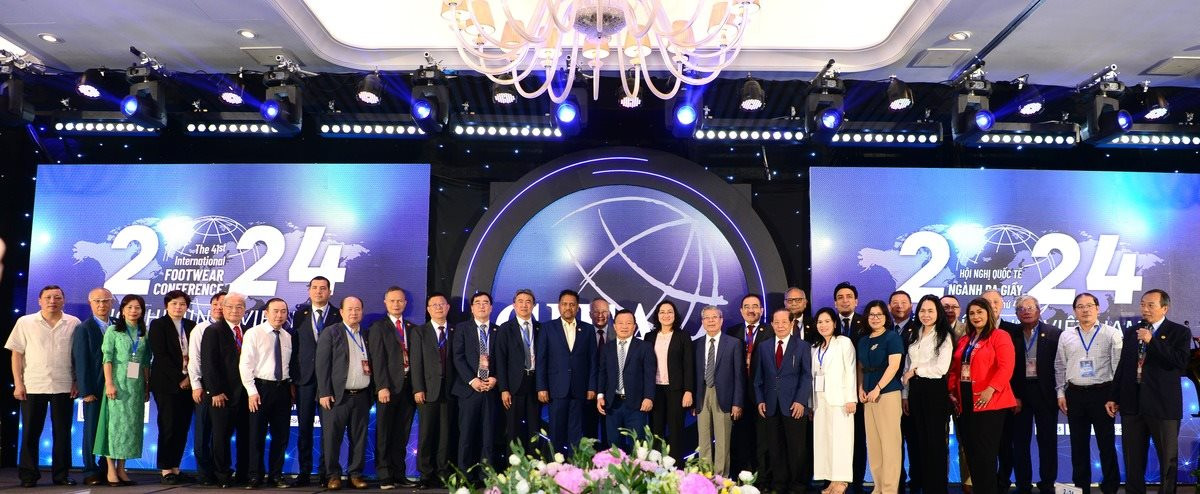

At the 41st CIFA Conference in 2024, CIFA/LEFASO Chairman and Chairman of TBS GROUP, Nguyen Duc Thuan, also proposed that the global fashion footwear industry should boldly adapt to keep up with consumer trends and preferences worldwide. This entails changes in research and development in design, materials, investment in technology application, distribution methods, and channels focusing on quality, aesthetics, cost reduction, and CO2 emission reduction to serve end consumers better.
Mr. Nguyen Duc Thuan also expressed interest and requested that leaders and speakers from participating countries share issues related to investment laws, specific policies regarding production and export activities, labor resources, wages, taxes, logistics, etc., so that everyone has information and understands the similarities and differences between countries in the leather and footwear manufacturing industry. This can create an investment cooperation environment between countries in this field.

Deputy Minister of Industry and Trade Phan Thi Thang, attending the conference, warmly welcomed the leaders of international associations and businesses to Vietnam - Ho Chi Minh City for the 41st CIFA Conference.
She affirmed that the Government and the Ministry of Industry and Trade of Vietnam highly value the role of the leather, footwear, handbag, and textile industries in Vietnam's economy. According to Decision No. 1643/QĐ-TTg of the Prime Minister, which concretizes the development strategy for Vietnam's footwear industry until 2030 with a vision to 2035, footwear is identified as a key national export sector with quality products that are competitive in the global market, meeting domestic market demands, and maintaining the second position in the world.
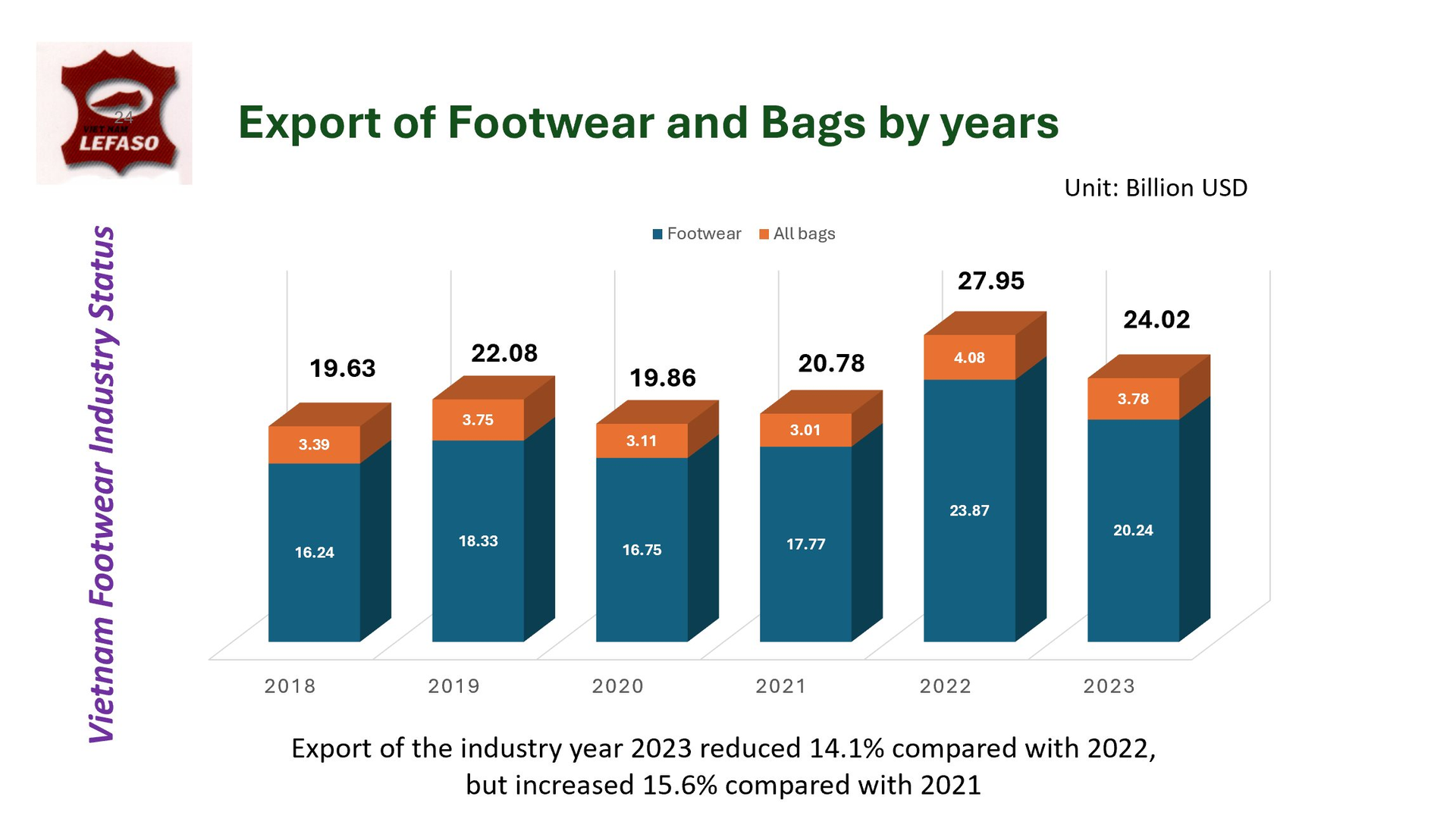
Moreover, Deputy Minister Phan Thi Thang also stated that the Government and the Ministry of Industry and Trade aim for total footwear and handbag export turnover to reach $38 - 40 billion by 2030, and by 2035, the industry will develop efficiently and sustainably according to the circular economy model, complete the domestic production value chain, effectively participate in the global value chain, and develop some regional and global brands.
Mr. Allen Lai, Secretary General of CIFA, highly appreciated the organization, content, and invited participants of the 41st CIFA Conference, hosted by LEFASO - Vietnam. He mentioned that not only Vietnam but many other countries are also facing significant challenges due to both objective and subjective factors in the industry. He acknowledged that the global footwear supply chain has been turbulent recently, highlighting issues such as labor resources, high production and logistics costs, scarcity of materials, and tariff issues in import-export markets, as well as digital transformation and investment in technological innovation and production processes.
At the conference, Mr. Allen Lai also called on industry leaders to unite and be determined to innovate to overcome challenges and keep pace with trends and consumer demands in the fashion footwear industry."
The Ministry of Industry and Trade leaders also suggested that LEFASO and member enterprises invest in building research and development centers for materials, design - learning from the models of China and other advanced countries - to aim for sustainable development in Vietnam's leather and footwear industry following the spirit of Decision No. 1643/QĐ-TTg of the Prime Minister.
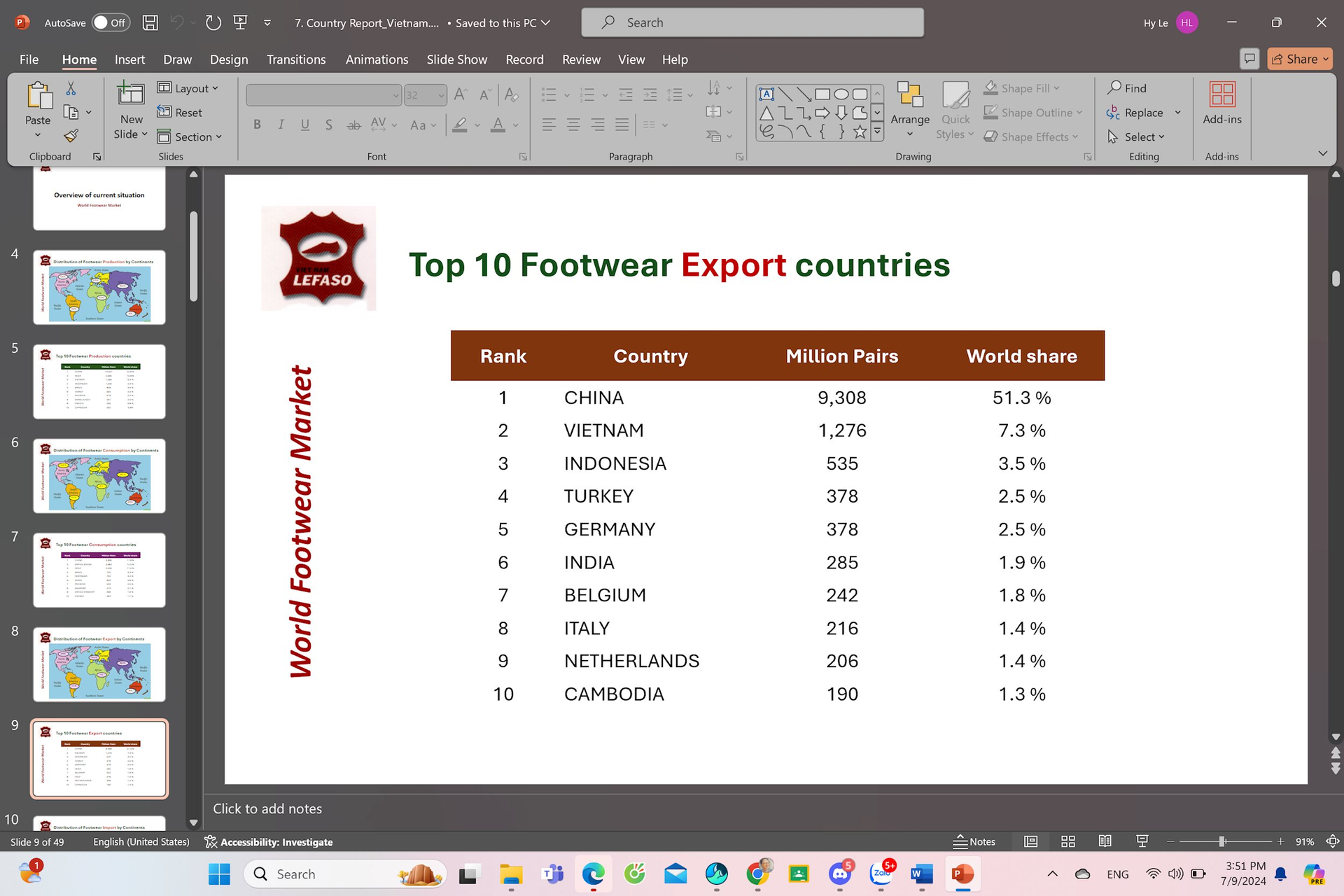
Top 10 footwear producing countries
|
Rank |
Country |
Million pairs |
World market share |
|
1 |
China |
13,047 |
54.6% |
|
2 |
India |
2,600 |
10.9% |
|
3 |
Vietnam |
1,300 |
5.4% |
|
4 |
Indonesia |
1,026 |
4.3% |
|
5 |
Brazil |
849 |
3.5% |
|
6 |
Turkey |
582 |
2.4% |
|
7 |
Pakistan |
519 |
2.2% |
|
8 |
Bangladesh |
467 |
2.0% |
|
9 |
Mexico |
205 |
0.9% |
|
10 |
Cambodia |
202 |
0.8% |
|
Source:LEFASO |
Commenting on the development opportunities for Vietnam's leather, footwear, and handbag industry, LEFASO leaders believe that the role and development potential of this industry remain substantial. Firstly, Vietnam is still considered a safe investment destination with many geopolitical advantages in the eyes of international investors. Secondly, Vietnam has many free trade agreements, accounting for over 60% of global trade volume. Thirdly, Vietnam benefits from restructuring many major global supply chains. And, Vietnam is facing the opportunity to welcome the fourth wave of FDI, focusing on high-tech fields such as electronics, semiconductors, artificial intelligence, and renewable energy.
Vietnam footwear and handbag export forecast for 2024
|
Scenario |
Export turnover |
Increase/Decrease (%) |
|
Optimistic |
$27 billion |
+ 10% |
|
Average |
$25.6 billion |
+ 6% |
|
Source: LEFASO |