
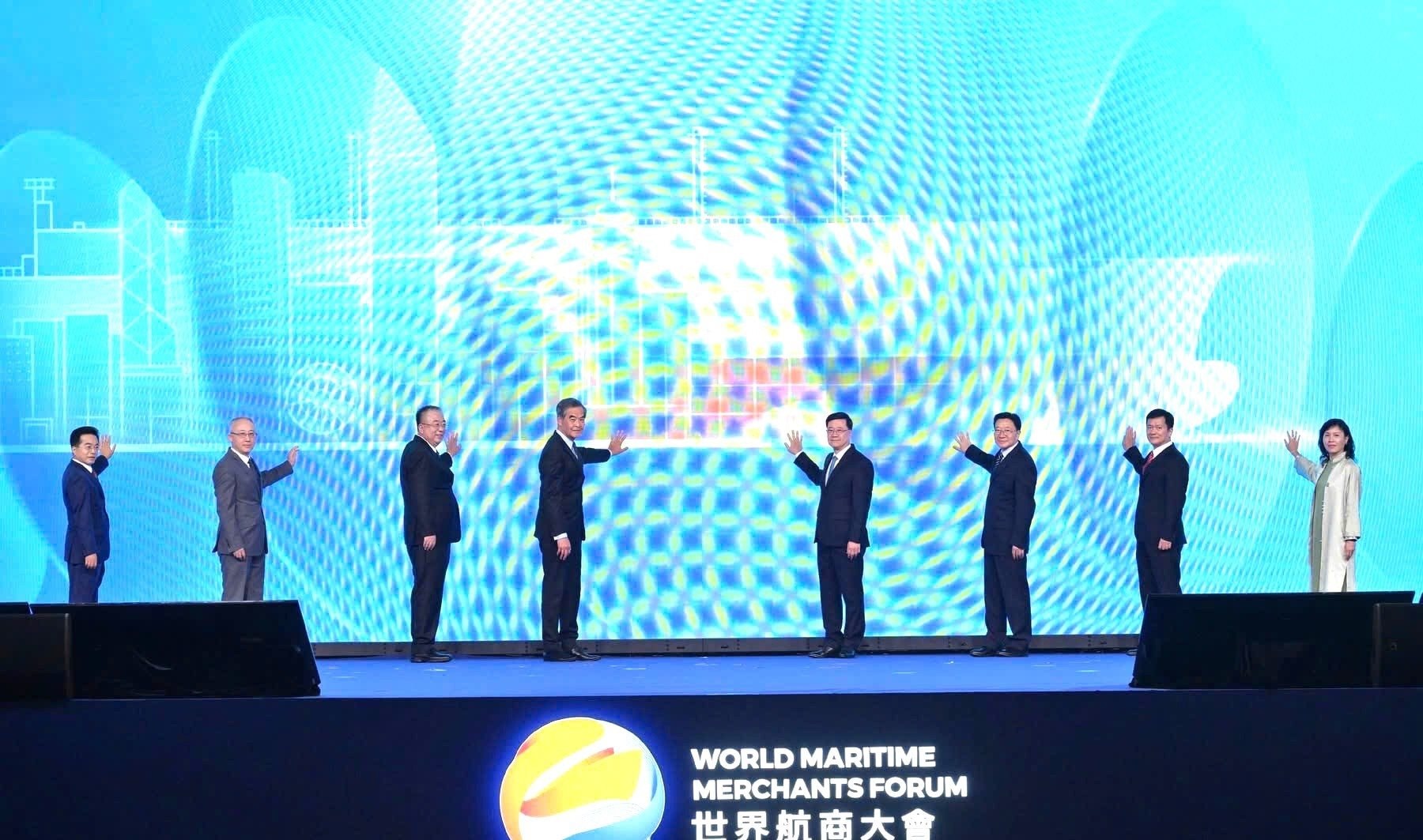
The event brought together more than 80 speakers, including government officials, business leaders and international experts, focusing on major global supply chain trends from market diversification and the low-altitude economy to the green transition.
Hong Kong strengthens its position as a logistics hub and “super connector”
ALMAC 2025 is co-organized by the Government of the Hong Kong Special Administrative Region (HKSAR) and the Hong Kong Trade Development Council (HKTDC), closely aligned with the 15th Five-Year Plan’s orientation to reinforce Hong Kong’s position as an international maritime centre, as well as new policy directions in the latest Policy Address to advance the city’s maritime, aviation and logistics sectors.
In his keynote address at the opening session, Chief Executive John Lee stressed that the theme “Collaboration and Growth” is a substantive response to geopolitical tensions, trade fragmentation and disruptions in route planning, fleet deployment and inventory management. According to him, risks can be offset by market diversification strategies and by leveraging technology to enhance supply chain efficiency.
In parallel, Hong Kong has recently established “Partner Port” relationships with ports in Guangxi and Dalian (China) and the Port of San Antonio (Chile). These strategic port linkages reinforce Hong Kong’s role as a key transshipment point connecting Mainland China with the world, while underscoring its commitment to an open, rules-based international trading order.
From an organizational perspective, ALMAC continues to act as a vital connector by maintaining business-matching sessions between cargo owners and logistics service providers, expanding cross-regional cooperation opportunities for small and medium-sized enterprises (SMEs). This year’s exhibition area features more than 90 exhibitors showcasing logistics solutions, supply chain management services, maritime and port services, aviation, technology and innovative service models.
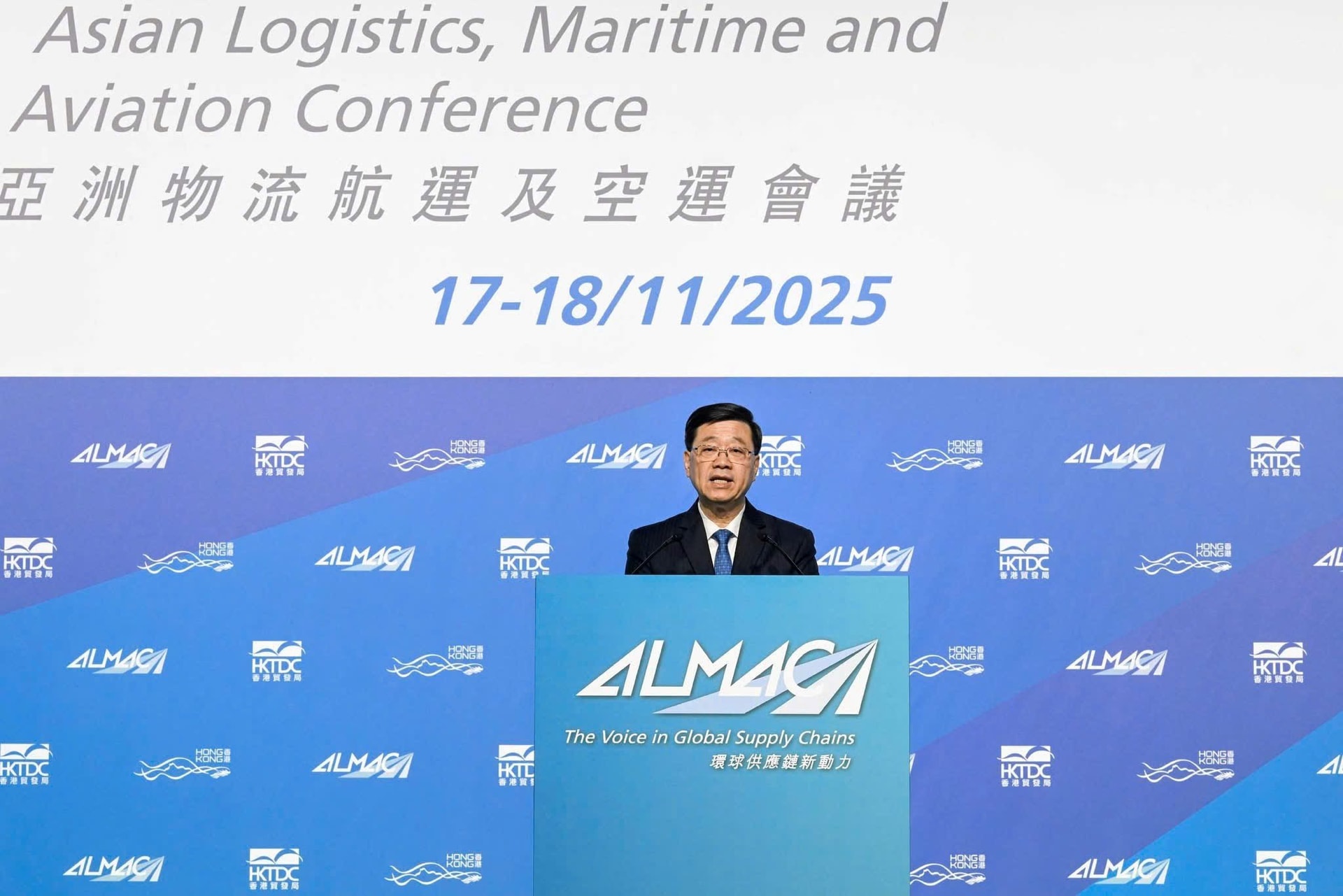
“The world is experiencing profound shifts in geopolitics and trade policy, which in turn create serious challenges for route planning, fleet deployment, warehousing and inventory management. Yet wherever there are challenges, there are also opportunities. Market diversification strategies, combined with the strong adoption of digital and smart technologies in logistics, will enable Hong Kong and its partners to build more agile and efficient supply chains, ready for a new phase of growth.” -
Diversifying supply chains: from the Middle East to Central Asia
According to Ms. Sophia Chong, Executive Director of HKTDC, global trade and supply chain networks are undergoing a “deep restructuring.” Businesses are forced to adapt flexibly to constantly changing trade policies while facing an accelerating wave of digitalization and increasingly stringent sustainability commitments. In this landscape, Hong Kong—positioned as a hub for aviation, maritime transport, logistics and supply chain management—is standing at the forefront of this transformation.
ALMAC 2025 focuses on three major themes: supply chain diversification, green and sustainable energy, and innovation and technology. The session “Insights into a New Era of Global Trade: Driving Business Growth” featuring leaders from SEKO Logistics, GEODIS, Mattel and others discussed the implications of economic fragmentation, evolving trade policy and how enterprises are restructuring their supply chain strategies to sustain growth.
For the first time, dedicated sessions on the Middle East and Central Asia were organized as a core content pillar. The “Tapping the Middle East: Logistics, Innovation & Trade Potentials” session brought together representatives from Etihad Airways, DP World Logistics and the Qatar Free Zones Authority to analyze logistics potential, investment models and innovation in the region. In parallel, the “Central Asia Session” focused on trade policies, multimodal transport corridors and economic corridor connectivity in Kazakhstan and neighbouring Central Asian countries, with contributions from organizations such as QazTrade, the OECD and PTC.
These discussions help businesses clearly identify emerging “hotspots” in new markets where gateway logistics hubs are rising along Asia–Europe economic corridors, major transshipment air routes and strategic deep-sea ports. For Asian enterprises, this is an opportunity to spread supply chain risk while seeking investment and service-linkage partners on new corridors that run alongside traditional trade lanes.
Low-altitude economy, smart ports and the race toward green logistics
A standout feature of ALMAC 2025 is the debut of the Low-altitude Economy Zone in the exhibition area, with the participation of companies from the Regulatory Sandbox programme such as SF Express (Hong Kong) and Esri China (Hong Kong). Visitors can directly experience the use of unmanned aerial vehicles (UAVs), cargo drones and “urban air mobility” solutions in urban transport, monitoring and logistics management.
The thematic session “The Engine of Low-altitude Economy: How Cargo Drones Are Revolutionising the Future of Air Logistics” convened leaders from startups and technology companies including MightyFly, Manna, SF Express (Hong Kong), Valqari and Urban-Air Port. Speakers shared the latest advances in cargo drone design, automation, AI-driven logistics systems and the potential integration of these solutions into urban transport networks in the near future.
In the maritime sector, the “Port Community System X LSCM Maritime Summit 2025” concentrated on the future of smart ports and smart trade. The deployment of Port Community Systems (PCS) powered by AI, blockchain and the Internet of Things (IoT) is seen as the key to improving operational efficiency, increasing data transparency and enhancing supply chain visibility from port to hinterland. Through this, Hong Kong further affirms its strengths as an international shipping centre and a hub for smart trade solutions.
A series of workshops on sustainable finance and green energy also took place in parallel. On the first day, “Sustainable Finance: Navigating a Sustainable Future across Logistics, Shipping, and Aviation Industries” examined how ESG is reshaping business models in logistics, shipping and aviation—from investment strategies to financing for emission-reduction projects. Hong Kong aims to become a leading green marine fuel bunkering centre in the region, focusing on green methanol, green ammonia and hydrogen, consistent with its vision of becoming a global green maritime hub.
On 18 November, the “Green Energy Forum: Fuels, Freight, and the Road to Net Zero” further explored roadmaps, opportunities and challenges on the pathway to net-zero emissions, with contributions from Asyad Group, Qair Group, DNV Energy Systems and Kunlun Energy. These discussions help businesses better visualize the “map” of the energy transition for ocean shipping, aviation and logistics in the coming decades.
Beyond high-level strategy, ALMAC also reserved significant space for practical topics such as the Authorized Economic Operator (AEO) Programme, the “Logtech Forum: Stay Ahead in the Next Wave of Supply Chain Innovation,” panels on supply chain management and youth empowerment workshops, with experience sharing from corporations such as HP, Reckitt, DHL Express, Lalamove and Procter & Gamble.

“The world is reshaping its supply chains at unprecedented speed: trade networks are being redirected, digital technologies are accelerating and sustainability standards have become non-negotiable. In this context, Hong Kong enjoys a unique advantage to serve as a ‘super connector’—not only as a strategic transshipment hub, but also as an ecosystem where businesses can find the services, finance and technology they need to build more resilient and greener supply chains, for themselves and for the region.”
From regional forum to the “new map” of global trade
ALMAC 2025 is not only an annual forum for Asia’s logistics, maritime and aviation industries; it is also a “control room” where major trends in global trade and supply chains are updated, analysed and translated into concrete partnership opportunities. From supply chain diversification and opening up the Middle East and Central Asia, to developing the low-altitude economy, smart ports and the green transition in transport, Hong Kong is demonstrating its role as both a “super connector” and a “super value-adder” in the emerging global trade order.
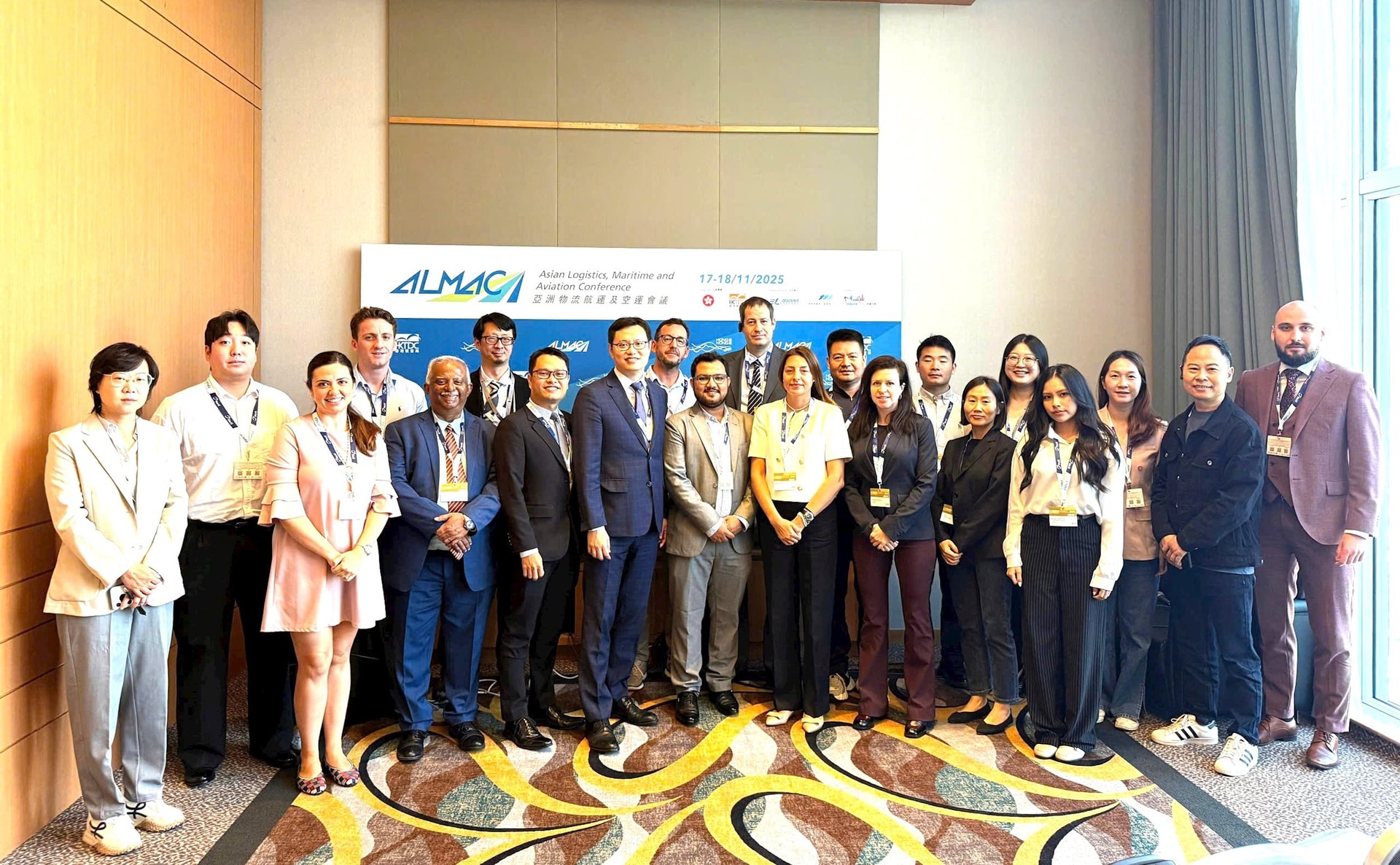
Coinciding with ALMAC, the HKSAR Government has also released the full texts of speeches by the Chief Executive, the Financial Secretary and key maritime leaders on its official portals, underscoring the strategic importance of logistics, maritime and aviation in Hong Kong’s new development phase.
Amid prolonged uncertainty, it is precisely platforms like ALMAC that will help shape the “new map” of global trade—where collaboration, innovation and sustainable development become the common denominator for every critical supply chain decision.


.jpg "Is the Red Sea About to “Reopen”: How a Return to Suez Could Reshape the Market?")
.png "U&I Logistics: Inland Waterways for Agricultural Cargo - Low Cost, High Quality, and Green")

.jpg "Zero-Emission Trucks + AI: a practical road for road freight")