The value of recycling therefore depends first on logistics: collecting the right batteries, classifying them correctly, moving them safely, preserving data and routing each pack to reuse, repurposing or material recovery.
From end-of-life batteries to a secondary mineral supply
The IEA’s Global Critical Minerals Outlook 2026 sees recycling playing a larger role in easing mineral-supply pressure. Under current policies, secondary supply could roughly double its contribution by 2040, while average recycling rates across key energy minerals could rise from around 10% today to close to 20%. Lithium and nickel remain early-stage but are expected to expand rapidly.
Batteries are an important urban mine because they concentrate lithium, nickel, cobalt, copper, aluminium and graphite. Yet recycling capacity is also concentrated: the IEA estimates China holds more than three-quarters of global pre-treatment capacity and about 90% of material-recovery capacity. Diversification therefore requires both plants and reliable feedstock collection.
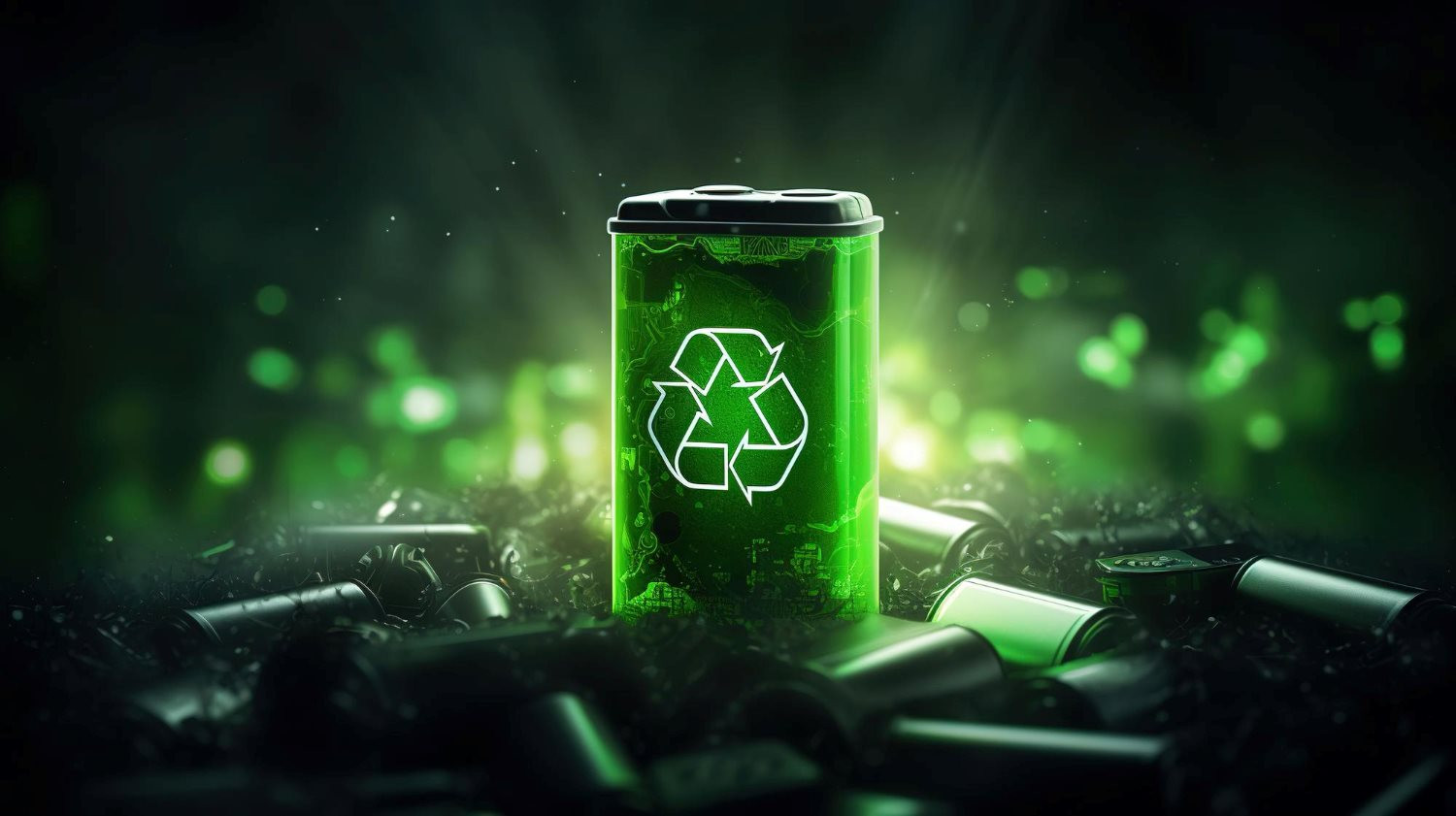
Not every battery removed from a vehicle should immediately enter material recovery. Packs with sufficient state of health may be repaired, remanufactured or repurposed for stationary storage. More degraded packs become recycling feedstock. Triage must therefore identify chemistry, condition, incident history and second-life potential before routing.
Policy is bringing this second mine into the mainstream. Under the EU Batteries Regulation, recycling efficiency for lithium-based batteries must be at least 65% by average weight from the end of 2025 and 70% by the end of 2030. By the end of 2027, material recovery targets are 90% for cobalt, copper and nickel and 50% for lithium; by 2031 those targets rise to 95% and 80% for lithium.
In September 2026, the European Commission reviewed those recycling and recovery targets and concluded that they remained fit for purpose. That sends a strong market signal: battery recycling is no longer merely an end-of-life waste activity. It is becoming a measured, traceable and increasingly strategic source of materials for future battery manufacturing.
The hardest reverse-logistics problem is that used batteries are not all alike
Battery reverse logistics is more complex than returning packaging because each item can present a different hazard. An intact pack, crash-damaged battery, swollen module, water-exposed pack or item with unknown history cannot automatically follow the same route. Wrong classification at collection can carry thermal-runaway risk through the network.
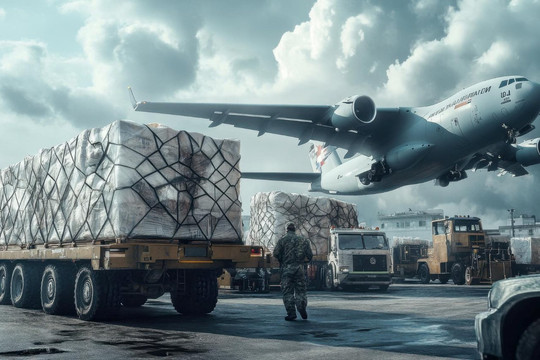
IATA’s 2026 guidance treats lithium and sodium-ion batteries as dangerous goods in air cargo. Batteries damaged or defective in a way that could generate dangerous heat, fire or short circuit are forbidden for air transport. Waste batteries shipped for recycling or disposal also fall under special approval provisions, making compliant road or sea options essential.
Safety starts with packaging. Terminals must be protected from short circuit, cells and modules secured against movement, and outer packaging matched to battery condition. Large packs may require isolation areas, temperature monitoring and emergency-response procedures. A battery that has lost its useful function can still contain enough energy to create serious transport risk.
Data matters as much as packaging. Recyclers need chemistry information, while logistics providers need battery type, weight, state of charge, condition and hazard status. Battery passports, serial numbers, BMS data and repair history can reduce uncertainty and improve second-life routing.
Another challenge is volume imbalance. End-of-life batteries arise across a wide geography, while recycling plants need stable feedstock. Regional consolidation hubs, scheduled milk runs and chemistry-based aggregation can lower logistics cost before batteries move to pre-treatment or material recovery.
A battery “second mine” exists only when reverse logistics connects six steps: collection; identification and state-of-health assessment; chemistry and hazard classification; safe packaging and storage; transport to second life, pre-treatment or recycling; and recording the recovered materials returning to supply. If one step fails, a battery can remain hazardous waste instead of becoming feedstock. Recycling value therefore depends not only on metallurgy, but on routing the right battery to the right process.
EPR is turning battery take-back into a system that must be organized
Vietnam strengthened its framework in 2026 through Decree 110/2026/ND-CP, effective from 25 May 2026, which regulates producer and importer responsibilities for recycling products and packaging. Batteries and accumulators are among the product groups subject to recycling responsibility, requiring companies to organize recycling or use the prescribed financial-support mechanism.
For logistics, the important point is that EPR cannot be fulfilled by year-end reporting alone. Real recycling volumes require collection points, take-back contracts, acceptance criteria, suitable transport, safe temporary storage and qualified recyclers. The new framework also allows collection and pre-treatment for export to overseas recyclers or refurbishers, subject to notification procedures under the Basel Convention.
Ho Chi Minh City has discussed a specialized EV-battery recycling center with planned capacity of around 3,000 tonnes per year. It remains an investment direction rather than an operating facility, but it illustrates the shift from asking where waste batteries will go to designing a collection and recycling ecosystem.
For OEMs and battery producers, an effective model begins with take-back design. Dealers, service centers and fleet depots can serve as collection points; serial and BMS data identify packs; 3PLs perform scheduled pickups to consolidation hubs. At the hub, batteries can be triaged into repair, second life, recycling or quarantine, lowering transport cost and separating abnormal batteries from normal returns.
For recyclers, feedstock quality drives economics. NMC, LFP and other chemistries have different metal values, process routes and recovery economics. Mixed input increases sorting cost and can reduce yield. Logistics therefore needs to become a quality gate for secondary material, not merely a service that moves waste from point A to point B.
Vietnamese 3PLs can build specialized services around battery returns: dangerous-goods packaging, compliant temporary storage, triage support, track-and-trace, Basel and EPR documentation, and transport of black mass or recovered materials. These services require training and compliance capability but offer higher value than conventional reverse logistics.
Most importantly, recycling should connect back to manufacturing. If Vietnam expands battery packs, EVs, BESS and electronics without building material-return flows, end-of-life value may leave the country or become an environmental cost. A circular battery chain gives lithium, nickel, cobalt, copper and graphite a path back into production.
An end-of-life battery becomes a second mine only when it is collected at sufficient scale, moved safely and accompanied by enough data to turn waste into qualified feedstock. Even the best recycling plant cannot recover materials from batteries that never reach the right facility.
The race to recycle batteries is therefore also a race to build reverse logistics. Countries and companies that integrate collection, triage, dangerous-goods transport, traceability and material return into one system will not only reduce waste; they will retain part of the strategic-resource value inside the electric economy.