
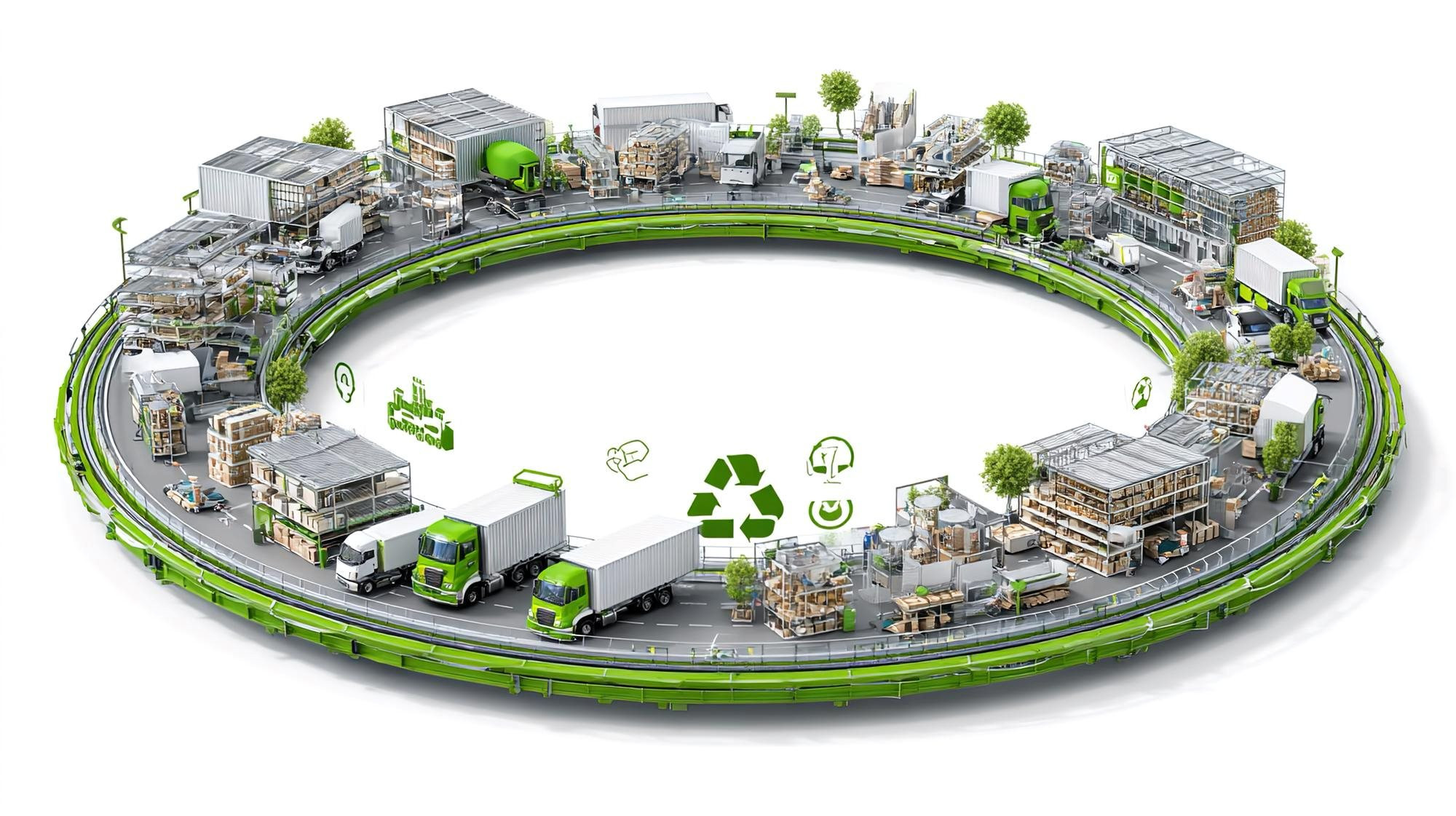
Companies increasingly need more than a service provider; they need an orchestration layer that connects transport, warehousing, inventory, orders, data, risk and multiple partners into one system that can be seen, governed and continuously optimized.
From logistics operator to network architect
Third-party logistics remains closely associated with execution: transport, warehousing, fulfillment, customs brokerage and combinations of similar services. Fourth-party logistics operates at a different layer. Gartner defines a 4PL as a provider that manages the design, build, operation, measurement and orchestration of all or part of an end-to-end logistics network, using internal and/or external providers.
The key difference is therefore not that a 4PL offers more individual services than a 3PL. It is that the 4PL holds an orchestration mandate. It can sit between the shipper and multiple ocean carriers, airlines, trucking companies, warehouses, forwarders and technology vendors, creating a single operating model with shared data, decision rules, KPIs and governance.

In 2026, Gartner lists control-tower operating models, analytics, purchase-order management, performance management, process integration, freight visibility and transport management among the core capabilities of 4PL. DHL describes its Lead Logistics Partner model as data-driven end-to-end orchestration, while Kuehne+Nagel emphasizes integrated technology, real-time insights and global control towers.
Fifth-party logistics extends the network logic further, although the term is not yet standardized consistently across the industry. In common usage, 5PL refers to a more platform-centric model that connects multiple 3PLs, 4PLs, carriers, marketplaces and technology providers, often aggregating demand and capacity across a broader ecosystem. This makes the concept especially relevant to e-commerce, omnichannel and high-volume multi-enterprise networks.
The real value is data, decision rights and orchestration
A company does not become a 4PL simply by adding a dashboard. The critical capability is the authority to intervene in operations. A control tower creates value when it can do more than identify a late shipment; it must be able to change carriers, shift modes, reprioritize inventory, adjust routing or trigger a contingency plan under agreed rules.
This is why supply chain orchestration platforms are becoming a market in their own right. Gartner's July 2026 market overview describes orchestration platforms as building blocks for adaptive and agile supply chains, governing and executing operational decisions to optimize strategic business outcomes. Logistics is therefore evolving from a sequence of transactions into a continuous decision system.
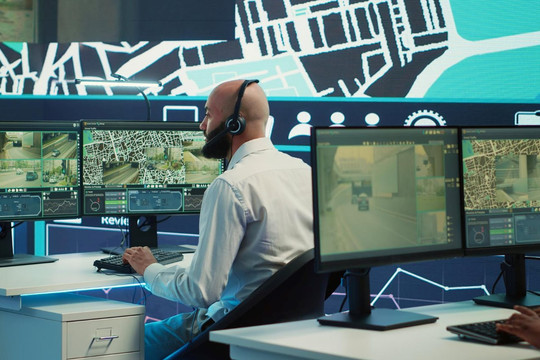
AI is accelerating the transition. DHL says orchestration has become one of the most critical customer capabilities as supply chains grow more interconnected and volatile. Kuehne+Nagel is similarly embedding AI-enabled decision intelligence into 4PL operations, moving from visibility toward predictive insight and proactive management. When systems can detect risk, estimate impact and recommend action, the control tower begins to function more like a decision tower.
Yet greater orchestration creates harder governance questions. Who owns the data? Who is allowed to switch a carrier? Does the algorithm prioritize cost, service or emissions? If AI recommends a route change that conflicts with a customer commitment, who is accountable? Mature 4PL and 5PL models therefore require data governance, access controls, audit trails, cybersecurity and clear exception-management rules.
KPIs must also change. Measuring each provider separately on freight rate or on-time performance can create local optimization. Orchestration requires network-level metrics such as end-to-end OTIF, total landed cost, inventory days, dwell time, forecast accuracy, emissions, exception-resolution time and recovery speed after disruption.
|
4PL and 5PL are not simply new labels for outsourced logistics. A company has truly moved into orchestration only when four capabilities work together: clean and connected end-to-end data; authority to govern multiple providers under common KPIs; a control tower that can make or trigger decisions rather than only display them; and a commercial model that rewards optimization of the whole network instead of individual transactions. Without these foundations, “orchestration” can remain little more than an attractive dashboard. |
Vietnam: Moving toward 4PL and 5PL starts with the foundations
Vietnam's Logistics Services Development Strategy for 2025-2035 explicitly calls for the development of integrated 4PL and 5PL services. The goal is not merely to expand service menus. It is linked to increasing value-added logistics, strengthening digital infrastructure and enabling Vietnamese providers to participate more deeply in regional and global supply chains.
The Ministry of Industry and Trade's March 2026 action plan makes that direction more concrete: support integrated 3PL, 4PL and 5PL models; develop digital platforms, logistics market databases and digital infrastructure maps; and promote AI, big data and automation in logistics management and operations. These are the foundations required for the market to move from fragmented services toward orchestration.

For many Vietnamese providers, the biggest gap is not software. TMS, WMS and visibility tools can be purchased relatively quickly. Becoming a 4PL requires network-design capability, multi-provider procurement, contract governance, analytics, inventory thinking, risk management and, crucially, enough neutrality to optimize for the customer rather than simply protect utilization of one's own assets.
5PL raises the bar further because it is fundamentally platform-driven. A provider aggregating volumes across shippers while connecting marketplaces, warehouses, carriers and last-mile networks must handle APIs, high-volume data, multi-party billing, security, access rights and near-real-time optimization. This is as much a technology and governance challenge as a logistics one.
A practical path for Vietnamese companies is to start with focused verticals such as electronics, textiles, cold chain, e-commerce or multi-market exports. Instead of declaring themselves 5PLs immediately, they can build a control tower for a defined customer segment, standardize data, manage multiple carriers, measure end-to-end KPIs and progressively add procurement, inventory, planning and risk management. Once orchestration capability is deep enough, the label matters less.
4PL and 5PL reflect a fundamental shift in logistics economics: value is no longer concentrated only in who owns the most physical assets, but increasingly in who can connect the largest number of assets, providers and decisions into one coordinated operating network.
In the era of data and AI, logistics advantage will increasingly come from orchestration - seeing the whole chain, making decisions at the right moment and allocating resources across company boundaries. For Vietnam, moving from selling services to orchestrating supply chains is more than a business-model upgrade; it is a route toward the higher-value layers of global supply chains.



.jpg "Dien Bien, Yunnan and Luang Prabang: Expanding Regional Cooperation and Investment Opportunities")