
Expanding the Supply Network, Reducing Reliance on Traditional Sources
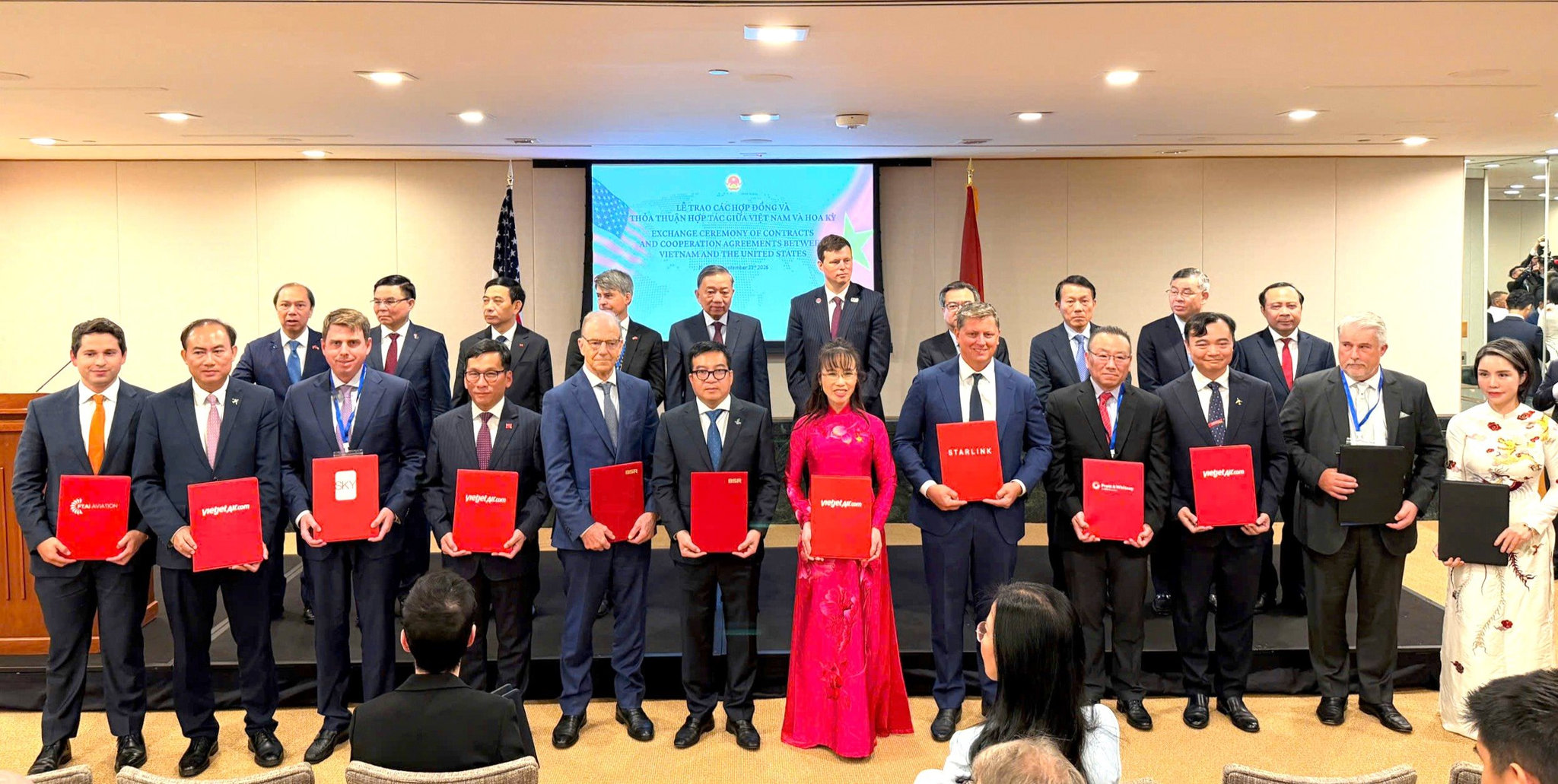
On September 23, 2026, in New York, BSR exchanged a framework crude oil purchase agreement with ExxonMobil Asia Pacific during a high-level roundtable with major US corporations. The event underscored the strategic importance of expanding energy cooperation and securing feedstock for the Dung Quat Oil Refinery.
The agreement comes as BSR accelerates crude-source diversification. Since early 2026, the company has expanded its search and evaluation of US and other international crudes and has also signed crude supply agreements with Chevron. ExxonMobil adds more options in crude grades, delivery timing, commercial terms and shipping arrangements.
This strategy is increasingly important as oil markets face geopolitical tensions, maritime risks and volatile freight costs. Between March and May 2026, BSR purchased around three million barrels of imported crude through various channels, including Qua Iboe, Bu Attifel, Medanito and Palanca Blend. Regional shocks can still affect shipping schedules, insurance and logistics costs.
In 2025, the Dung Quat Oil Refinery processed about 8.28 million tonnes of crude, with imported feedstock accounting for roughly 31%. In 2026, BSR prioritized domestic crude while maintaining imports at around 15%, sourced from West Africa, the Mediterranean and Southeast Asia. The ExxonMobil framework agreement further broadens BSR’s supplier network and expands its sourcing options.
A 40-Grade Crude Slate Creates Operational and Commercial Advantages
Supply diversification creates value only when the refinery can process a broad range of crudes. Since the start of 2026, BSR has successfully trial-processed three additional crude grades, bringing Dung Quat’s qualified slate to 40 types, including 12 domestic and 28 imported grades.
Nigeria’s Erha crude was processed at a maximum blend ratio of around 45% by volume, while Sao Vang-Dai Nguyet condensate reached about 12%. During the trials, the refinery remained stable at near-limit throughput of 119-120% of design capacity, demonstrating stronger research, simulation and process-control capabilities.
A broader crude slate allows BSR to assess feedstock by purchase price, freight, supply reliability, crude quality and product yield. Because feedstock is the largest cost component in refining, every validated grade creates additional room to optimize margins and reduce dependence on a narrow set of traditional sources.
TECHNOLOGY AND COMMERCIAL ADVANTAGE: Dung Quat can now process 40 crude grades, including 12 domestic and 28 imported types. In 2026, BSR demonstrated the ability to process Erha crude at a maximum blend ratio of around 45% and Sao Vang-Dai Nguyet condensate at about 12%. This capability turns feedstock diversity into an advantage in cost, product optimization and market responsiveness.
Preparing Feedstock for the Expanded Dung Quat Refinery
The ExxonMobil agreement also has longer-term significance as BSR advances the Dung Quat Refinery Expansion and Upgrade Project. Once completed, processing capacity will rise from 148,000 to 171,000 barrels per day, crude flexibility will improve and products will meet Euro V standards. The larger refinery will require a stronger feedstock network.
From a supply-chain perspective, a diversified international partner network spreads risk and improves BSR’s ability to respond when transport routes or producing regions are disrupted. Crude storage capacity of about 585,000 cubic metres and the refinery’s single-point mooring system provide additional flexibility in vessel scheduling and crude-receipt planning.

Import diversification does not reduce the role of domestic crude. BSR continues to prioritize domestic supplies for energy security while using imported crude as a complementary tool to optimize costs and reduce exposure to disruption. This balanced model combines supply self-reliance, commercial efficiency and responsiveness to international markets.
Over the longer term, relationships with global energy companies such as ExxonMobil may also create room for cooperation beyond crude trading, including logistics, technology and lower-carbon energy solutions. As Dung Quat develops toward a national refining, petrochemical and energy hub, a strong international partner ecosystem will become increasingly important.
The ExxonMobil Asia Pacific framework agreement therefore represents more than the addition of another supplier. Its broader value lies in expanding feedstock choice, strengthening supply-chain resilience and preparing for the next operating scale of Dung Quat. By integrating technology, commercial sourcing and logistics into a unified feedstock strategy, BSR can improve efficiency, reinforce energy security and strengthen the competitiveness of Vietnam’s refining industry.