In 2026, as dangerous-goods rules tighten and digital booking screening expands, safety is no longer only about better firefighting. It is increasingly about identifying risk earlier and maintaining accountability across the supply chain.
The flame often begins with bad information
The World Shipping Council (WSC), citing Allianz Safety & Shipping Review 2026, says a container ship fire occurs on average about once every 17 days. Not every incident is caused by dangerous goods, but misdeclared and undeclared hazardous cargo remains a major and preventable risk. The vulnerability is structural: a booking is only data, while a container is effectively a closed box. Carriers, terminals and crews must therefore rely heavily on the information supplied by the shipper.
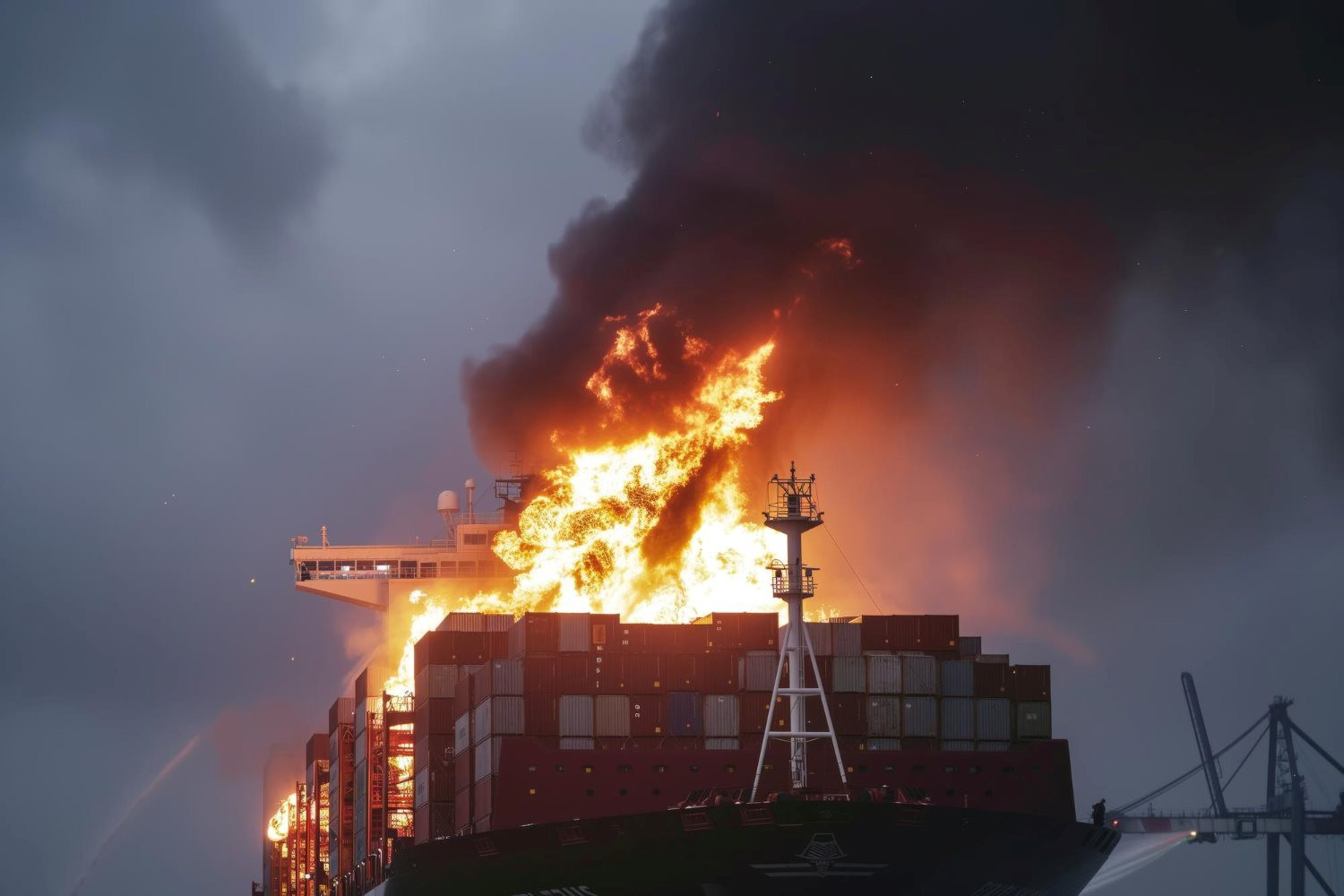
When commodity descriptions are vague, classifications or UN numbers are wrong, or hazardous cargo is presented as ordinary freight, downstream safeguards can fail. From 1 January 2026, the 2024 IMDG Code incorporating Amendment 42-24 became mandatory for dangerous goods in packaged form carried by sea. Charcoal and lithium-ion batteries are two examples showing why classification, declaration and carriage requirements must reflect very different physical hazards.
Rules, however, are only as effective as the information entering the system. WSC has therefore launched its Cargo Safety Program, using shared digital screening to examine keywords, trade patterns and other risk indicators in bookings and identify cargo that may be misdeclared or undeclared. The safety model is shifting from reacting after a fire starts toward questioning suspicious shipments before the container is accepted and loaded.
Misdeclaration also affects emergency response. If crews do not know the true contents of a box, they may not know which extinguishing method is appropriate, what toxic gases could be released, or whether adjacent cargo should be isolated. A bad commodity description therefore does more than distort paperwork: it can remove critical information precisely when responders have the least time to investigate.
Packing and segregation: where rules become real safety
Correct declaration is not enough if the container is packed badly. Incompatible packaging, damaged batteries, leaking drums, inadequate blocking and bracing, or heat sources placed near sensitive materials can turn a small defect into a major event. During multimodal transport, containers are exposed to vibration, impact, temperature changes and long dwell times, allowing packing defects to worsen before they become visible.
WSC data published in September 2026 show that authorities in seven countries inspected 93,079 cargo transport units during 2025 and found 9,645 with safety deficiencies, or 10.36%. Problems included documentation, marking, labelling, packing and cargo securing. Because only seven countries reported results, the figure is not a complete global sample. It nevertheless shows a significant gap between regulatory requirements and field execution.
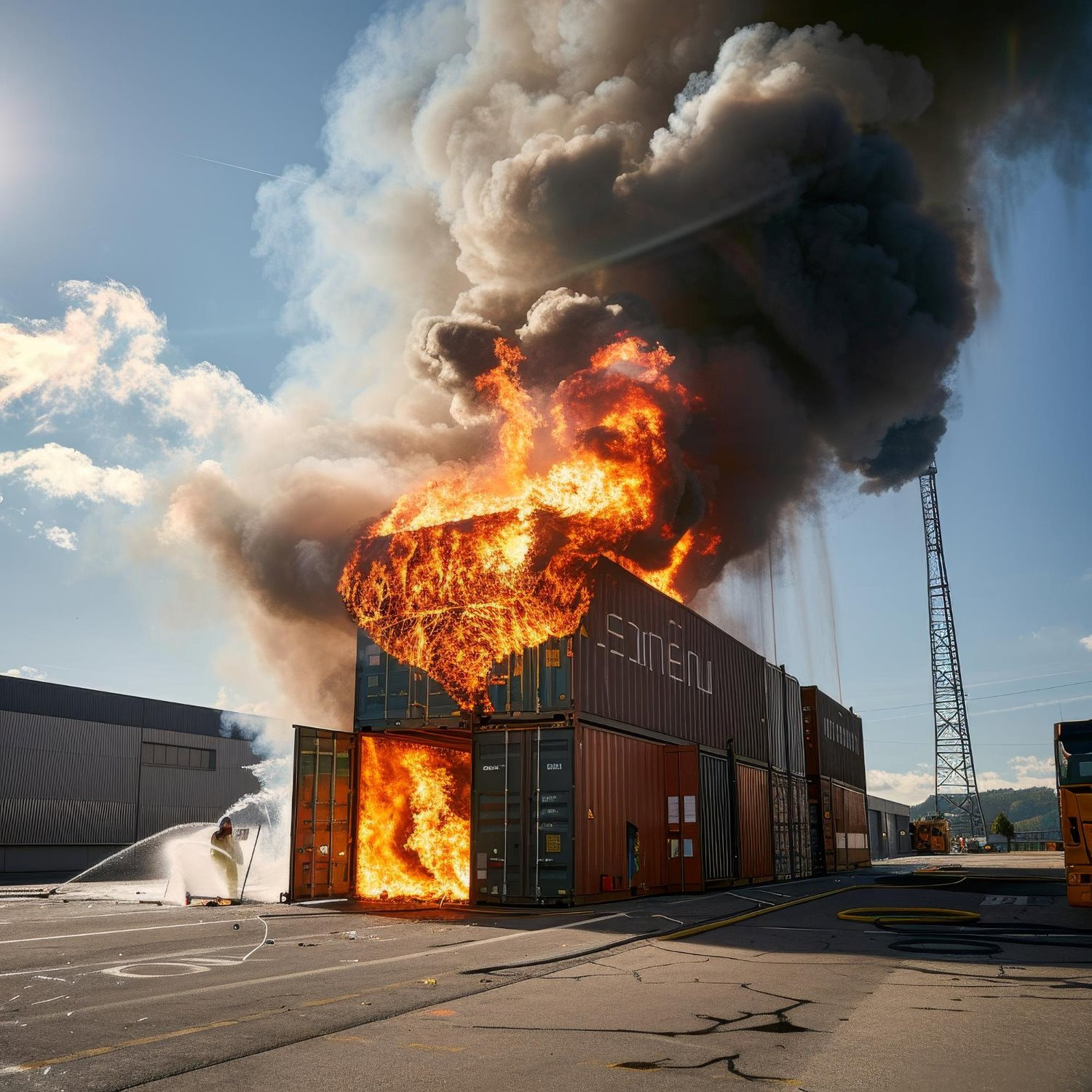
Segregation is the next barrier. Stowage planning must consider dangerous-goods class, compatibility, deck position, distance from heat sources and access for emergency response. If the original declaration is wrong, stowage software and planners lack the information needed to separate cargo correctly. Responsibility must therefore run from shipper and packing party through forwarder, terminal and carrier rather than being pushed onto the final operational link.
For forwarders and logistics providers, this creates a practical duty of challenge. A document may be complete yet still be illogical when compared with the commodity, packaging, origin, destination or known risk profile. Strong cargo integrity therefore requires staff who can recognize anomalies, escalate uncertainty and stop treating dangerous-goods data as a clerical field that merely needs to be filled.
Three layers of defence are essential against cargo fire: prevent risk at origin through correct classification, declaration, packaging and packing; intercept suspicious containers before loading through screening, inspection and segregation; and limit consequences through appropriate stowage, early detection and cargo-specific emergency response. No layer can replace another. When one is bypassed, the burden shifts to the next, where intervention is usually more difficult, more expensive and potentially far more dangerous.
Three layers of defence against cargo fire
The first layer is prevention at origin: identify the cargo, classify it correctly, use suitable packaging, declare it accurately and pack the container properly. This is usually the least expensive and most effective layer because a problem found at the warehouse is far easier to correct than one discovered after the box is buried in a vessel stack. Dangerous-goods paperwork should be treated as quality management, not last-minute shipping administration.
The second layer is interception before loading: screen bookings, cross-check suspicious terminology, validate commodity descriptions, inspect high-risk units and apply consistent inspection standards. AI can help review millions of bookings, but decisions to stop cargo, demand more evidence or order an inspection still require clear accountability, escalation rules and approval thresholds.
The third layer is consequence limitation after an incident begins: appropriate stowage, early detection, effective alarms, isolation capability and cargo-specific firefighting. The Cargo Fire & Loss Innovation Initiative promoted in 2026 by TT Club with shipping lines, insurers and industry bodies focuses on the gap between fire initiation and detection under real maritime conditions. On ever-larger container ships, minutes of delay can fundamentally change the ability to contain a fire.
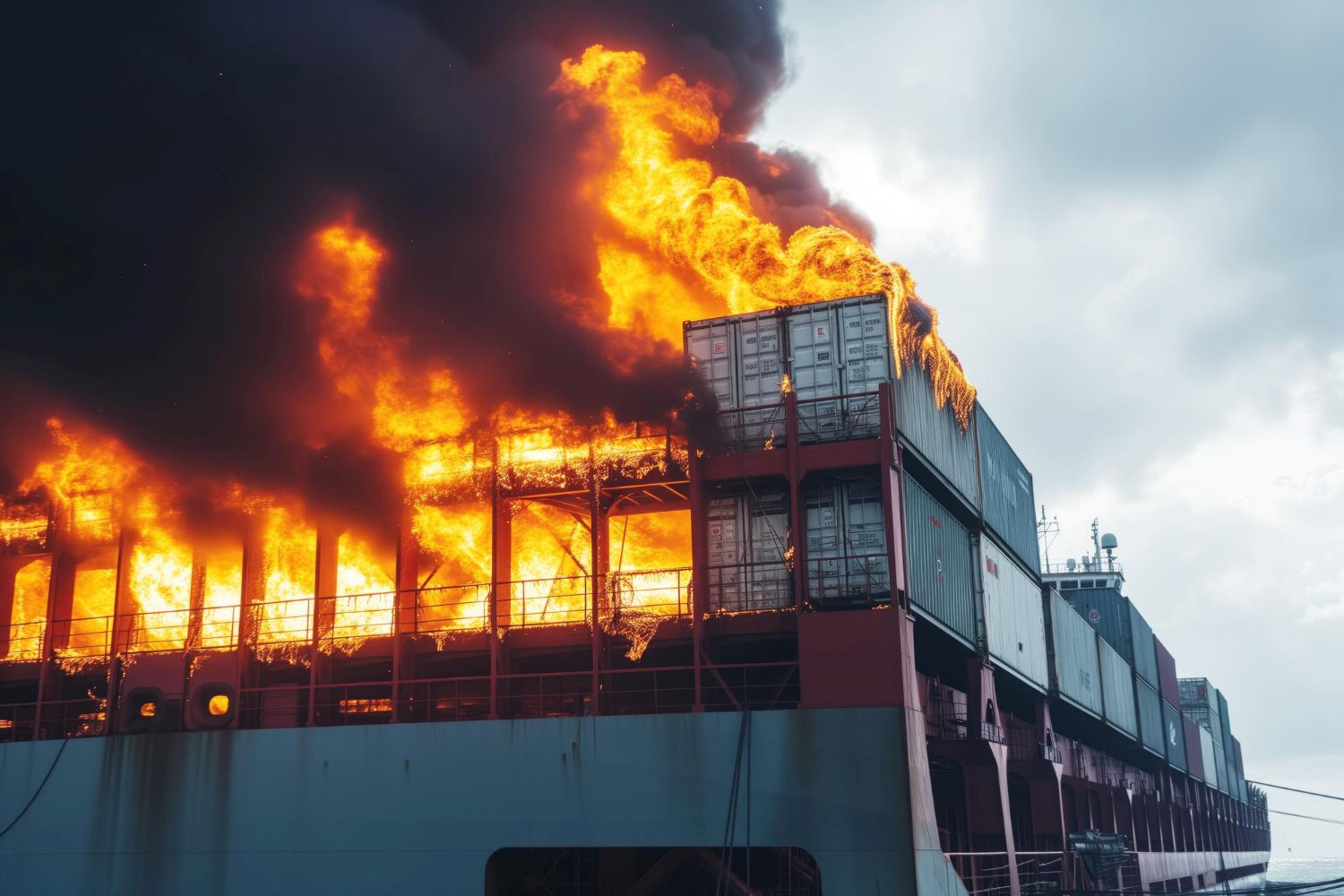
Across all three layers, data must follow the cargo consistently. Booking details, dangerous-goods declarations, labels, packing information, container numbers, stowage positions and emergency guidance should describe the same risk. Cargo-safety visibility is therefore more than knowing where a container is; it is knowing what hazard it carries, which controls apply and who must act when conditions change.
A container fire does not begin when a smoke detector activates. It is often the physical result of earlier decisions about how cargo was named, classified, packed, checked and positioned onboard. The industry therefore cannot solve cargo fire risk only with stronger firefighting equipment. The decisive capability is to make risk visible earlier, keep information accurate and make accountability explicit. When every participant understands that one incorrect declaration can become a physical emergency in the middle of the ocean, safety becomes an attribute of the supply chain itself rather than a task left to the ship.