At the event, Prime Minister Pham Minh Chinh extended his warmest congratulations to the Congress and emphasized that the FIATA 2025 Congress, themed “Green, Rapidly Adaptive Logistics” (also rendered as “Green and Resilient Logistics”), is of exceptional significance.

He noted that this is not only an occasion for the global logistics community to meet and forge partnerships, but also a forum for discussing emerging trends and identifying innovative solutions aimed at building a modern, green, sustainable logistics sector with high adaptability amid today’s constantly changing world.
FIATA’s decision to select Vietnam as the host country this year—and to choose the capital city of Hanoi as the venue—reflects the international community’s strong confidence, and that of the global logistics industry in particular, in Vietnam’s role, potential, and development aspirations in logistics. At the same time, it is a valuable opportunity for Vietnam to further present to international friends an image of a peaceful, stable, innovative, dynamic, friendly, and hospitable nation.
According to the Prime Minister, in the context of deepening globalization and international integration, logistics has increasingly affirmed its role as the “lifeblood” of the economy—the bridge between production, circulation, distribution, and consumption.

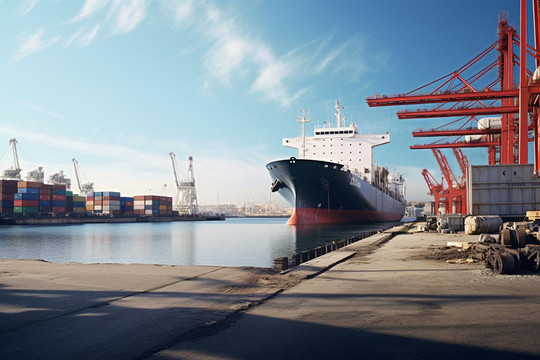
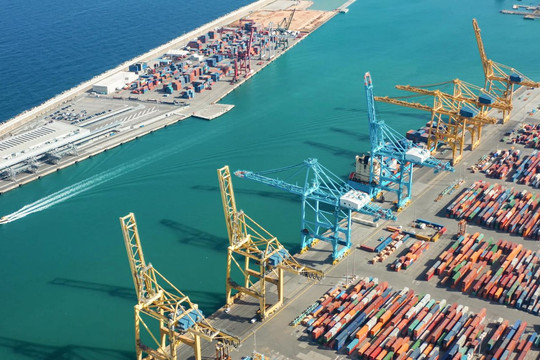
Situated along international maritime and aviation routes, with a coastline of more than 3,200 km and an extensive network of seaports, airports, and border gates, Vietnam has all the conditions to become an important logistics hub in the region. Vietnam identifies logistics as one of the three growth drivers and a foundational factor for connecting production sectors and localities, and for linking Vietnam with the world.
The Prime Minister stated that, in recent times, Vietnam has been implementing a range of comprehensive and resolute measures to develop the logistics industry; building out transport infrastructure across all five modes—aviation, maritime, inland waterways, road, and rail.
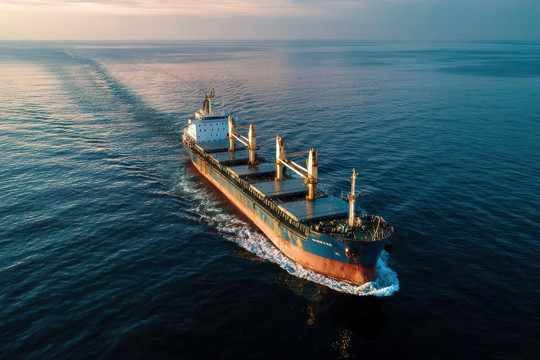
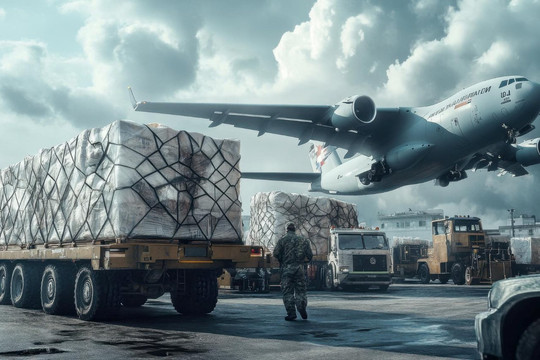
In particular, Vietnam is pushing synchronized, determined investment in major seaports such as Cai Mep–Thi Vai, Da Nang, Quy Nhon, Hue, Vung Ang, and Hai Phong; developing airports in Hanoi, Hai Phong, Ho Chi Minh City, and Can Tho—especially Long Thanh International Airport; accelerating construction to complete the North–South expressway and coastal roads; preparing to break ground on standard-gauge rail lines connecting with China, as well as a high-speed North–South trunk railway.
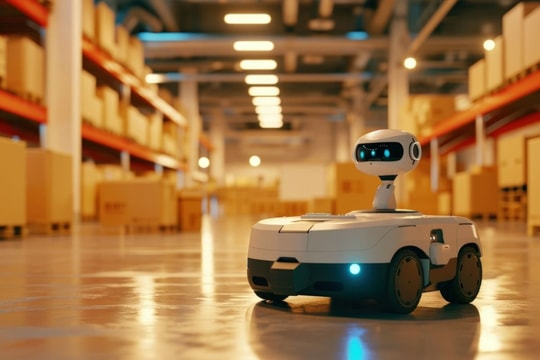
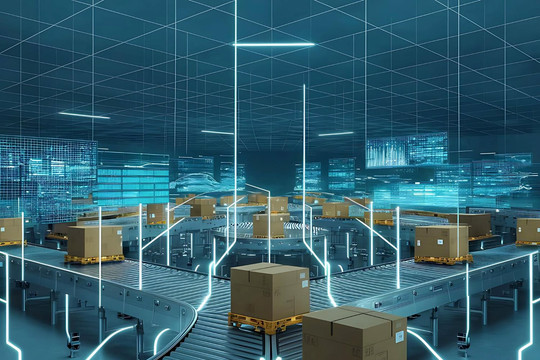
Vietnam has promulgated and applied strong preferential policies for businesses and investors in logistics, such as corporate income tax exemptions and reductions for new investment projects; incentives on land rent and infrastructure in industrial parks and economic zones; support for research and technological application—especially green technologies, digital technologies, and high tech; and fast-track licensing for certain environmentally friendly logistics projects. Vietnam is accelerating digital transformation in logistics, building smart logistics centers; promoting the development of a green, sustainable logistics sector; and focusing on training a high-quality workforce for logistics.
Analyzing the current and upcoming global landscape, the Prime Minister observed that multiple factors are profoundly affecting regional and international supply chains, with implications for enterprises’ production, business operations, and the circulation of goods. Therefore, there is a need to uphold multilateralism and strengthen connectivity for peace, cooperation, and development—to bring a happy and prosperous life to all people around the world, leaving no one behind.
With the desire to enhance international cooperation in logistics and jointly develop a modern, green, and sustainable global logistics industry, the Prime Minister called on the FIATA community and international businesses, together with Vietnam, to advance five areas: intensifying innovation and digital transformation in logistics; intensifying cooperation to develop green, sustainable logistics; intensifying cooperation in training high-quality human resources in logistics; intensifying connectivity among transport corridors and logistics centers across countries, regions, and the world; and intensifying the interconnection of logistics across transport modes.

On the occasion of this Congress, the Prime Minister appealed for “five areas of strengthened cooperation”: strengthen cooperation in science and technology, innovation, and digital transformation in logistics; strengthen cooperation to develop logistics that is fast, green, and sustainable; strengthen cooperation in training high-quality human resources and in building interconnected smart logistics centers; strengthen connectivity among national logistics centers, linking national logistics to other countries, countries to regions, and regions to the world; and strengthen cooperative linkages across logistics modes—aviation, maritime, riverine/inland waterways, rail, and road.
The Prime Minister affirmed that Vietnam is committed to “three guarantees”: guaranteeing the most favorable conditions for domestic and foreign enterprises to invest in and develop logistics in Vietnam; guaranteeing the legitimate rights and interests of domestic and international investors and businesses in the logistics sector; and guaranteeing political stability, security, social order and safety, safeguarding independence and territorial integrity, and maintaining a transparent, safe investment environment while continually improving institutions, mechanisms, and policies to promote public–private and multi-stakeholder partnerships in logistics.

In addition, Vietnam pursues the “three togethers”: listening and understanding together—between enterprises and the State and the people, and between domestic and international partners; sharing a common vision and acting together to cooperate and support each other for rapid and sustainable development; and doing together, winning together, sharing together, developing together, and sharing joy, happiness, and pride together.
According to the Prime Minister, the FIATA World Congress 2025 is an opportunity to deepen cooperation and jointly shape a global logistics industry that is greener, smarter, and more modern—one that contributes positively to trade, investment, growth, and shared prosperity for humanity. With the motto “Solidarity – Cooperation – Responsibility – Sustainable Development,” Vietnam stands ready to be a trusted partner and a safe, attractive destination for the international logistics business community.
Warmly welcoming distinguished delegates and guests to the FIATA World Congress 2025, Prime Minister Pham Minh Chinh expressed confidence that the Congress will be a great success, leaving a profound impression and making an important contribution to further advancing the global logistics industry in a strong, effective direction—toward being greener, more digital, and more sustainable in the time ahead.
FIATA 2025 is hosted by VLA in coordination with FIATA and international partners under the theme “Logistics xanh, thích ứng nhanh” (“Green and Resilient Logistics”), aiming to promote green transition, enhance supply chain resilience, and affirm the role of logistics in sustainable development.