
(Vietnam Logistics Review)There has been trade shortfall in the first five months of 2017. However, with export growth which is higher than that of 2016 and with positive signals, it is expected that export targets for 2017 will be fulfilled.
Maintaining export growth
Reports from the Ministry of Commerce and Industry showed Vietnam export markets, in the first five months of 2017, have undergone impacts from various factors as changes in the U.S’s economic management policies- especially tax cuts, Brexit negotiations between England and the EU, Eurozone’s budget shortfall, political tensions in Korea and the Middle East… However, Vietnam’s export turnover has been in a higher growth level year- over- year.
According to inter-Ministries draft statistics, the export turnover for the first five month of 2017 reached USD 79.3 bn, an increase of 17.4% year- over- year (6.3% in 2016). There has been an increase in price and amount of products. Besides, export turnover from local enterprises reached a growth of USD 22bn, an increase of 13.6% year- over- year (an increase of 3.7% in 2016 for the group).

In export markets, only export to Africa market experienced a decrease, there have been increases of 4.2%- 25% in other markets.
Trade deficit: not worrying
Also according to reports from the Ministry of Commerce and Industry, in the first five months of 2017, import growth has also been on the increase (an increase of 23.9% compared to export increase of 17.4%). Generally calculated, in the first 5 months of 2017, trade deficit for the whole country was around USD 2.7bn, equally to 3.4% export turnover. The group of machinery, equipment, tools and spare parts reached USD 14.9bn, an increase of 38.8% year- over- year. The group of computers, electronic products and accessories reached USD 13.34bn, an increase of 27.5%. The group of steel and metal products experienced a decrease in quantity, but their prices increased. The group of garment accessories and shoe leather had an increase of around USD 905bn…
According to the Ministry of Commerce and Industry’s evaluation, there are 3 reasons for trade deficit.
 | However, Minister Tran Tuan Anh said there should be particular scenarios for every group of products, for every market on the basis of comparing competition abilities and following the policies of each imported countries. |  |
(1) There has been an increase in the need for importing machinery, equipment, spare parts, steel and metal products serving investment project by FDI enterprises and by local ones.
(2) There has been an increase in the need for production, especially those serving export orders as wood products, garment products and footwear…
(3) There has been an increase in prices worldwide due to higher oil price year- over –year.
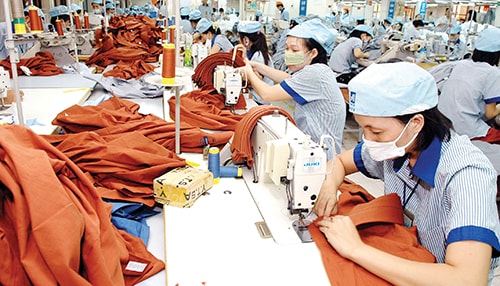
In the coming months, import growth is predicted to decrease due to falling prices of steel, fertilizers and oil…, machinery import which had increased in the first months of the year due to disbursements of projects will decrease in the coming months (Samsung Display project which had complement license of USD 2.5 nearly finished its disbursement); import turnover in the first five years of 2016 was in low level (USD 13.2 bn/ month in average) and was on significant increase in the last 7 months (USD 15.5bn/ month in average). Therefore a relative high increase year- over- year of the first 5 months of 2017 (estimated increase of 23.9% year- over- year) will gradually decrease at the last months of the year.
Experts said only trade deficit due to the increase of consuming goods is worth worrying, not that from importing materials and machinery. Trade deficit that is equal to 3.4% of export turnover is not worth worrying.
Many solutions for the goals
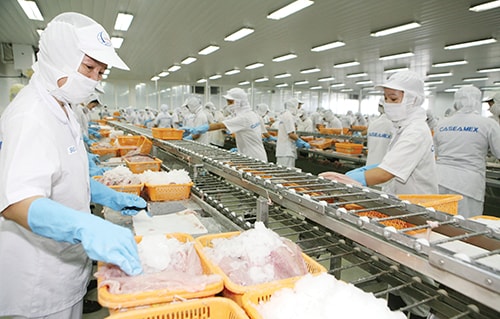
Agricultural and aqua product exports regularly increase at the middle of the year and reach their peaks at the end of the year. Industrial products that have large export turnover as textile and garment, footwear and wood products come to their export season at the middle of the second quarter. In addition, trade deficit will gradually decrease at the last months of the year because many projects finished their machinery installation or will come into operation.



.png "Dung Quat Enters a New EPC Execution Phase")