
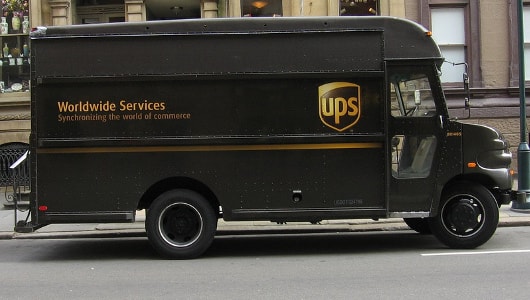
United Parcel Service posted disappointing second-quarter earnings due to higher spending and transportation costs and lowered full-year earnings projections as it invests more heavily than expected to avoid problems this holiday season.
The company will spend about US$175 million to improve peak operations, up from its previous estimate of $100 million, on a list that includes new technology, 50 new package sorting shifts, and paying employees to work on Black Friday. About 85 percent of that spending will take place in the second half of 2014, reported Dow Jones Newswires.
The company posted a profit of $454 million, or 49 cents a share, down from $1.07 billion, or $1.13 a share, in the prior-year period. The results for the most recent period included a $665 million after-tax charge related to the companys transfer of post-retirement health-care benefits to multi-employer plans for certain employees in the Teamsters union. Revenue improved 5.6 percent to $14.27 billion.
US revenue rose 5.2 percent to $8.67 billion, as daily package volume rose 7.4 percent, largely attributable to an increase in e-commerce shipments. International small package revenue grew 6.2 percent to $3.25 billion, with export shipments driving the increase. Supply chain and freight revenue improved 6.5 percent to $2.35 billion.
The carrier now projects 2014 earnings of between $4.90 and $5 a share, down from its previous expectation of the lower end of between $5.05 to $5.30 a share.
During last years holiday season, UPS was overwhelmed by last-minute online orders and wasnt able to deliver all of its packages on time for Christmas. Executives have said that a lack of communication with retailers was a big part of the problem.
Retailers dropped hundreds of unexpected trailers of packages at UPS sorting operations at the last minute. Customers were unable to track their packages through the supply chain because UPS could only offer tracking updates once a package was unloaded and scanned into its system.
"Thats why this is a big priority," said chief financial officer Kurt Kuehn in an interview with The Wall Street Journal. The company is investing in new technology to enable it to better communicate with retailers. "Were working with our largest customers to do data integration. They give us - to whatever extent theyre able to - the specific details of whats on each trailer."
Retailers have also agreed to notify UPS of big sales or initiatives that could result in an influx of shipments, he added.
The 50 new shifts to sort packages in existing hub buildings will add five percent to capacity, the company said. UPS is accelerating its rollout of Orion, its on-road integrated optimisation and navigation programme, which aims to save millions of dollars by routing delivery trucks more efficiently. About 45 percent of all drivers should be using the routing technology by the holiday season.
The company doesnt anticipate spending at the same level for next years holiday peak season because many of the improvements are one-time expenses, Kuehn said. One exception may be continuing to run full operations on Black Friday to ensure a smooth transition for the increasingly important Cyber Monday online shopping day, Kuehn said. Previously, the company has run only limited operations the day after Thanksgiving.
Also affecting second-quarter earnings were higher transportation costs, which the company attributed to railroad congestion. The company was forced to switch to the more expensive method of trucking packages and freight along some rail lanes, which included costs to hire and train drivers. This reduced earnings per share each by a couple of cents, Kuehn said.
The company did see strong growth in the second quarter across its services, although that didnt translate to higher profits thanks in part to continued customer preference for cheaper, slower options.





.png "Synergy – Network – Prosperity: A journey of appreciation shaped by experiences with Saigon Newport Corporation")