
.jpg)
.jpg)
When speed is no longer the only “weapon”
Over its more than 50 years in operation, FedEx has built its brand on the promise of “next morning” delivery. However, the 2025 landscape has changed: demand for ultra-fast delivery is falling, while operating costs — especially fuel and aircraft maintenance — are rising sharply.
.jpg)
.jpg)
According to FedEx’s Q2 2025 financial report, the profit margin for overnight services dropped nearly 2.1 percentage points compared to the same period last year, mainly due to fewer high-end orders and price pressure from competitors. In contrast, the deferred cargo segment — with delivery times of one to three days — offers higher margins, particularly for high-value, heavy goods such as pharmaceuticals, auto parts, and machinery.
The “Purple” and “Orange” networks — two different worlds
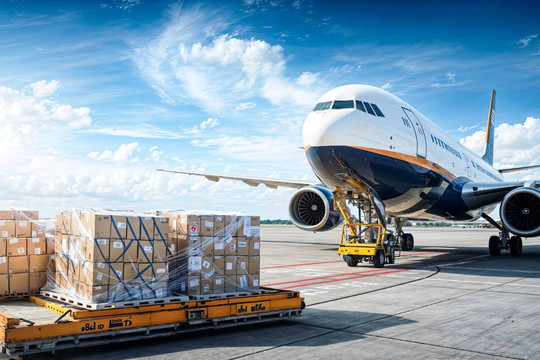
In FedEx’s system, the Purple network serves express delivery using aircraft optimized for speed, operating through massive hubs such as Memphis (USA) and Paris-Charles de Gaulle (France). This is a costly network, requiring ultra-short aircraft turnaround times and high staffing costs.
In contrast, the Orange network specializes in deferred cargo. Aircraft are operated with better payload optimization and flexible schedules, allowing for higher load factors and lower fuel costs per ton.
.jpg)
.jpg)
The decision to move a Boeing 777 from Purple to Orange is clear evidence that FedEx is rebalancing resources, prioritizing long-term profitability over sheer speed at any cost.
Implications for the Vietnamese market
Vietnam is one of FedEx’s key destinations in Southeast Asia, particularly on routes from Ho Chi Minh City to Memphis and from Hanoi to Paris via intermediate hubs.
The shift toward deferred cargo could have three major impacts:
Opportunities for specialized exports: Industries such as pharmaceuticals, medical equipment, and electronic components could leverage the new service for more affordable shipping while maintaining preservation standards and reasonable delivery times.
Pressure on high-speed domestic services: If FedEx deprioritizes its overnight network, Vietnam’s domestic market will need other companies to fill the gap for premium e-commerce express services.
Slot competition and freight rates: Fleet adjustments could alter flight schedules at key airports such as Noi Bai and Tan Son Nhat, affecting booking capacity for exporters and importers.
.jpg)
.jpg)
A global trend: from speed to performance optimization
FedEx is not the only carrier adjusting its strategy. DHL and UPS are also investing heavily in deferred cargo and specialized charter services. The main drivers are:
Rising fuel costs: Jet A-1 fuel prices in Q2 2025 remain about 18% higher than the five-year average.
A saturated overnight market: Consumers are increasingly willing to accept longer delivery times in exchange for lower prices.
Growth in specialized cargo: Sectors such as pharmaceuticals, industrial equipment, and perishables require tailored transport solutions rather than maximum speed.
This trend means that global logistics networks are shifting toward optimizing performance, cost, and reliability — rather than simply racing against time.
How Vietnam should prepare for the industry’s “turn”
To take advantage of this shift, Vietnam should focus on four key areas:
Investing in specialized warehousing infrastructure, including GDP-compliant (Good Distribution Practice) cold storage for pharmaceuticals and facilities for oversized machinery.
Optimizing multimodal connections by linking road, rail, and air to shorten domestic transport times before goods reach the airport.
Building charter service capacity by encouraging Vietnamese logistics companies to partner for international charters serving specialized cargo, reducing reliance on foreign carriers.
Training skilled personnel in packing, preservation, and safety inspection for high-value cargo.
Long-term impact — when “speed” becomes just an option
If FedEx’s strategy proves successful, many other carriers may follow, turning overnight services into a niche segment focused on ultra-premium customers.


Most cargo would instead shift to deferred or specialized charter services, where costs are more competitive, customization is higher, and offerings align better with new consumer trends.
This could also be an opportunity for Vietnam to develop regional cargo routes with reasonable delivery times, creating a springboard for integration into the global deferred network.
Not slowing down, but getting smarter
FedEx’s pivot is not simply about “slowing down” — it is about redefining value in the air cargo supply chain: moving from an absolute focus on speed toward maximizing advantages in cost, efficiency, and specialized service.
For Vietnam, this is both a warning and an invitation: if the country wants to become a vital link in the global logistics network, it must quickly adjust strategies, invest in infrastructure, enhance operational capacity, and embrace emerging transport trends. Only then can Vietnam avoid being left behind in a “game” that has already entered a new chapter.
.jpg "Cargojet’s Growth Amid Trade Wars – The “Dark Horse” of the Air Cargo Industry")
.jpg "Institutional Reform – The Key to Creating an Attractive Investment Environment")
.jpg "Firefighting at Sea & the “Port of Refuge” Dilemma: Lessons from Marie Maersk to Wan Hai 503")
.png "DHL Extends Contract with Cargojet – A Strategic Move to Strengthen the Global Air Cargo Supply Chain")
.png "Global Port Competition – When Western Giants Join the Geopolitical Game")