
.jpg)
.jpg)
.jpg)
.jpg)
Deep-Sea Port – Gateway to the World
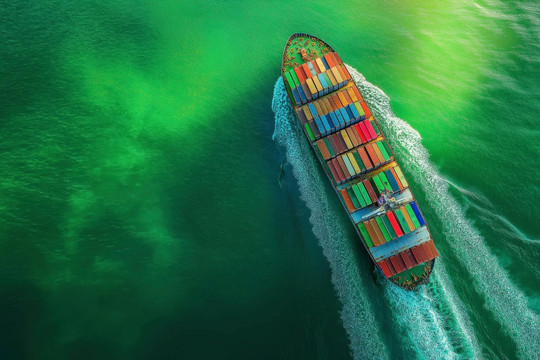
The Cai Mep – Thi Vai port complex currently owns 35 berths, with 22 operating efficiently, handling over 117.8 million tons annually and 6.8 million TEUs of containers each year.
.jpg)
.jpg)
Previously a backbone for BRVT, it now forms the logistics foundation paving the way for the super city’s global outreach.
Multimodal Infrastructure – Interregional Connection Artery
With the integration of former BRVT, logistics infrastructure is being elevated to new heights. The Bien Hoa–Vung Tau Expressway and Ring Roads 3 and 4 have begun vigorous construction, opening up multi-connection land routes between the seaport and the inland.
Simultaneously, the Bien Hoa–Vung Tau railway line (132 km long, with an investment of over USD 6.1 billion for the 2025–2027 phase) is underway, playing a key role in transporting large volumes of cargo.
The Cai Mep Ha logistics center (1,763 hectares) is more than a storage and distribution hub. It includes a bonded area and single-window customs system, and is a strategic component to enhance HCMC's international cargo handling capacity.
Additionally, an inland waterway route between Cai Mep and Can Gio is being added to reduce pressure on road traffic, cut logistics costs, and protect the environment — a part of the super city's sustainable development commitment.
Triangular Development Model – Multi-Core Strategy
.jpg)
.jpg)
The Cat Lai port cluster continues to serve domestic markets, while Cai Mep – Thi Vai handles international cargo. In particular, Can Gio is being planned as a transshipment center with large-scale logistics capabilities (expected to handle 7.2 million TEUs/year).
The clear role allocation and integration of specialized hubs form an effective interregional system, offering new opportunities for urban economic development strategies.
Flexible Governance – Optimal Investment Environment
The former BRVT province strongly attracted FDI in port projects such as Gemalink, CMIT, and TCIT — contributing over 53% of the container volume through the port complex — demonstrating the area’s significant appeal. International enterprises have invested in infrastructure and expanded international logistics services.
The establishment of the Cai Mep Ha Free Trade Zone (FTZ), with expedited customs clearance, single-window procedures, and reduced paperwork and processing times, has welcomed a new wave of global businesses.
After the merger, HCMC launched comprehensive administrative reforms — improving PCI (Provincial Competitiveness Index), cutting logistics costs by 5–10%, enhancing transparency, supporting businesses, and aligning with the government and strategic investors.
The reform roadmap includes streamlining investment procedures, offering land, tax, and utility support, and establishing multilingual business support centers. These initiatives truly act as long-term investment drivers, positioning the new HCMC as an attractive regional destination.
.jpg)
.jpg)
Thanks to its scale, modern infrastructure, and interregional strategy, Cai Mep – Thi Vai Port has completed its transformation from a local port to a cross-border logistics hub.
The “new HCMC super city” product will not only be measured by urban size, but also by global connectivity, supply chain coordination capabilities, and international integration potential.
In this new era, seaport and logistics systems are not merely services — they are the foundation of prosperity, the core that allows Ho Chi Minh City to reaffirm its strategic position on the economic map of Southeast Asia and the world.
.jpg "Green Procurement – An Inevitable Trend in the Global Supply Chain")
.jpg "The Distinct Beauty Of Leather: Where Art Meets Industry")

.jpg "SNP Run As One 2025: Connecting the Logistics Community on the Running Track")

.png "Dien Bien builds investment value chains to power its next growth chapter")

.jpg "Dien Bien, Yunnan and Luang Prabang: Expanding Regional Cooperation and Investment Opportunities")