
(Vietnam Logistics Review)The holiday shopping season has just been started in many countries like United States or United Kingdom for occasions including Thanksgivings, Black Friday, Cyber Monday, upcoming Christmas and New Year. Its the peak period of time for shopping and also the right season for Omni-channel retailing. Coming a bit later than in those countries, often from annual December, shopping season in Vietnam is not less bustling and colorful. However many Vietnamese retailers have not known or applied Omni-channel to satisfy their customers and boost sales.
Consumers and retailing companies today are familiar with the term “Multi-channel marketing”. Multi-channel marketing is defined as “the ability to interact with potential customers on various platforms”. It can be seen in its name as ‘Multi-” means “multiple” or “many,” so a Multi-channel marketing strategy is one that uses more than just a single channel to reach customers, such as retail location with in-store ads, fliers, a website, a mobile app, emails, or even word of mouth and more. On the other hand, Omni-channel has been introduced recently and still quite unfamiliar with many Vietnamese companies and consumers. “Omni-” comes from the word “Omnis” which means “all” or “universal”. So an Omni-channel marketing strategy uses every messaging channel to engage customers in a coordinated way. Wikipedia defines Omni-channel as “a cross-channel business model that companies use to increase customer experience, including channels such as physical locations, FAQ webpages, social media, live web chats, mobile applications and telephone communication” and “a customer values the ability to be in constant contact with a company through multiple avenues at the same time”. It is also considered the integration of all physical channels (offline) and digital channels (online) to “offer a seamless and unified customer experience”.
What makes Omni-channel more special than Multi-channel?
Let look at the way people do shopping. With the development of technology nowadays, consumers had multiple options to satisfy their shopping needs, both online and offline. They might choose to shop in-store, or they might shop on an online website or application with a computer, a laptop, a smartphone, or a smart TV. Not only talk to their friends to learn of a new product, they might learn in an email or through a social media post, visit the website on their laptop to learn more, and ultimately use their smartphone to make the purchase.
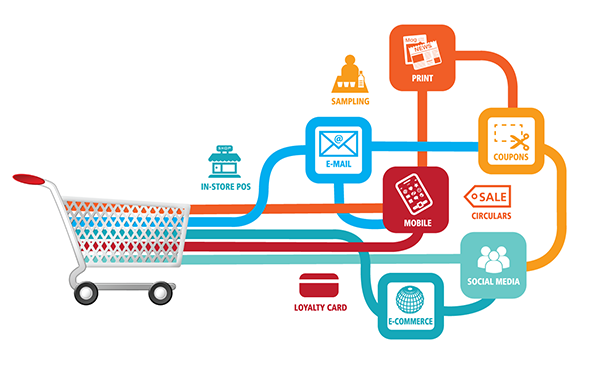
Thereof, companies, which have a Multi-channel strategy, try to connect with their customers in all of those touch points. They focus on maximizing the performance of each channel. For instance, websites accessed via laptops, tablets and other large-screen formats might be more content-rich and allow for more exploration of a brand’s content and offerings, while simpler, mobile sites may allow for swiping, pinch-zooming and other touchscreen-enabled features.
Even when leveraging all of these unique features, retailers often fail to create a consistent experience throughout multiple channels and the customer still lacks a seamless experience and consistent messaging across each of these channels due to each channel tries to achieve their own objectives but the whole value for the customers.
Similarly to Multi-channel, Omni-channel marketing recognizes that customers engage with companies or brands in many different ways-across multiple platforms. However, Omni-channel understands consumers better than that. It acknowledges that mobile and social have enabled customers to not only quickly switch between channels, but also actually use channels simultaneously. For example, checking out product reviews on their mobile phone while evaluating a product on a physical retail store shelf. Omni-channel anticipates that customers may start in one channel and move to another as they progress to a resolution.
The difference between Multi-channel and Omni-channel really comes down to a companys approach to digital channels. An Omni-channel approach puts the customer, not the company, at the center of its strategy. Multi-channel is an operational view – how the company allows the customer to complete transactions in each channel. Omni-channel, however, is viewing the experience through the eyes of your customer, orchestrating the customer experience across all channels so that it is seamless, integrated, and consistent. Instead of displaying different ads in their newsletters, on their websites and in their stores, for instance, retailers with effective Omni-channel strategies will send identical or complementary messages across each channel. This approach allows for more consistent branding and personalized communication with each customer.
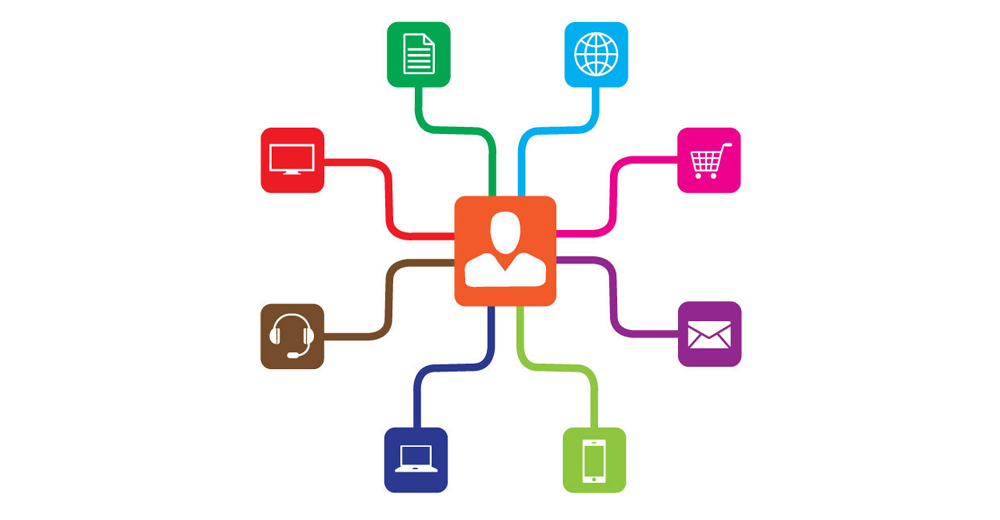
Here’s an example: Suppose that someone wants to buy a new shirt, he may check it online to compare prices then he will go to a physical store to try it on and buy it. Unluckily, he finds that it is out of stock. Now all he has to do is quickly pick up his cell phone to search for the same item online, place an online order for the same product, drop it in his online shopping cart and has it shipped directly to his home. However, if he get distracted with something else such as a phone call or his cell phone runs out of battery, he can’t finish the purchasing process. In the evening, when he is checking Facebook on his laptop, he sees an ad from the same retailer offering the same shirt. He opens that web on his computer and discovers the shirt he selected earlier in the day is still there in his shopping cart. He is able to finish the purchase and have it shipped directly to his home. To adequately satisfy today’s buyers, brands must allow them to pick up from where they left off, no matter where they are in the purchase process. The seamless experience and the consistent offer are the beauty of Omni-channel marketing.
Companies with Inspiring Omni-channel Experiences
Macy’s:
Macy’s, a 150-year-old department store, is one of the most typical companies implemented successful Omni-channel. The company used digital to optimize its logistics while still making excellent use of its widespread store locations. Store distribution centers supplemented the “Buy Online Pickup in Store” program, which helped bring customers into the stores. Its online sales grew 48 percent in 2012. Its profit margin grew 257.2 percent in 2014. This successful digital transformation also increased the company’s brand value by 383 percent between spring 2013 and spring 2014, according to Interbrand’s Top Retail Brands.
Oasis
Founded over 20 years ago, Oasis, a UK fashion retailer, is also an inspiring example of Omni-channel companies that’s fusing their ecommerce site, mobile app, and physical stores into a simple shopping experience. With perfect and simply displayed images across their site and social channels such as Pinterest, Instagram and Facebook, this brand has fully connected all essential Omni-channel elements together. They offer users each product code for each item included in the image posted. The code given is paste-able into the Oasis online store search bar, leading buyers straight to the item. Staffs are armed with tablets that enable them to deliver the latest product information and stock information and even act as a cash register. And if something is out of stock, the staff can instantly place an online order for you to have the item shipped directly to buyers’ home. That’s in-store and online integration at its finest.
In conclusion, the overarching goal of both Multi-channel and Omni-channel marketing is to create a better customer experience that leads to greater brand loyalty and a higher likelihood of purchases. An Omni-channel approach will build upon that strategy to create a more cohesive, continuous experience for the average customer, which is someone who frequently uses and views multiple forms of media digitally and in person. With Omni-channel, companies, especially retailers can get closer to their customers and personalize offers to them, boosting loyalty and revenue more effectively. For US and UK retailers, Omni-channel is a must this season. And for Vietnamese retailers, they should apply this strategy as soon as possible to attract more and more customers in this year-end shopping season like Christmas, Solar and Lunar New year.





.png "Dung Quat Enters a New EPC Execution Phase")