Tan Cang Hai Phong International Container Terminal Welcomes Its One-Millionth TEU of 2025

By Khanh Linh|18/10/2025 08:00

Welcoming the one-millionth TEU container in 2025 marks a significant milestone, reaffirming the exceptional operational capacity and service quality of Tan Cang Hai Phong International Container Terminal (TC-HICT).

hinh-3.jpg
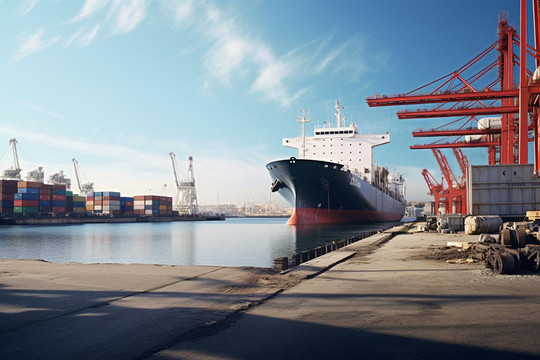
The CSCL EAST CHINA SEA calls at TC-HICT

On the morning of October 17, at the Lach Huyen terminal area, Tan Cang Hai Phong International Container Terminal (TC-HICT), a subsidiary of Saigon Newport Corporation, celebrated the arrival of its one-millionth TEU container handled in 2025.

This achievement marks the fourth consecutive year 2022, 2023, 2024, and now 2025 that TC-HICT has surpassed the one-million TEU throughput milestone.

hinh-2.jpg
The one-millionth TEU container is loaded/unloaded aboard the CSCL EAST CHINA SEA operated by COSCO

Reaching this milestone as early as October 2025 reflects TC-HICT’s resilience in overcoming challenges, its outstanding operational efficiency, and its ongoing commitment to service excellence.

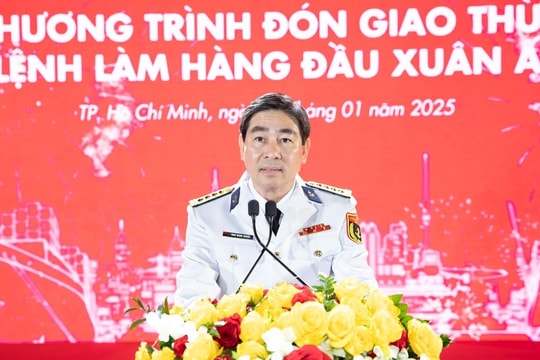
According to Lieutenant Colonel Doan Hai Tuan, Chairman of the Members’ Council of TC-HICT, the terminal has focused on enhancing operational performance throughout the first nine months of 2025. These efforts have yielded significant improvements in key performance indicators.

hinh-4.jpg
Lieutenant Colonel Doan Hai Tuan, Chairman of the Members’ Council of TC-HICT, delivers remarks at the ceremony

Specifically, vessel handling productivity reached 110 containers per hour, a 24% increase compared to 2024; Average berth waiting time was reduced from 26.5 hours in 2024 to just 7.8 hours this year.

These results have enabled TC-HICT to maintain its market share, sustain cargo throughput, and reinforce its position as one of the leading seaports in the Hai Phong port area.

Looking ahead to the final months of 2025 and into 2026, the port industry is expected to face considerable challenges due to global market fluctuations and intensified competition among ports. In response, TC-HICT remains committed to continuous improvement, enhancing service quality, and accelerating the adoption of advanced technologies in port operations all with customer satisfaction as its central focus.

hinh-1.jpg
Delegates perform the ceremonial button press to welcome TC-HICT’s one-millionth TEU container of 2025

During the ceremony, delegates participated in a symbolic button-pressing ritual to commemorate the arrival of the one-millionth TEU container of 2025.
Bài liên quan

(0) Bình luận
  • Smart Warehousing Begins with Reliable Data
    Robots, conveyors and software often dominate discussions about smart warehouses. Yet advanced equipment cannot rescue inconsistent master data. Duplicate item identifiers, conflicting units, unrecorded location moves and differences between system stock and physical stock can turn automation into a faster way of repeating errors.
  • Steel Coils and Quality Preservation During Transport
    Steel coils can arrive at the correct total weight yet fail to meet the intended use when edges are deformed, surfaces are scratched or corrosion appears. Quality preservation needs to begin before loading and continue through each transfer. Steel producers and transport providers need to connect product information, the transport arrangement and condition records into a process that can be checked.
  • Port concessions and investment responsibilities
    Granting a business the right to operate a port can mobilize capital and operational expertise. The outcome depends on identifying who invests, who maintains the assets and who is accountable when infrastructure deteriorates or services are interrupted. A sound agreement connects operating rights with specific obligations and protects customers' ability to use the port throughout the operating term.
  • Measuring shipment emissions across the transport chain
    A shipment may move through trucks, ports, vessels and several transfer points before reaching its consignee. Quantifying the emissions associated with that journey requires an agreed boundary, suitable data and a clear allocation approach. A useful result should explain how it was calculated. That transparency allows customers to compare transport options and helps operators identify where better information or operational changes would have the greatest value.
  • Prefabricated Housing and Delivery in Construction Sequence
    Prefabricated housing moves part of construction from the site to the factory, but installation progress still depends on how components are delivered. Correct quantities cannot sustain work when an item needed first arrives later, or when the site is unprepared to receive it. For residential projects, transport planning should start from the approved erection sequence, connecting production schedules with unloading capacity and the installation position of each component.
  • Managing Returns in Domestic E-commerce
    A returned parcel is not a closed case. The customer’s request still needs a decision, while each item needs an authorized destination and an accurate stock status. When parcels reach a warehouse but wait unexamined, both merchandise and money remain tied up between processes. For domestic e-commerce, returns should be designed as part of normal operations, with clear ownership from the initial request to the final inventory and financial entries.
Nổi bật Tạp chí Vietnam Logistics Review
Đừng bỏ lỡ
Tan Cang Hai Phong International Container Terminal Welcomes Its One-Millionth TEU of 2025
POWERED BY ONECMS - A PRODUCT OF NEKO