
From vessel schedules, truck capacity, container locations and warehouse space to customs declarations, invoices and delivery orders, logistics still runs on a patchwork of paper forms, Excel files and email threads. As long as data remains fragmented and locked in silos, supply chains cannot truly operate in real time. The question is how Vietnam can build a logistics data ecosystem so that flows of cargo are matched by flows of information on digital “highways”.
From paper documents to real-time supply chains
Today, “invisible bottlenecks” caused by poor data flows are everywhere. Exporters and importers still print, stamp and courier thick sets of documents for a single shipment. Shipping lines email delivery orders, while forwarders re-key the same details into their own systems. Drivers call or text to report that they have arrived at the terminal gate; warehouse staff manually check container numbers and seals. Each step seems minor in isolation, but multiplied across hundreds of thousands of shipments, it becomes a massive friction cost.

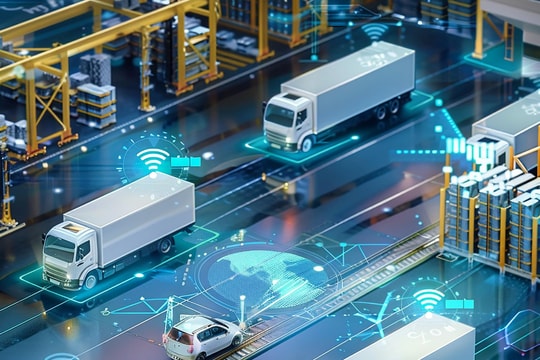
Globally, the trend is towards real-time supply chains where data moves almost in lockstep with cargo. When a container leaves the yard, its status is automatically shared with the shipper, carrier, terminal and trucker. When a vessel arrives, information is pushed to customs, port community platforms, truck dispatch systems and warehouses. Data is no longer trapped inside closed corporate systems; it is exchanged through APIs, EDI messages or shared data platforms that act as “hubs” for the ecosystem.
In Vietnam, important building blocks are already in place: the National Single Window, electronic customs systems, early Port Community Systems at some ports, and the adoption of eBLs and eDOs by several carriers. Yet if we trace the entire chain end-to-end, data still breaks at multiple points: between factories and ports, between terminals and ICDs, between warehouses and e-commerce platforms, between logistics providers and banks and insurers. The “data bloodstream” is not yet flowing smoothly enough to support truly real-time supply chain operations.
Shared data platforms: who builds them, who uses them, who benefits?
Any logistics data platform raises fundamental questions about governance and incentives. Who invests, who participates, who owns the data, and how are gains shared? If only a few large players build systems for their own benefit, data will once again be trapped inside separate “digital kingdoms”. A platform and ecosystem mindset is needed.
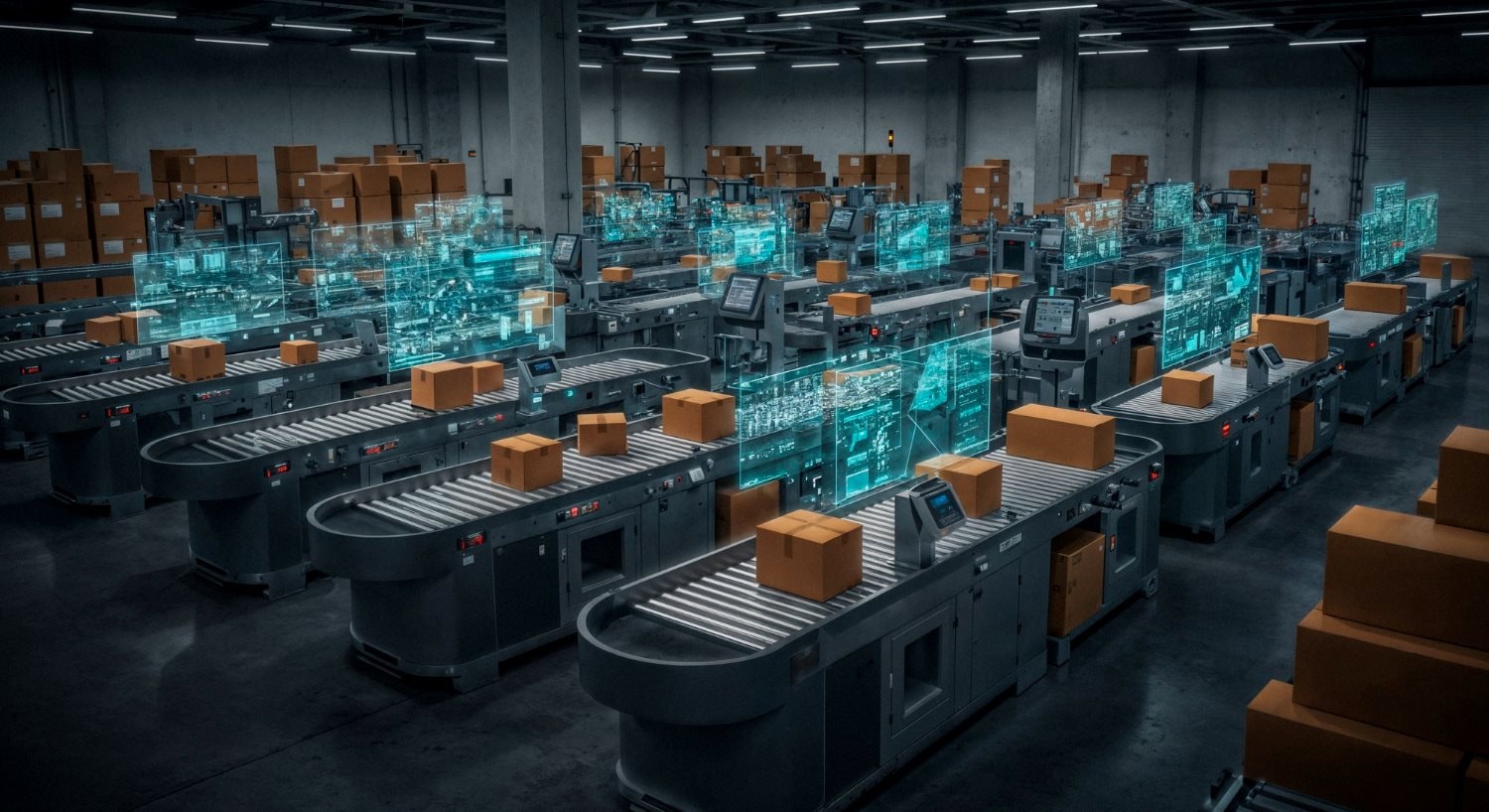
At the industry level, we can imagine a shared logistics data platform functioning as an information exchange among ports, shipping lines, ICDs, warehouses, trucking companies, shippers, banks, customs and regulators. Each party keeps its own core systems but agrees to send and receive a standardised set of messages via the platform: container status, berthing windows, slot bookings, customs release updates, delivery orders, electronic documents.
The benefits are multi-sided. Truckers reduce waiting times and empty runs by knowing exactly when gates and loading bays are available. Shippers cut storage and demurrage costs. Ports schedule berths and equipment more efficiently. Authorities gain a near real-time view of cargo flows to inform policy and enforcement. Platform operators can charge usage-based or subscription fees, which are likely to be far lower than the hidden costs the system currently absorbs due to data fragmentation.
For stakeholders to join, two prerequisites must be met: trust and standards. Trust is not only about cybersecurity; it also involves credible commitments that shared data will not be used for unfair competition or to “lock in” users. Standards mean agreeing on common formats and codes – for locations, facilities, messages and events – so that information can move between systems without errors, duplication or misinterpretation.
A roadmap for building a national logistics data ecosystem
To turn data into a genuine “soft infrastructure” for logistics, Vietnam will need a clear and incremental roadmap. The first step is to digitise what already exists: replacing paper-based processes with electronic ones for delivery orders, gate passes, warehouse receipts, transport documents, invoices and payments. This is largely an enterprise-level effort, but if accompanied by early guidance on data standards, it will prevent costly rework when systems are later interconnected.
The second step is to connect clusters and corridors. Pilot projects can focus on high-volume port clusters and corridors where stakeholders are relatively digital-ready – for example, the Cai Mep–Thi Vai complex, Hai Phong, and their hinterland links to ICDs and inland logistics centres. Within these pilots, a shared data platform could be used by ports, shipping lines, ICDs, truckers and shippers, with clear KPIs such as truck turnaround times, vessel productivity, electronic DO adoption and gate appointment compliance.
The third step is modular expansion: gradually integrating more functional blocks – berth scheduling, gate slot management, container tracking, warehouse visibility – and exposing APIs so that tech firms and start-ups can build value-added services on top. In this stage, the logistics data ecosystem becomes not only an operational backbone but also a “sandbox” for new services such as route optimisation, congestion forecasting, freight rate comparison and decision support tools for booking and capacity planning.

Finally, the state’s role is to act as architect and conductor: issuing minimum common data standards, defining rules for data sharing and security, and driving interoperability between public systems (customs, transport regulators, port authorities) and industry platforms. The government does not need to build everything itself, but it must ensure that different “digital pieces” can plug into each other instead of each adopting its own language and protocols.
When properly captured and shared, logistics data becomes the “soft infrastructure” that makes supply chains faster, more transparent and more resilient. But data only creates value when it flows – not when it sits locked in spreadsheets or isolated systems. Shared, open and secure platforms using common standards can turn scattered events into an integrated picture of cargo flows. In that world, containers, pallets and parcels move not only along roads and sea lanes, but also along seamless data paths that enable real-time decisions.
As Vietnam seeks to upgrade its logistics capabilities, bricks-and-mortar investments in ports, roads and warehouses will not be enough. The next tier of competitiveness will be built on data and shared information platforms. If the country can seize this moment of digital transformation to standardise data, progressively connect systems and develop open platforms with joint public–private stewardship, it can “leapfrog” from manual operations to real-time, data-driven supply chains. In that future, decisions about port operations, truck dispatching and warehouse management will be based less on gut feeling and more on live data – enabling Vietnamese supply chains to move faster, smarter and more robustly through global disruptions.