
By April 2025, some 43 offshore wind projects were in operation or active development, placing Vietnam third globally by project count, after China and the UK. Behind these figures lies a complex logistics story: moving oversize, overweight components through constrained infrastructure to remote hills, coastal sites and future offshore hubs.
Wind and Solar Booms and the Journey of Oversize, Overweight Cargo
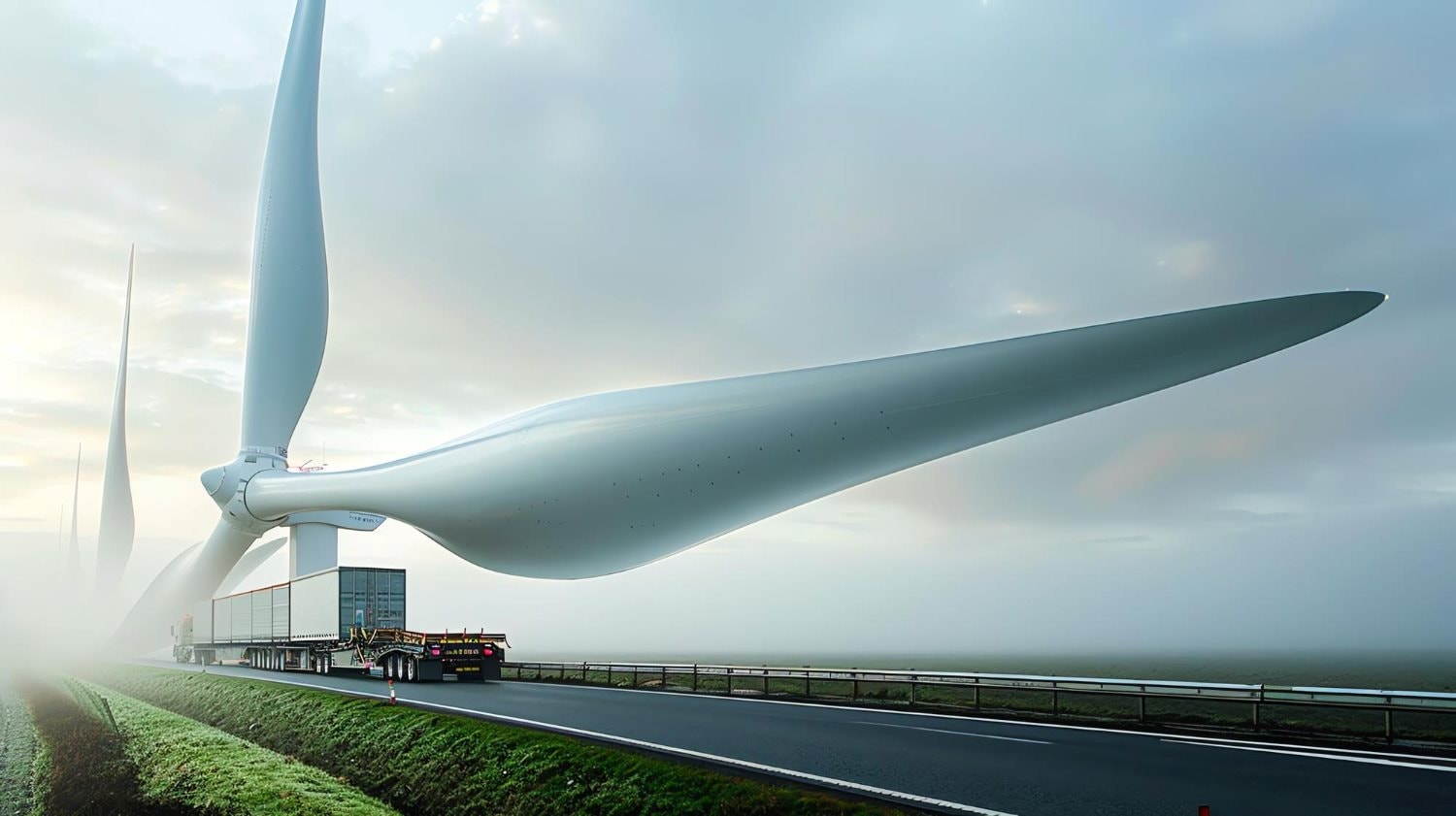
The supply chain for a wind project begins at the port, where massive components - towers, nacelles and blades up to 70–80 metres long - are discharged from specialised vessels and marshalled in laydown yards. They are then transported on multi-axle hydraulic trailers, often with inland waterway legs to bypass weak road infrastructure.
The first challenge is pure geometry: narrow roads, sharp bends, steep gradients and low-capacity bridges on national and provincial highways and access roads. Many routes pass through dense residential areas, small towns and mountainous terrain. Project logistics operators must work closely with local authorities to survey routes, strengthen bridges, temporarily remove road furniture and trees and, in some cases, perform temporary civil works on curves and junctions to enable passage.
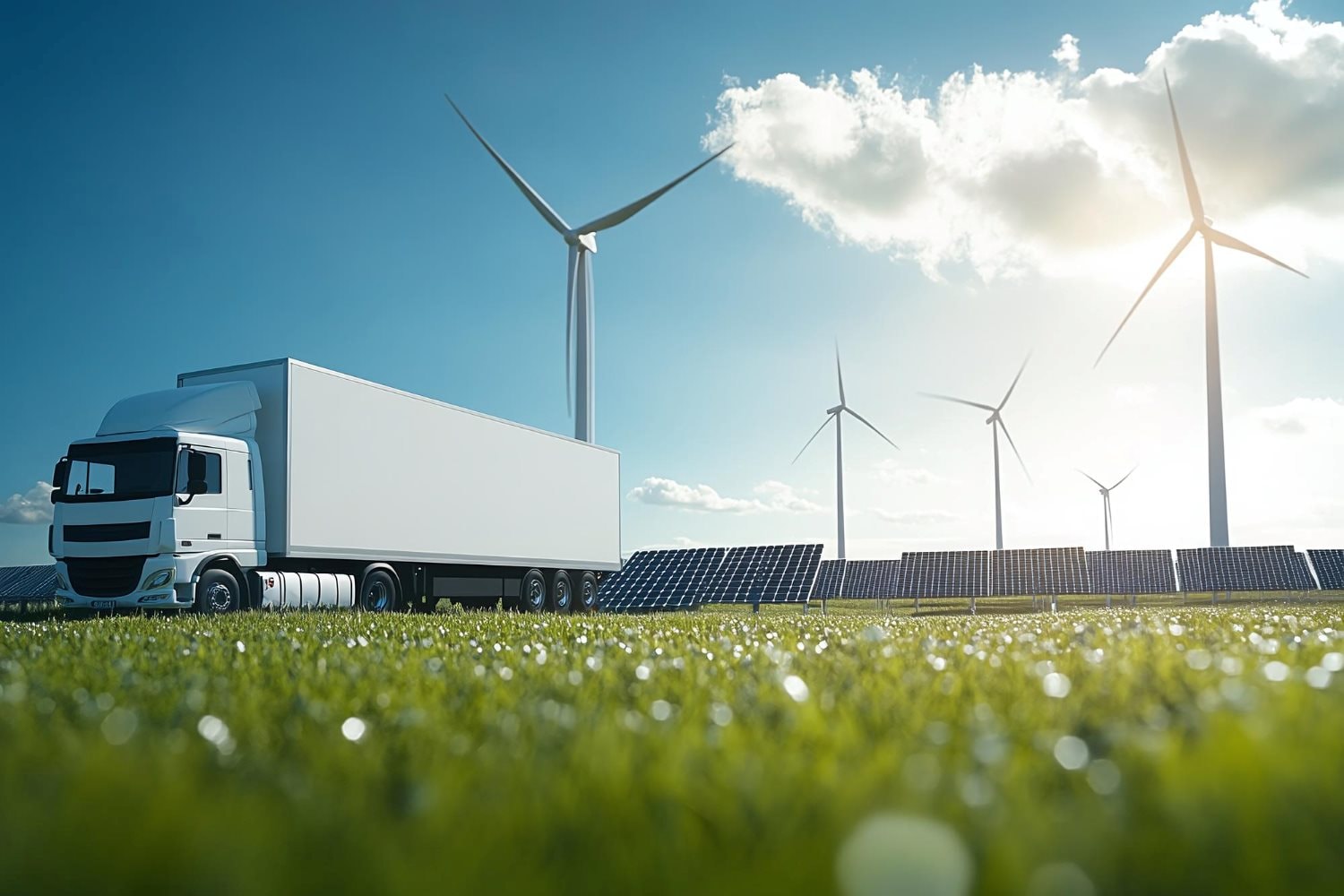
For solar projects, the oversize issue is less severe, but the volume of cargo is enormous: containers and pallets of modules, inverters, steel structures and cables must be delivered within compressed construction windows. This requires strong consolidation capability, fast customs clearance, careful fleet scheduling and staging warehouses, especially when multiple projects are being built in regions where the grid and substations have yet to be upgraded.
Wind and solar projects are not only about turbines and panels; they are about supply chains with extreme complexity. Turbines weigh hundreds of tonnes, blades stretch nearly the length of a football pitch and thousands of containers of equipment must arrive on site right on schedule. A single weak link in the logistics chain can delay a project by months and drive up costs by millions of dollars. Project logistics is therefore the backbone of Vietnam’s energy transition.
Ports, Roads and Waterways: Critical Links for Project Timelines
For wind power, port capacity is the starting point of every logistics plan. Many experts argue that Vietnam should develop one or more dedicated offshore wind logistics hubs along the coast, with sufficient berths, storage yards and heavy-lift equipment to serve multiple projects, rather than spreading investment thinly across small ports. Such hubs would also support a broader marine-economy cluster including fabrication yards, repair services and engineering support.
From port to site, smart combinations of road and inland waterway transport can significantly ease pressure on road networks. Canals and rivers, if dredged and equipped with suitable river ports, can function as “green expressways” for heavy components, shortening the most difficult road legs to the last miles around project sites.
Grid and substation infrastructure remain a major bottleneck. Many renewable plants have been completed only to face curtailment or connection delays due to grid constraints, increasing project risks and imposing additional storage and preservation burdens on logistics providers. This underscores the need for coordinated planning across generation, transmission and logistics infrastructure - ports, waterways and roads - so that “wind waiting for the grid” does not become the norm.
Project Logistics Providers: From Carriers to Architects of Clean-Energy Supply Chains
In major wind and solar projects, project logistics providers are involved long before the first shipment is booked. In the pre-feasibility phase, they assess port and route feasibility, determine heavy-lift and transport requirements, and work with OEMs, EPC contractors and investors to translate technical specifications into practical logistics solutions.
During execution, they orchestrate hundreds of vessel calls, truck convoys and barge trips, coordinating with local authorities across provinces to ensure traffic safety, labour safety and progress. Any incident - an overloaded bridge, a stuck trailer, equipment failure or sudden weather disruption - can trigger cascading delays for civil, mechanical and electrical teams waiting on site.
Vietnam is recalibrating some of its offshore wind targets due to cost and grid-readiness concerns, even as it continues to expand renewable capacity overall. That makes efficient project logistics even more important to lowering lifetime project costs. Solutions such as campaign-based transport planning, shared logistics hubs serving multiple projects, digital route simulations and combined local-international engineering teams can help Vietnam build its own capabilities in renewable-energy supply chains rather than relying solely on foreign expertise.
If renewable energy is to become a new pillar of Vietnam’s marine and green economy, project logistics is the ticket to entry into the global supply chain. Companies that master heavy-lift operations, understand local infrastructure constraints and leverage planning, data and technology will graduate from mere contractors to long-term strategic partners for wind and solar investors. Over time, this expertise can be exported to cross-border projects, particularly as regional interconnection schemes and multi-country offshore wind initiatives take shape.
A Window of Opportunity in the Renewable-Energy Supply Chain
Despite adjustments to specific targets, Vietnam remains an attractive market for renewables due to fast-rising power demand, climate commitments and strong onshore and offshore wind and solar potential. This creates opportunities not only to host generation projects but also to take deeper roles in manufacturing, engineering and operations and maintenance services for the wider region.
Seizing this opportunity will require a clear national strategy for renewable-energy logistics: designated wind-power logistics hubs, specialised heavy-lift fleets and port equipment, a pool of trained project-logistics professionals and a modern regulatory framework for domestic and cross-border transport of oversize, overweight cargo.
Renewable-energy logistics is emerging as a new frontier for Vietnam’s logistics industry - more complex than traditional cargo, but rich in long-term potential. If logistics firms view these projects as one-off transport jobs, they will struggle to build durable advantages. If instead they position themselves as architects of project supply chains, developing specialised assets, skills and partnerships, they can become core enablers of Vietnam’s energy transition and important players in the regional clean-energy ecosystem.



.png "Dung Quat Refinery Runs Steadily at 124-125% Capacity, Securing Fuel Supply During Tet")

.png "Dien Bien builds investment value chains to power its next growth chapter")

.jpg "Dien Bien, Yunnan and Luang Prabang: Expanding Regional Cooperation and Investment Opportunities")