
In this turmoil, air cargo – together with sea–air solutions – has emerged as a new “safety valve” on the Asia–Europe corridor, forcing shippers, airlines and logistics providers to redesign their entire supply chain maps.
From sea to sky: when delivery time becomes the key asset
The Red Sea disruption is not just about blocked lanes; it’s a psychological shock. Many European retailers and manufacturers, especially in fast fashion, electronics and seasonal consumer goods, no longer dare to “bet” their whole delivery plan on ocean shipping. UNCTAD estimates that by mid-February 2024, container traffic through the Red Sea–Suez corridor had fallen by as much as 82%, with hundreds of vessels forced to sail around the Cape of Good Hope. When transit times stretch by an additional two weeks, high-value orders are often compelled to move by air if they are to hit selling seasons or avoid contract penalties.
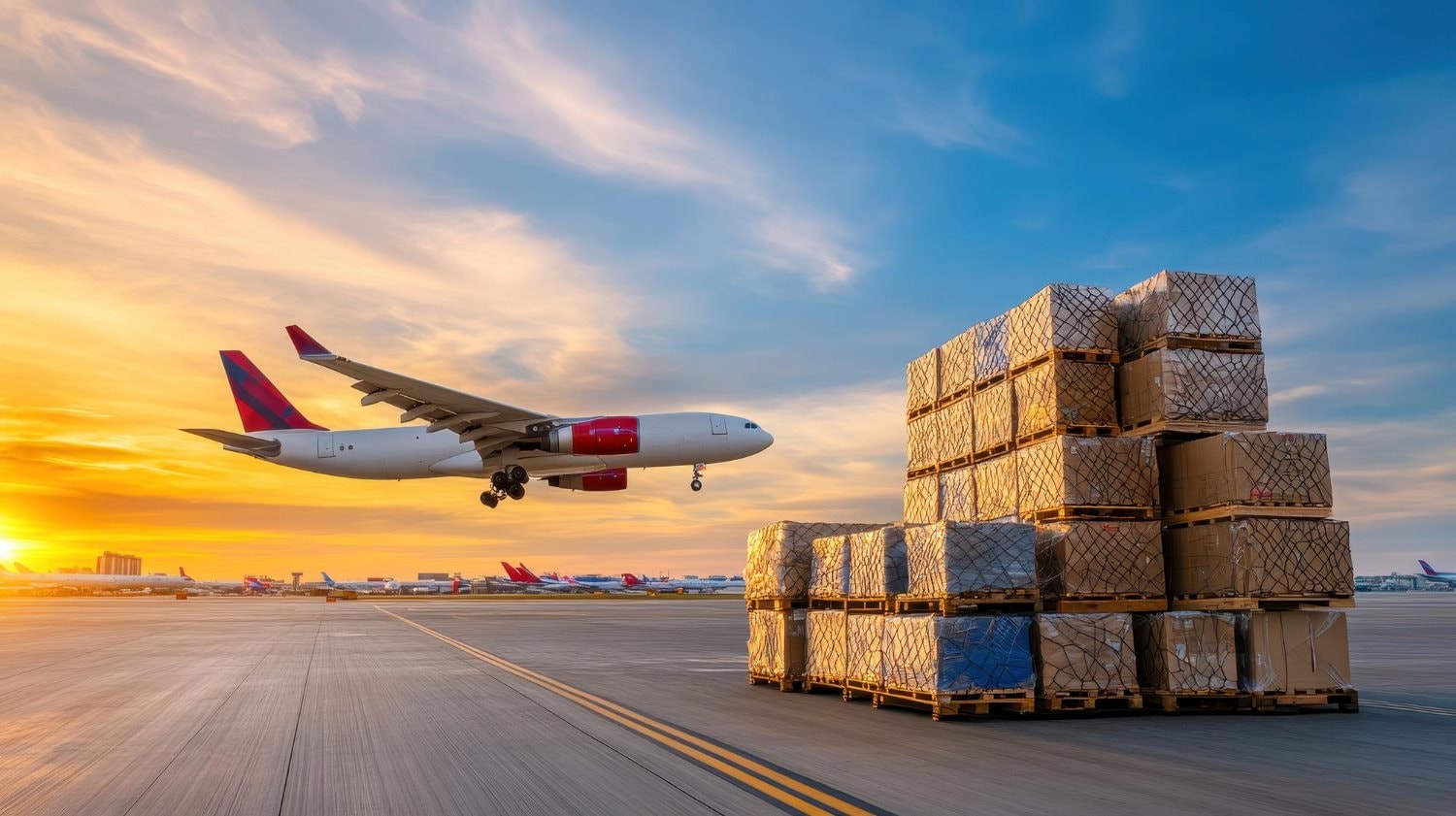
Surging ocean rates, war-risk insurance and surcharges, combined with plummeting schedule reliability, have made air cargo more attractive for “time-critical, high-value” shipments. Many European retailers admit that during the 2024 peak season they were forced to increase their use of air freight on Asia–Europe lanes to keep shelves stocked, accepting a hit to profit margins.
IATA data also show the Asia–Europe corridor rebounding sharply. In 2024, Asia–Pacific led global air-cargo growth with demand up 14.5%, and within that, Asia–Europe ranked as the world’s second-most important freight corridor by CTK, with volumes up 8.3% versus 2023. Moving into 2025, air cargo has maintained its momentum, with IATA still forecasting around 6% growth for the industry as a whole, even under scenarios where ocean traffic gradually returns to the Red Sea route. This reflects a deeper reality: part of the demand has effectively “locked in” to air because of time pressure and the persistent uncertainty of ocean routes.
Sea–air via the Middle East, Singapore, Incheon: the new waypoints of supply chains
Not every shipment can or should travel end-to-end by air. While ocean costs have surged, they are still far below pure air-freight rates, which makes sea–air – moving by sea to a hub and then transshipping to air – a practical compromise between time and cost.
Middle Eastern hubs such as Dubai and Doha, together with Singapore and even Incheon, are becoming critical nodes in these new sea–air corridors. Companies can ship containers from East Asia to Dubai or Singapore on relatively safe ocean routes, then transfer the goods into ULDs and fly them onward to European or North American airports. A number of service providers in the UK, US and Ireland have actively promoted sea–air solutions from Asia as “an efficient response to Suez-channel disruptions.”
One international air-cargo analysis notes that the “on-the-ridge” role of the Middle East is likely to increase: as long as the Red Sea remains unstable, demand for sea–air solutions will remain strong. This does more than bring in additional revenue for regional airlines and airports; it also fragments the Asia–Europe transport map. Instead of cargo moving straight from a Chinese port to a European port, shipments now “stop over” at multiple intermediate nodes where logistics value – warehousing, sorting, labeling, repackaging – can be added.
For Southeast Asia, this presents an opening. Airports such as Singapore, Kuala Lumpur, Bangkok, Tan Son Nhat and Noi Bai can deepen their participation in sea–air chains if they leverage strong seaport–airport connectivity and move quickly on customs reform. Logistics parks near deep-sea ports with direct links to airports could become launchpads for sea–air solutions serving the entire region.
Cost, insurance risks and strategic choices for Asia–Europe shippers
Despite offering a short-term escape route, shifting to air freight or sea–air fundamentally alters the cost structure of Asia–Europe supply chains. Air-freight rates are no longer at the peaks seen during Covid, but they remain far above 2019 levels; according to IATA, although average yields in 2024 edged down versus 2023, they were still nearly 40% higher than before the pandemic. At the same time, war-risk insurance, security surcharges and fuel surcharges for vessels rounding the Cape have driven up total logistics costs per unit of cargo.
Large shippers now face tough trade-offs: pay significantly more to safeguard delivery reliability, or lengthen inventory cycles and build higher safety stocks in Europe – a reversal of the “just-in-time” philosophy that dominated for decades. Many multinationals are opting for a blended approach: maintaining some Cape-route ocean services for slower-moving goods, using sea–air for urgent batches, and reserving pure air freight for SKUs targeting fast-fashion cycles, high-end electronics or other segments where margin is high enough to absorb additional logistics costs.
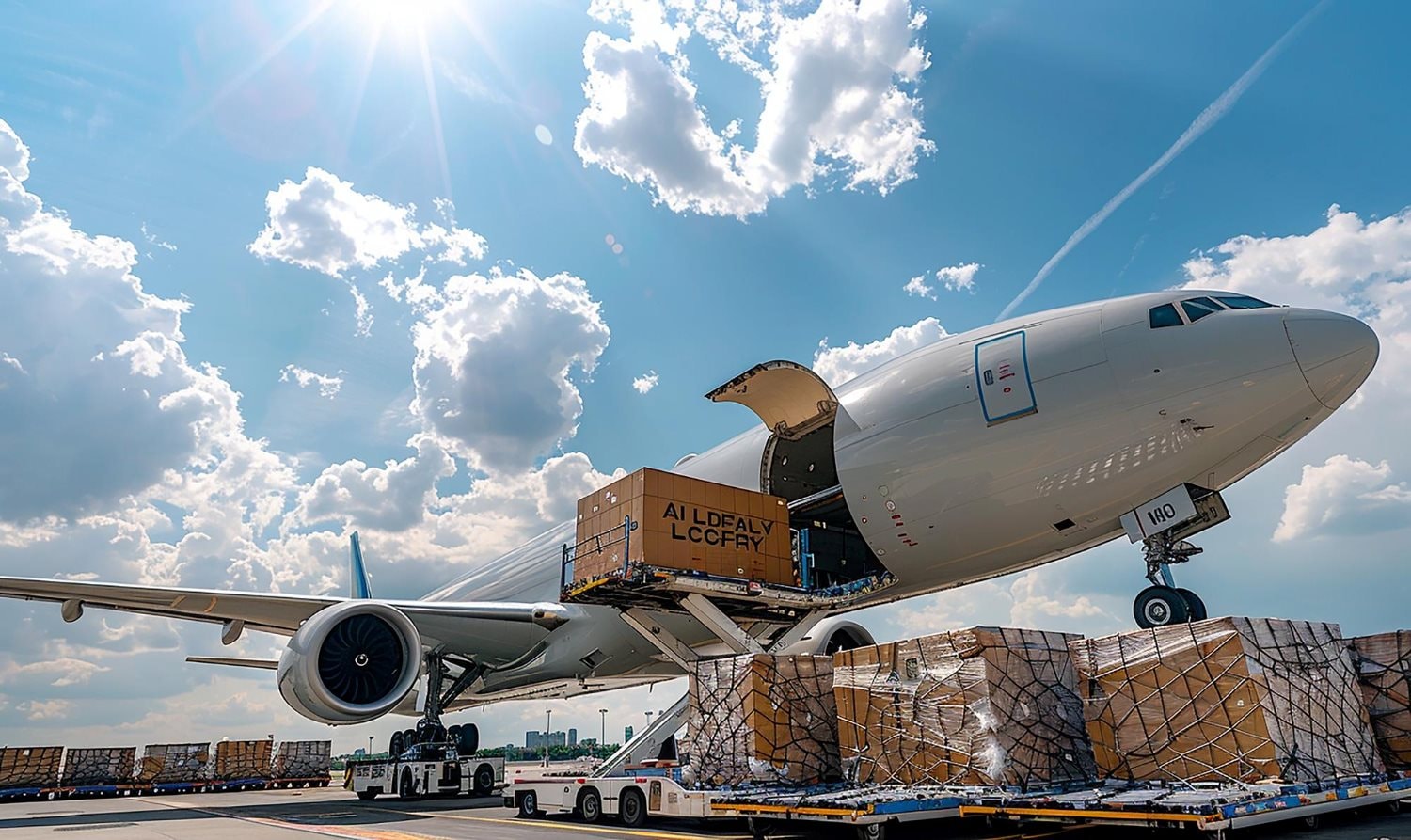
For logistics providers, misreading the market cycle can be costly. Airlines and forwarders have been warned that the 2024 “bull market” could see growth rates fall by roughly half in 2025 as ocean routes normalize and belly capacity increases. If they over-invest in fleets, block-space commitments or warehousing at the peak, they risk sliding into overcapacity and rapidly thinning margins.
Conversely, those that harness data—closely tracking changes in ocean rates, transit times, war-risk levels and sector-specific demand—can design flexible solution “bundles” that optimize the cost–time equation for customers. At a strategic level, this is the moment for Asia–Europe shippers to revisit their entire footprint: where to place warehouses, how to split production and assembly, which mode and route to assign to each customer segment—rather than merely “firefighting” each new crisis as it arises.
In the short term, the Red Sea disruption has pushed a significant share of high-value cargo from ocean to air and sea–air, turning Asia–Europe into one of the busiest corridors in global air freight. In the long term, however, its bigger impact lies in forcing companies to “redesign” their supply chains: segmenting cargo by time sensitivity, building new transit hubs and combining multiple modes within a single end-to-end journey. Those who treat this as an opportunity to restructure—rather than just a temporary shock—will narrow the gap with the world’s leading players.
The Red Sea crisis shows how a single chokepoint on the geopolitical map can shake the entire Asia–Europe supply chain. In this context, air cargo is no longer a mere “backup” option; it is becoming a strategic building block in many corporations’ network design. Nonstop flights, sea–air routes via the Middle East and Southeast Asia, and a wave of investment in new transit hubs are quietly redrawing the Asia–Europe transport map. The key question for businesses and policymakers is not “when will things go back to normal,” but “how will we adapt to the new normal with a different supply chain architecture”—one in which air cargo plays a more central role than ever before.

.jpg "Asia–Pacific Leads the Pack: A New Air Cargo Boom After the Pandemic")


.png "Fulbright at 30: Homecoming… and the Next Steps Toward New Horizons")