
.png)
.png)
WHEN ECONOMIC FLOWS NEED A NEW WAY OF THINKING
We have a manufacturing base that is increasingly mature, a geo-economic position few countries possess, and a business community full of aspiration. Yet alongside those advantages lies a paradox that has troubled us for years: logistics costs are 40–50% higher than the world average, quietly eroding the competitiveness of Vietnamese enterprises - even on home ground.
.png)
.png)
In this context, increasing investment alone is not enough. Localized improvements are not enough either. Viet Nam needs a new mindset - a different approach to unlock systemic strength.
That is why I am writing this piece - not to present a doctrine, and certainly not to paint another slogan. I want to open a way of thinking - an approach strong enough to help Viet Nam’s cargo flows turn a new page: Logistics Symbiosis.
FRAGMENTATION – DUPLICATION – BROKEN FLOWS
Viet Nam has more than 30,000 logistics enterprises. At first glance, that sounds like a formidable force. But behind the number lies a hard truth: most of them operate like isolated “islands.”
Everyone builds their own warehouse. Buys their own fleet. Develops their own software. Each enterprise is a separate piece, disconnected from the whole.
The consequences are visible every day:
- Vehicles return empty on major routes.
-Warehouses run at only 40–60% utilization while other places face shortages.
-Shippers bear logistics costs higher than regional competitors.
-Duplicated investment wastes national resources.
Yet the largest “invisible wound” lies in data: each enterprise holds its own “information island,” with no system able to communicate with another.
.png)
.png)
FROM INDIVIDUAL OWNERSHIP TO SYSTEMIC SYMBIOSIS
The world is entering an era of open platforms, shared assets, and ecosystems. Logistics, ultimately, is not a race of asset ownership; it is the art of optimizing flow.
Logistics Symbiosis is a shift from an ownership mindset to a connectivity mindset:
-One company’s warehouse becomes open capacity for another.
-A small company’s vehicles become capillaries in the national circulatory system.
-Shippers hold a central role - every optimization must serve their efficiency.
-Data becomes a bloodstream that runs through the system, instead of being locked away.
.png)
.png)
THE THREE-LAYER ARCHITECTURE OF LOGISTICS SYMBIOSIS
A model has value only when it has a clear structure. Logistics Symbiosis operates like a living organism, with three layers interacting in rhythm.
1. Physical Infrastructure Layer - Public - private connectivity in one flow
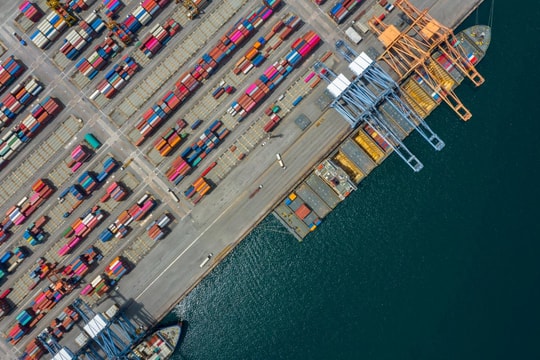
Viet Nam’s logistics infrastructure today is not only insufficient in quantity but also weak in linkage. We have seaports, airports, and expressways, yet they function separately, lacking coordination across transport modes. As a result, cargo flows are disrupted precisely at transfer points.
To address this, the symbiosis mindset does not call for scattered investment; it demands a clearly defined division of roles to optimize social resources. Specifically:
The State - Building the “backbone”: Instead of doing everything, the State concentrates resources on creating the national trunk infrastructure (expressways, railways, airports, gateway seaports, and national and regional logistics centers). This backbone ensures supply-chain security and interregional circulation.
Large enterprises - Operating the “joints”: Leading companies (such as Viettel Post, SNP, U&I Logistics, and others) play the role of operating focal points along major connectivity axes. We invest in seaports, inland waterway ports, ICDs, warehouses, and local distribution centers to regulate trade flows along that backbone.
SMEs and citizens - Extending the “capillaries”: Rather than operating in isolation, they become flexible satellite branches. Small warehouses, light-truck fleets, and idle assets in the community connect into the trunk through a shared-infrastructure model, bringing goods to every corner.
2. Digital Infrastructure Layer - The nervous system of the whole network
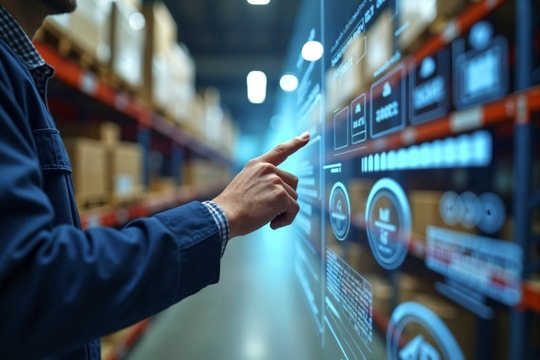
This is where Viet Nam can accelerate the fastest and the most. We need an Open Logistics Platform - a neutral, open data platform that connects all systems:
-State and enterprise management/operational applications speak the same language through standardized APIs.
-Logistics data flows in real time.
-Clear standards for cybersecurity and privacy rights.
-No single enterprise owns it; it is operated in a neutral manner.
A typical example is Singapore - the strength of system thinking. Singapore does not have much land, but it has a “network mindset.” SGTraDex, a national data-sharing platform, is operated by a neutral consortium rather than by the State alone. Data from banks, ports, and transport operators is standardized, secured, and shared in real time. The result: cargo-processing time falls from multiple days to just a few hours. That is not magic. It is the discipline of system thinking.
3. Value Symbiosis Layer - Where prosperity spreads
This is the layer that creates strong spillover effects - where stakeholders do not merely “split the pie,” but work together to make the pie bigger:
Shippers: Benefit directly from lower logistics costs and faster cargo circulation.
Logistics service providers (LSPs): Shift from price-cutting competition to performance-based competition. With shared infrastructure, they can scale services without scattered investment and can optimize load factors.
Industrial parks/export processing zones and FTZs: Transform into green, smart logistics nodes instead of being only land-leasing areas.
Banks and insurers: Can price risk and extend credit more accurately thanks to transparent cargo-flow data.
Technology firms and startups: Gain room to provide AI and IoT solutions that optimize operations.
Citizens: Participate directly in the value chain by sharing idle assets (warehousing space, vehicles).
.png)
.png)
THE RULES OF THE GAME FOR A SMOOTH-RUNNING ECOSYSTEM
A symbiotic system cannot rely on spontaneity. But it also does not need excessive control.
The role of the State - Enable, lead, not replace
- Strategic regional planning - right place, right role, right function.
-Setting standards for data connectivity, privacy rights, and cybersecurity.
-Sandbox mechanisms: allowing pilots of new data- and asset-sharing models within a limited scope before scaling up.
-Tax and credit incentives for enterprises that share infrastructure.
The role of the Market - Operate and innovate
- Logistics enterprises become architects of flow.
- Shippers are the center of optimization.
- Symbiosis is strong only when every participant sees their own benefit within the bigger picture.
CONCLUSION
Logistics is not merely a supporting service; it is the pulse of the economy. And for a pulse to be strong, it must be smooth-flowing, synchronized, and sustainable.
Logistics Symbiosis is not an easy path, but it is a path Viet Nam can take - and must take.
.png)
.png)
That is the “Viet Nam Logistics Path” - a path of connection, symbiosis, and reaching higher.
(*) Vice Chair of the Board, CEO & Co-founder, U&I Logistics