
Yet the reality on the ground is still constrained by a fragmented truck fleet, high empty-backhaul rates, informal costs and low levels of digitalization. This is why digital freight platforms and logistics marketplaces are emerging as a potential game-changer for Vietnam’s road transport industry.
Fragmented Fleet, Empty Backhauls and High Logistics Costs
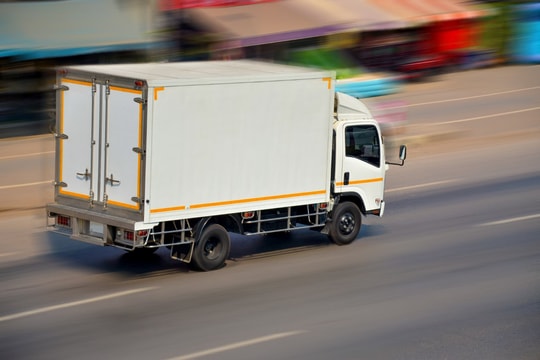
World Bank and other studies highlight how skewed Vietnam’s truck fleet is: around 68 percent of trucks are under 5 tonnes, contributing to road congestion and lower transport efficiency. The market is heavily fragmented among hundreds of thousands of household businesses and small carriers; one survey indicates that about 93 percent of truck owners are individuals, resulting in 60–70 percent of return trips running empty and wasting fuel, time and capacity while doubling CO₂ emissions.

In this environment, Vietnam’s logistics costs remain high by regional standards, driven largely by road transport, informal payments and poor vehicle utilisation. Recently tightened road-safety regulations - such as stricter limits on continuous driving time and higher fines for violations—are positive for safety but require more drivers and careful planning, pushing up operating costs in the short term. Against this backdrop, traditional brokerage and manual dispatching are no longer sufficient to sustain competitiveness.
If every truck is seen as a “digital asset” that can be matched and optimised in real time, the picture of Vietnam’s road transport would look very different. Instead of running empty in one direction, both outbound and return legs could be filled with appropriate loads, with flexible backhaul matching and tighter cost control. Digital freight platforms thus function as a new “soft infrastructure”: bridging shippers, carriers and drivers, rather than leaving each party to navigate a fragmented market on its own.
“Uber for Trucks”, Logistics Marketplaces and the Digitalization Wave
Over the past few years, Vietnam has witnessed the rise of digital freight startups such as LOGIVAN - often dubbed “Uber for trucks” which aims to connect shippers directly with truckers nationwide and slash empty-backhaul ratios. LOGIVAN has been recognised in Forbes Asia’s “100 to Watch” list and has raised international venture funding while building a large network of truck drivers. Other logistics tech startups focus on flexible warehousing and transportation, enabling businesses to book storage and transport services on demand through a single digital interface.
In parallel, logistics marketplace platforms are being developed as “digital lifelines” for SMEs, offering a fully digital order-to-payment process with real-time tracking, simplified documentation and access to multimodal transport, bonded warehouses and financial services. Recent analyses suggest that well-designed digital freight platforms can increase truck utilisation by about 12 percent, mitigating empty backhauls and manual inefficiencies across the network.
Nevertheless, the overall digital maturity of Vietnam’s logistics sector remains modest. Reports note that while logistics firms invested roughly US$500 million in digital technologies in 2023 - up 25 percent from 2022 - this is still low compared to regional peers, and adoption rates for TMS, WMS and platform-based collaboration remain far from their potential.
From Standalone Apps to a Connected Digital Ecosystem
For digital freight platforms to truly rewrite the rules of road transport, the key is not how many truck-booking apps exist, but how deeply these platforms are integrated into the broader logistics ecosystem: seaports, ICDs, warehouses, customs, banks and insurers. Policy discussions and pilot proposals increasingly focus on shared logistics data platforms, where ports, shipping lines, ICDs, truckers and shippers can access a common data layer with clear KPIs, such as truck turnaround times, gate appointment adherence and electronic delivery-order (e-DO) adoption.

In the era of Logistics 4.0, digital freight platforms are only the first step. The larger value lies in creating a “digital brain” for road transport: centralised data, real-time analytics, demand forecasting and network-wide route optimisation. When connected to a national logistics data platform, this ecosystem can lower costs not just for individual companies but for the entire economy, by reducing empty mileage, improving asset utilisation and enabling more transparent, data-driven policy decisions.
Vietnam’s road freight sector is at a critical crossroads. On one side lies the inertia of traditional models - fragmented fleets, manual dispatching, high costs and empty backhauls; on the other stands the opportunity to restructure the market through digital freight platforms, shared data and logistics marketplaces designed to optimise the whole chain. If digital platforms are seen merely as online brokers, their impact will be limited. But if they are treated as core “soft infrastructure” embedded in policy, hard infrastructure and service ecosystems, digital freight platforms can play a pivotal role in reducing logistics costs, enhancing competitiveness and moving Vietnam closer to its ambition of becoming a regional logistics hub in the digital age.





.png "Dien Bien builds investment value chains to power its next growth chapter")

.jpg "Dien Bien, Yunnan and Luang Prabang: Expanding Regional Cooperation and Investment Opportunities")