
.png)
.png)
Geneva 2026 and a logistics landscape changing colour
According to FIATA’s official programme, the 2026 HQ Meeting was held in Geneva from 30 March to 2 April 2026, with sessions focused on digitalisation, multimodal corridors, risk management, e-commerce and emerging technologies. The opening session itself was framed by FIATA as a discussion on the global economic landscape shaping freight forwarding, featuring experts from DECALIA SA, MDS Transmodal and HHLA Next. That design choice matters. It signals that logistics can no longer be understood as a narrow transport function. It has become an industry that must read macroeconomic signals, trade-flow shifts, corridor risks and supply-chain relocation patterns in real time.
.png)
.png)
Based on professional notes shared after the meeting, three themes stood out. First, economic and financial uncertainty - especially exchange-rate volatility, trade policy shifts and cost risk - is now directly affecting international transport contracts. Second, transport, port and hinterland infrastructure are no longer background conditions; they have become competitive variables in their own right. Third, resilience has moved ahead of pure cost optimisation, which for years had guided supply-chain design in many markets.
From “China + 1” to Vietnam’s need for a new logistics positioning
The post-pandemic trading environment, together with geopolitical conflict and disruptions on strategic maritime routes, has accelerated diversification in sourcing and manufacturing. Vietnam is one of the economies benefiting from this shift, yet being selected is not the same as being fully prepared. In practice, Vietnam remains deeply dependent on external trade. According to Vietnam Customs, total merchandise trade in 2025 was estimated at about USD 920 billion, the highest level on record, including exports of roughly USD 470.59 billion and imports of around USD 449.41 billion. At that scale, logistics is no longer a back-office support service. It is soft infrastructure for the entire growth engine.
This is precisely why the Geneva discussions matter for Vietnam. When freight costs, cross-border payment risks and route uncertainty move simultaneously, Vietnamese forwarders cannot continue to rely overwhelmingly on the traditional sea-air binary. The next growth space lies in better modal integration, stronger cross-border trucking and rail-road solutions, and closer links between ICDs, gateway ports, logistics centres and regional trade networks. Without that shift in mindset, Vietnam may continue to grow in cargo volume while retaining only a limited share of logistics value.
.png)
.png)
Vietnam must not only handle cargo, but organise cargo flows
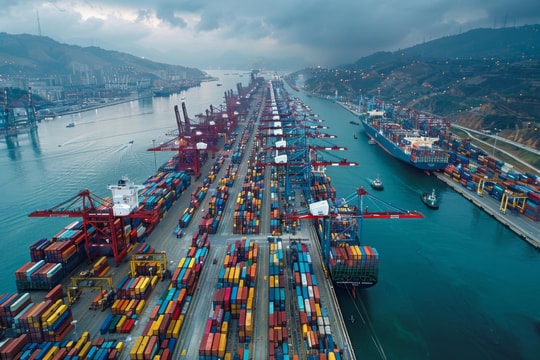
One of the most revealing ideas emerging from the meeting was that port infrastructure and hinterland links should no longer be discussed as isolated construction projects. The key issue is whether a country can become a node that helps organise regional cargo flows. This is where Vietnam needs to move from a mindset of “having large ports” to one of “building logistics systems that create value”. To do so, it needs to advance on three fronts at once: improve the national and regional feeder ecosystem, strengthen the attractiveness of gateway ports for mainline calls, and invest more seriously in hinterland connectivity so that domestic bottlenecks do not erode seaport gains.
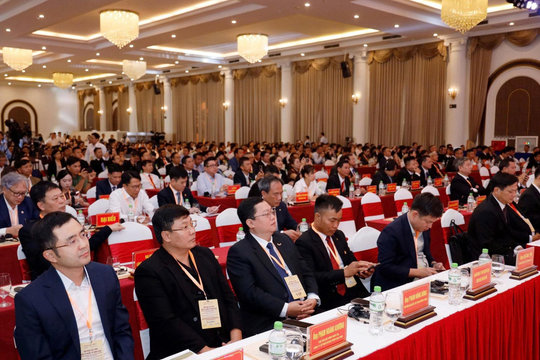
The fact that the 2025 FIATA World Congress in Hanoi welcomed more than 1,000 delegates from over 100 territories is an important indicator. It shows that Vietnam is no longer standing at the edge of the industry’s global conversation; it is increasingly recognised as a logistics platform with a voice. Yet hosting a successful international congress is only the first step. The next one is to turn Vietnam from a venue of discussion into a source of proposals - especially on new corridors, green logistics, digital trade documents and workforce development.
From international observation to policy action and business action
The core lesson from Geneva is that logistics has entered a period in which companies that watch only freight rates will react too slowly. A new observational capability is needed: one that tracks trade data, currency movements, route risk, regulatory change, connection reliability and data quality. For VLA and the wider Vietnamese logistics community, this is also the right time to consider building periodic market-intelligence reports tailored to domestic firms instead of waiting for disruption to happen before responding.
For policymakers, logistics should be treated as a strategic platform linked to trade, industry and external economic relations. For enterprises, the priority is not simply to add trucks, warehouses or vessels, but to strengthen capabilities in multimodal solution design, data governance and customer risk management. In a world moving from cost optimisation to resilience optimisation, the logistics firm that helps cargo owners reduce uncertainty will be the firm that captures better margins.
.png)
.png)
Looking from Geneva toward Vietnam, the biggest lesson is not any single trend in isolation, but the collision of many trends at once: geopolitics, exchange rates, infrastructure, data, law and human capital. The 2026 FIATA HQ Meeting showed that global logistics is moving away from linear growth assumptions and into a model of dynamic adaptation. For Vietnam, the moment is right to build on the momentum of FWC 2025 with more concrete initiatives on corridors, digitalisation and market intelligence. If it can seize this transition, Vietnam may move closer to becoming not only a destination for cargo, but also a place that helps organise regional trade flows.
Sources:
- FIATA, “2026 FIATA HQ Meeting”, official programme.
- FIATA, “HQ Meeting, Middle East Legal Guidance & US Tariff Updates”, 13 March 2026.
- FIATA, “FIATA Unites Global Freight Forwarders in Hanoi to Advance Green and Resilient Logistics”, 8 October 2025.
- Vietnam Customs, “Preliminary assessment of Vietnam international merchandise trade in the second half of December and in 2025”.
- World Bank, Logistics Performance Index 2023.
- UNCTAD, Viet Nam Maritime Profile.

.png "From production capacity to market positioning: WEPACK 2026 as Vietnam packaging's moment to move beyond contract manufacturing")
.png "More than a trade show visit: a WEPACK 2026 program designed for Vietnamese businesses to see better, meet better, and decide better")
.jpg "Dien Bien, Yunnan and Luang Prabang: Expanding Regional Cooperation and Investment Opportunities")