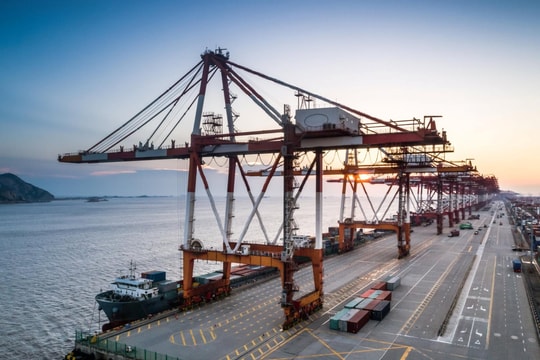

Vietnam’s target for 2025 is to develop a dry-port system capable of handling 20–30 percent of container import-export volumes, with a total capacity of about 6–8.7 million TEUs per year. The key question is how to organise ICDs so they truly function as an “extension arm” of seaport clusters, rather than just overflow container yards.
ICDs as Hubs between Seaports and Inland Production
Research on dry ports and inland terminals defines ICDs as inland logistics nodes directly connected to seaports by road, rail or inland waterways, where customs clearance, container storage, consolidation and de-consolidation can be performed as if at the seaport. In Vietnam, ICDs are concentrated in major economic zones such as Hanoi, Hai Phong, Ho Chi Minh City, Binh Duong and Dong Nai. Their functions include relieving congestion at ports, shortening vessel turnaround times and enabling firms to complete customs procedures closer to industrial parks instead of crowding everything into port areas.
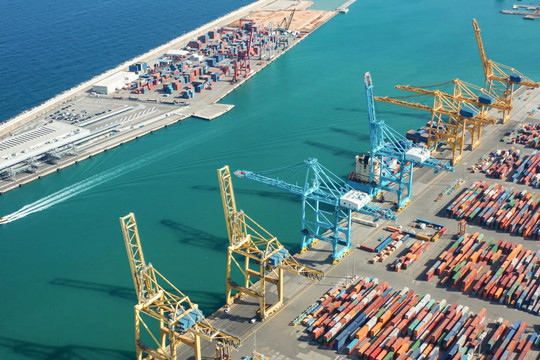
In high-volume clusters like Cai Mep–Thi Vai, Hai Phong and Cat Lai, if all containers moved directly to and from the port gates, pressure on access roads and terminal gates would be immense. ICDs and other inland hubs serve as “buffers,” spreading out container pick-up and drop-off times, consolidating flows from smaller factories, optimising empty-container repositioning and reducing truck queuing at ports. New facilities such as Dong Pho Moi ICD in Lao Cai are being developed as modern logistics centres and key nodes in border-area supply chains, linking road and rail with northern border gates and seaports.
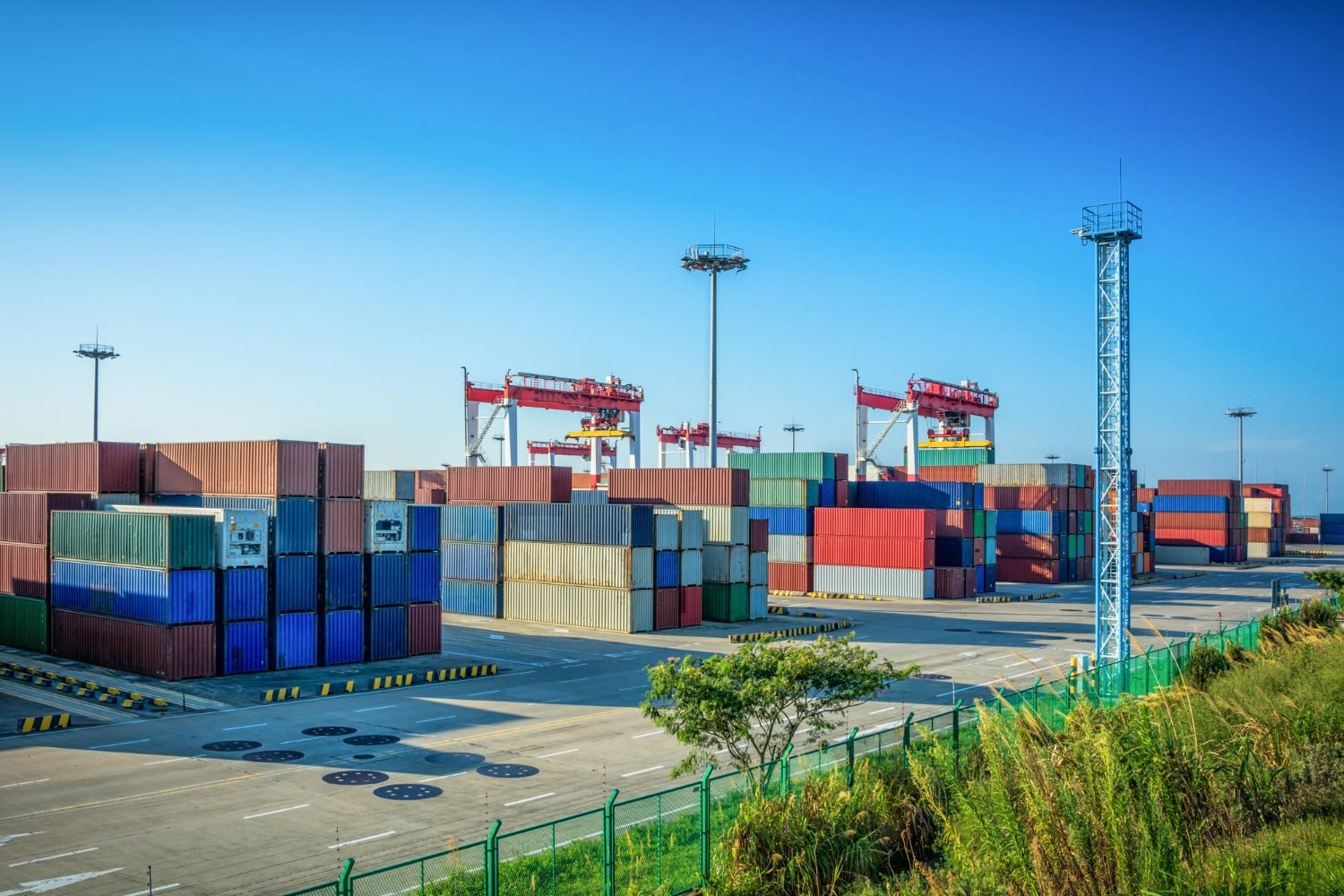
When properly planned and operated, an ICD is more than a parking lot for boxes; it is a true “seaport inland”: equipped with customs, storage and value-added services and connected to multiple transport modes. Containers can be cleared, inspected, sealed and switched between modes smoothly. In this model, seaports are freed from many tasks that can be carried out inland, allowing them to focus on ship operations and high-efficiency planning of vessel and container flows.
Multimodal Corridors: Where Do ICDs Fit on the Connectivity Map?
One of Vietnam’s structural weaknesses is the under-utilisation of multimodal transport, particularly rail and inland waterways. Yet ESCAP and World Bank analyses emphasise the role of inland logistics nodes - including ICDs - as junctions linking road, rail and water, thereby reducing transport costs and improving supply-chain performance along economic corridors.
In the north, rail routes such as Hanoi–Hai Phong, Hanoi–Lao Cai and Hanoi–Dong Dang could deliver far greater value if anchored by ICD networks connected to industrial parks and border gates, enabling cargo consolidation by road and transfer to rail or inland waterways before reaching seaports. In the south, ICDs around Ho Chi Minh City, Binh Duong and Dong Nai can serve as inland hubs for the Cai Mep–Thi Vai cluster when road and barge services are arranged efficiently. Leveraging the Saigon, Dong Nai and Thi Vai rivers for container barge services between ICDs and seaports would ease road congestion and reduce both costs and emissions.
However, several ICDs are currently under-utilised or failing to play their intended roles. Root causes include fragmented planning, overlapping functions, weak integration with seaports (no genuinely through, port-to-ICD products), insufficient rail and waterway connectivity and a lack of attractive value-added services. Some experts warn of an “ICD bubble” if licenses are granted without regard to actual cargo flows, transport corridors or clear cooperation models with seaports.
From Container Yards to Inland Logistics Centres: A Roadmap for Vietnam’s ICDs
To turn ICDs into genuine extensions of seaports, their development roadmap should rest on three pillars. First, corridor-based rather than administrative-boundary-based planning. Each main corridor - northern (Lao Cai, Lang Son–Hai Phong), the North–South axis, southern corridors (Central Highlands–Southeast–seaports) - should have clearly defined ICD nodes tasked with consolidation, distribution and mode shift functions.
Second, integrating ICDs into “end-to-end service contracts” among shipping lines, terminals, logistics providers and shippers. When containers can be picked up or delivered at ICDs under conditions equivalent to seaports, shippers gain more options to optimise their routes and reduce “last-mile to port” costs. Third, upgrading ICDs into full-fledged inland logistics centres, offering bonded and cold storage, light processing, labelling, domestic distribution and multimodal control-tower functions.
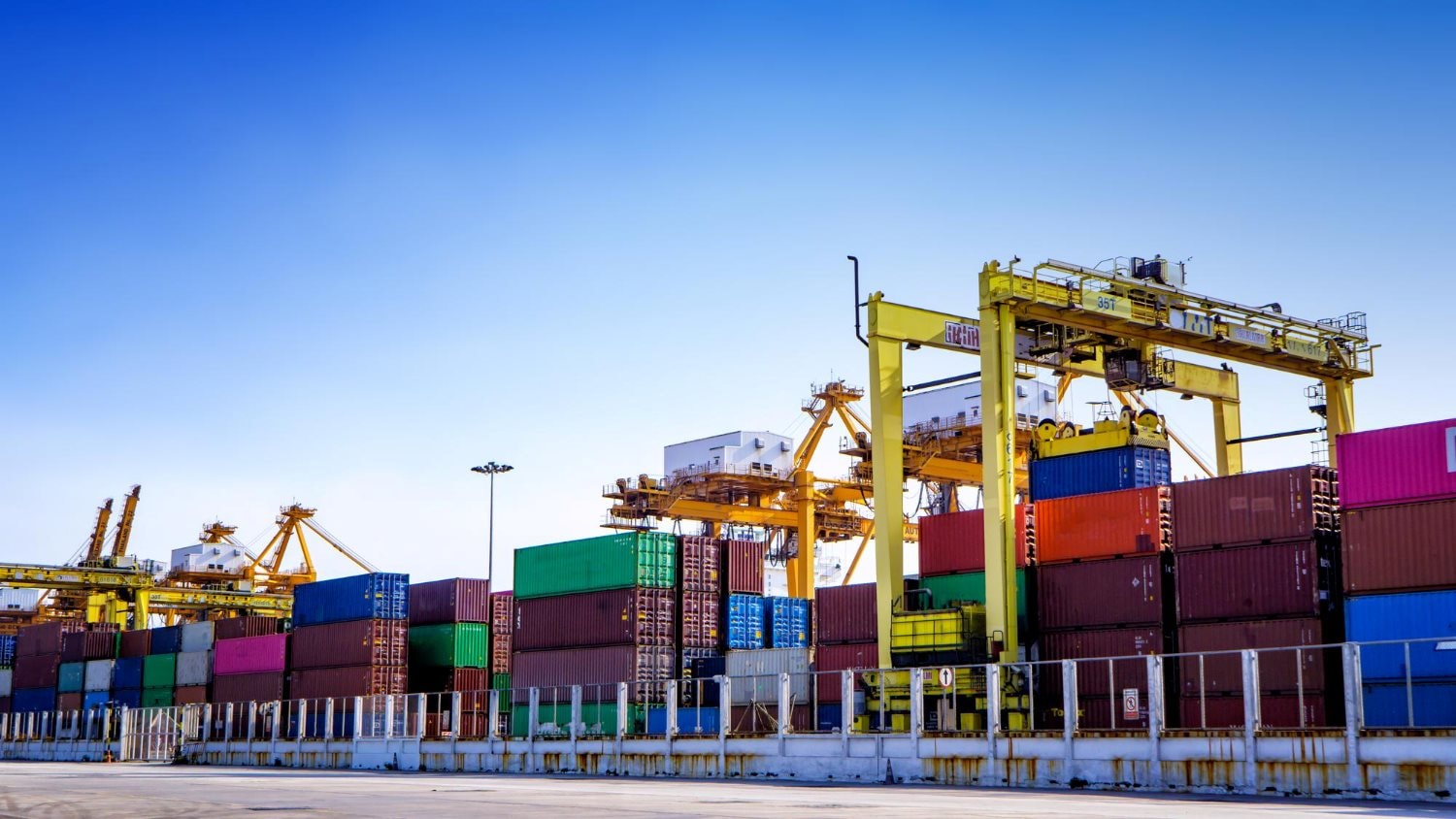
Vietnam’s ICD story underscores a broader lesson: infrastructure only “comes alive” when it occupies the right position in the supply chain, aligned with real cargo flows and sound business models. If ICDs are planned along corridors and embedded in the service offerings of seaports, shipping lines and logistics providers, they will not only relieve congestion but also become the “engine rooms” for orchestrating domestic and international supply chains more flexibly and efficiently.
In Vietnam’s efforts to modernise logistics infrastructure, ICDs and inland terminals are indispensable links for optimising multimodal networks and enhancing cost competitiveness. The issue is no longer “how many ICDs appear on the map,” but where each ICD sits along logistics corridors and how it connects to seaports, rail, inland waterways and industrial parks. Once ICDs genuinely function as seaports’ extended arms - rather than mere inland container yards - Vietnam will move closer to a logistics system that is seamless, efficient and sustainable.