Tech Reset 2025: The Supply Chain Investment Landscape

By Thanh Lam|08/11/2025 08:00

The 2025 technology market survey by Inbound Logistics shows a strong upswing in vendor revenues; 58% of companies reported growth of 10% or more over the past year, reflecting the pressing need for digitization and automation amid rising labor costs and persistent talent shortages. This “tech reset” is not an impulsive buying spree but a disciplined re-ordering of solution portfolios by business impact, time to value, and organizational readiness.

p2(2).jpg
This “tech reset” is not an impulsive buying spree but a disciplined re-ordering of solution portfolios by business impact, time to value, and organizational readiness

Hot Spots

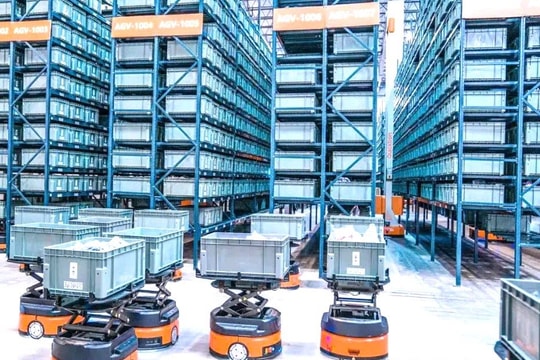
Projects that combine TMS with real-time visibility continue to lead spending as companies seek to lock in optimal transportation schedules based on accurate ETAs and actual loads. In the warehouse, WMS paired with AMRs addresses the twin challenges of productivity and consistent quality - especially with long SKU assortments and fast changeovers.

Predictive AI is shifting from pilots to production, enabling risk-based inventory planning and orchestration recommendations driven by simulated demand. At the same time, risk and resilience capabilities are emerging as a strategic safety net: early triggers based on dwell time, spot rates, or port congestion automatically propose lane shifts, extra time buffers, or activation of postponement. Together, these hot spots form a unified orchestration layer where operational data is converted into same-day decisions.

Data Skills & the Digital Control Tower

Technology only endures when it is anchored in organizational capability. Many companies have set up a digital control tower as the convergence point for data from TMS, WMS, IoT, and orders, where operations, commercial, and finance teams share a single KPI dashboard to manage exceptions. Core capability now means data literacy across roles: reading dashboards, tracing root causes, running “what-if” scenarios, and asking vendors the right questions.

Successful organizations typically train in three layers: foundational safety and process discipline; basic digital skills for frontline teams; and an “advance guard” specializing in analytics, simulation, and continuous improvement to translate recommendations into new operating rules.

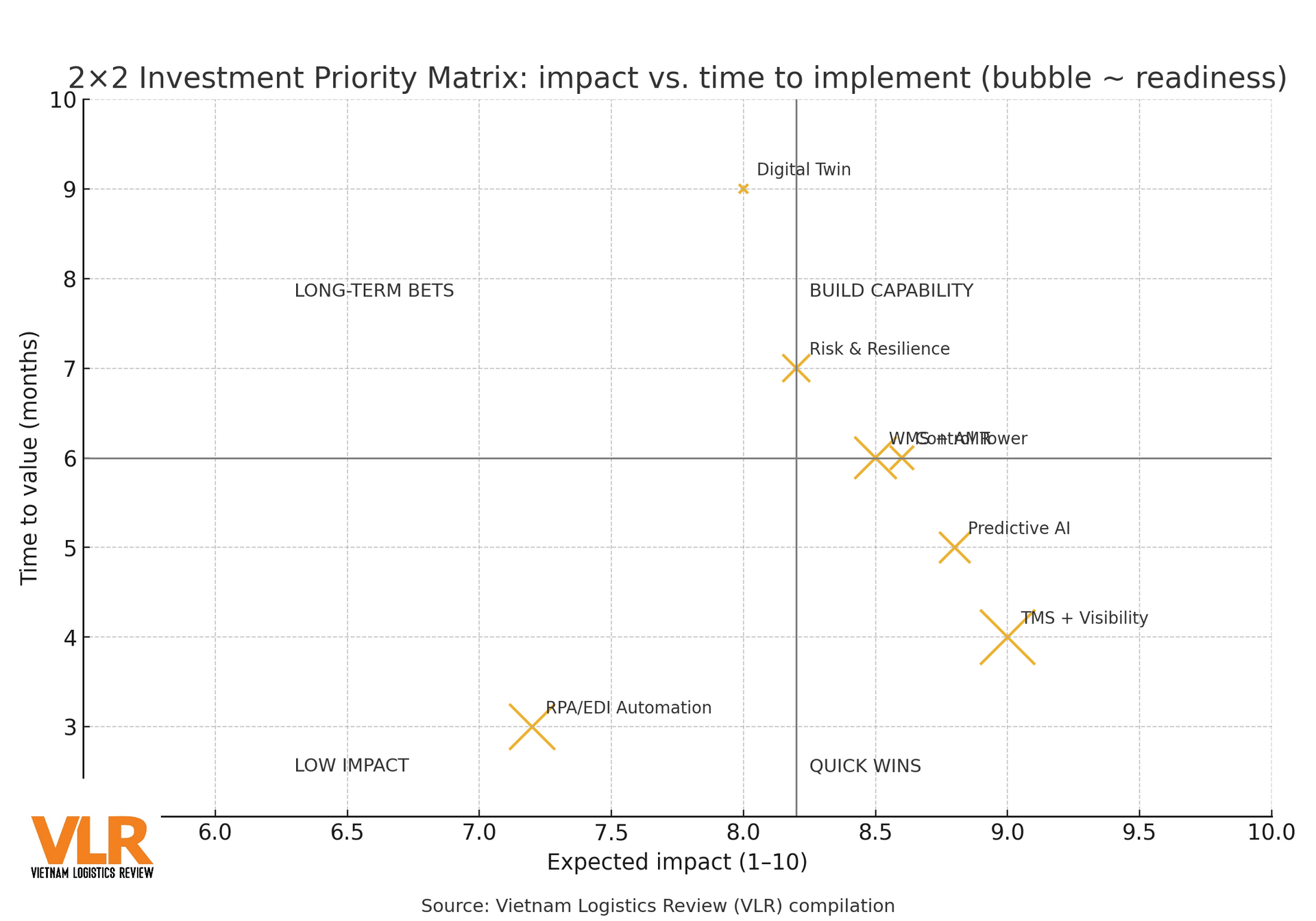
A 2×2 investment-priority matrix helps: rank initiatives by impact and time to implement, favoring “quick wins” such as TMS + visibility or targeted AMR deployments that deliver value in three to six months. Platform plays like control towers, risk systems, or digital twins should scale along a maturity roadmap, tied to cost–service–carbon metrics each quarter to avoid “big purchase, half-hearted adoption.”
techreset2025_en_chart1_quadrant.png

Technology Contracts

Contracting is shifting toward phased value rather than long, monolithic rollouts. The first 90-day phase focuses on a single process to prove measurable outcomes - higher ETA accuracy, lower cost-to-serve, or reduced CO₂ per order - before broadening scope. Companies also negotiate flexible licensing and open API integrations to avoid vendor lock-in and formalize data provisions: ownership, export formats, refresh cadence, and security requirements. This approach balances speed, risk, and cost while preserving strategic control.

Before signing, buyers should demand proof of impact via operational KPIs, a clear integration roadmap with existing systems, explicit commitments to open APIs and data standards, security and audit mechanisms, on-site support capability, role-based training plans, value-linked pricing, Scope 3 handling, exit options, and case studies from comparable industries. Convincing answers to these ten areas form the bedrock for sound decisions.
techreset2025_en_chart2_radar.png

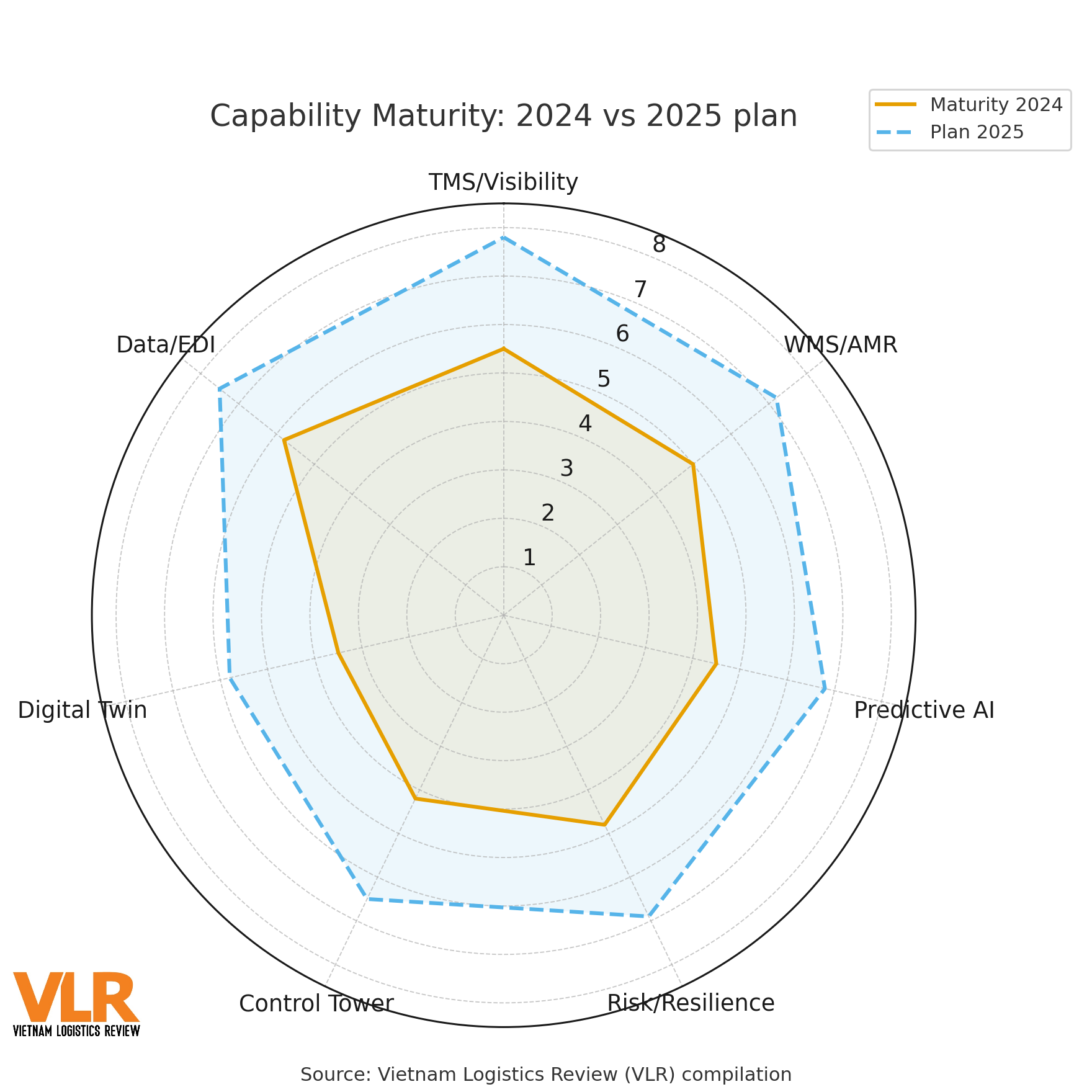
Investments in technology deliver durable results only when paired with a program to upgrade people and processes. In 2025, firms don’t need to “innovate at any cost”; they need a sharp priority list: a few 90-day quick wins to build momentum, several architectural foundations (control tower, risk, and data) to enable scale, and a data-skills program that turns dashboards into decisions. When technology, process, and people move in concert, the supply chain truly enters its tech-reset phase - faster, more transparent, and more resilient.
Bài liên quan

(0) Bình luận
  • Smart Warehousing Begins with Reliable Data
    Robots, conveyors and software often dominate discussions about smart warehouses. Yet advanced equipment cannot rescue inconsistent master data. Duplicate item identifiers, conflicting units, unrecorded location moves and differences between system stock and physical stock can turn automation into a faster way of repeating errors.
  • Steel Coils and Quality Preservation During Transport
    Steel coils can arrive at the correct total weight yet fail to meet the intended use when edges are deformed, surfaces are scratched or corrosion appears. Quality preservation needs to begin before loading and continue through each transfer. Steel producers and transport providers need to connect product information, the transport arrangement and condition records into a process that can be checked.
  • Port concessions and investment responsibilities
    Granting a business the right to operate a port can mobilize capital and operational expertise. The outcome depends on identifying who invests, who maintains the assets and who is accountable when infrastructure deteriorates or services are interrupted. A sound agreement connects operating rights with specific obligations and protects customers' ability to use the port throughout the operating term.
  • Measuring shipment emissions across the transport chain
    A shipment may move through trucks, ports, vessels and several transfer points before reaching its consignee. Quantifying the emissions associated with that journey requires an agreed boundary, suitable data and a clear allocation approach. A useful result should explain how it was calculated. That transparency allows customers to compare transport options and helps operators identify where better information or operational changes would have the greatest value.
  • Prefabricated Housing and Delivery in Construction Sequence
    Prefabricated housing moves part of construction from the site to the factory, but installation progress still depends on how components are delivered. Correct quantities cannot sustain work when an item needed first arrives later, or when the site is unprepared to receive it. For residential projects, transport planning should start from the approved erection sequence, connecting production schedules with unloading capacity and the installation position of each component.
  • Managing Returns in Domestic E-commerce
    A returned parcel is not a closed case. The customer’s request still needs a decision, while each item needs an authorized destination and an accurate stock status. When parcels reach a warehouse but wait unexamined, both merchandise and money remain tied up between processes. For domestic e-commerce, returns should be designed as part of normal operations, with clear ownership from the initial request to the final inventory and financial entries.
Nổi bật Tạp chí Vietnam Logistics Review
Đừng bỏ lỡ
Tech Reset 2025: The Supply Chain Investment Landscape
POWERED BY ONECMS - A PRODUCT OF NEKO