
Robots enter warehouses because operational pressure has changed
Modern warehouses face much greater pressure than before. Order volumes are rising, but order sizes are smaller. Customers want faster delivery, but costs must be lower. SKU counts are increasing, but inventory must be more accurate. Peak seasons are harder to forecast, while warehouse labour is becoming harder to recruit and retain.
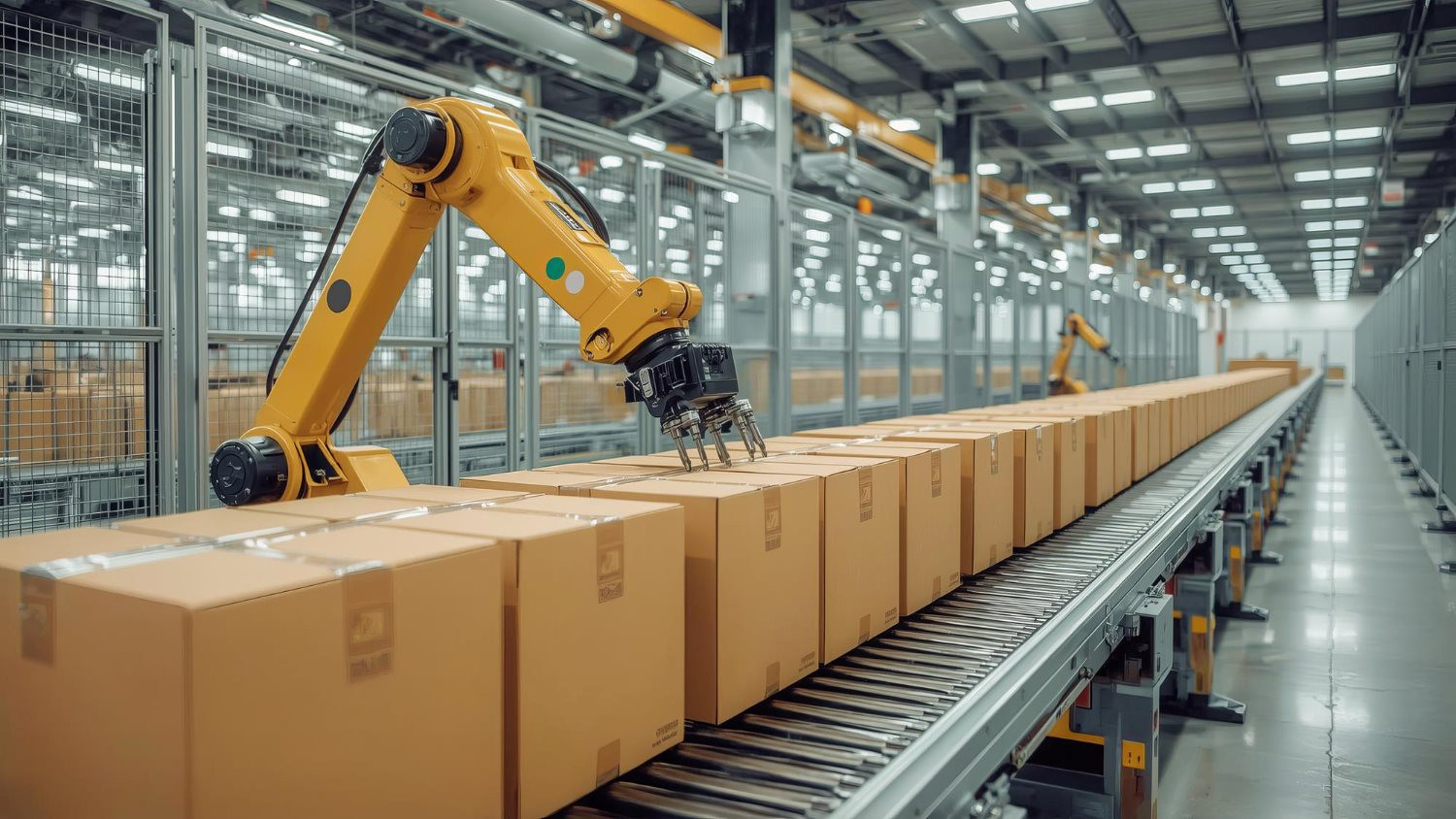
In this context, robotics has become an inevitable direction. Robots can support goods movement, bring shelves to pickers, sort parcels, move totes, assist packing, palletising, counting, scanning and, when combined with AI, optimise warehouse flow. In high-volume warehouses, robots reduce walking distance, lower picking errors, increase handling speed and help warehouses expand capacity without increasing space or labour at the same rate.
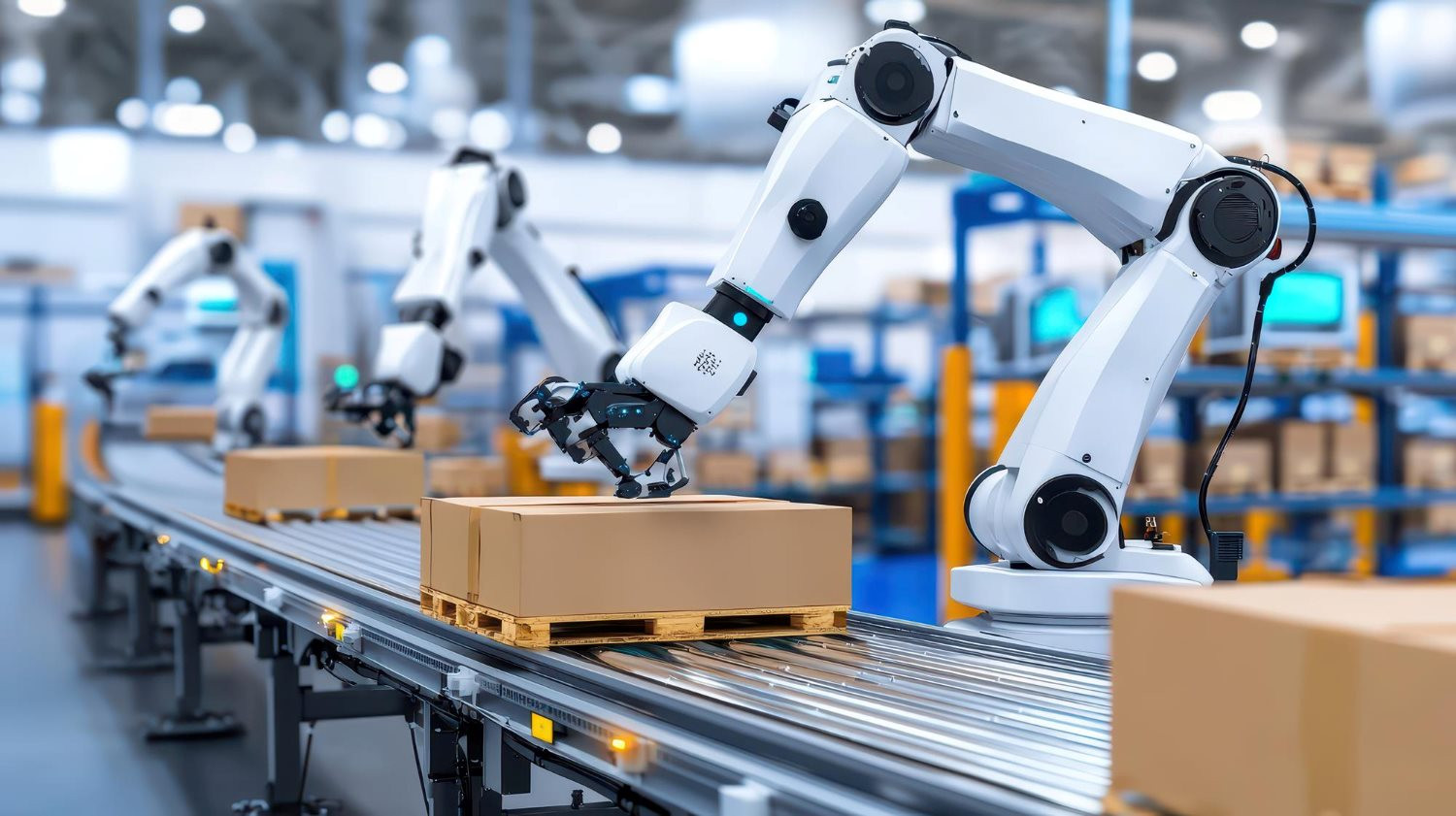
This is not merely an impression. The International Federation of Robotics reports that in 2024, 102,900 professional service robots were sold for transportation and logistics applications, up 14%; this was also the largest application category for professional service robots. These robots mainly include mobile robots for transporting and handling goods in indoor environments.
At the broader industrial level, IFR also reports that 542,000 industrial robots were installed globally in 2024, more than double the number installed ten years earlier, with Asia accounting for 74% of new deployments. This shows that automation is no longer a distant trend, but a core competitive capability for manufacturing and logistics.
Not every robot fits every warehouse
A common mistake is to assume that bringing robots into a warehouse automatically improves efficiency. In reality, robotics works only when selected for the right problem. Some warehouses need AMRs to reduce walking time. Others need goods-to-person systems to speed up picking. Some need sorting robots for small parcels. Others need robotic arms for palletising. In many cases, conveyors, scanners, a good WMS and better layout may already create significant improvement.
Companies should begin with operational questions, not technology questions. What is the current bottleneck? Do workers walk too much? Are picking errors high? Do orders spike during peak seasons? Is space insufficient? Are returns high? Are labour costs rising? Is small-parcel handling difficult? Is real-time data missing? Each bottleneck leads to a different robotics configuration.
If selected poorly, robots can become expensive investments. A rigid automation system may not suit a fast-changing product category. A robot that cannot integrate with the WMS may add manual work. A solution that is too complex may exceed the operating capability of the team. Warehouse robotics must therefore be designed as part of operational strategy, not as a technology showcase.
Warehouse robots do not replace management thinking. They demand better management: clearer data, better layouts, standardised processes, trained staff and transparent productivity indicators. Robots create value only when the whole operating system is redesigned.
Four robotics models to watch
The first model is autonomous or semi-autonomous mobile robots. These support goods movement inside warehouses, bringing shelves or totes to processing zones and reducing walking distance. This model suits fulfilment, e-commerce, omnichannel retail and warehouses with many small orders.
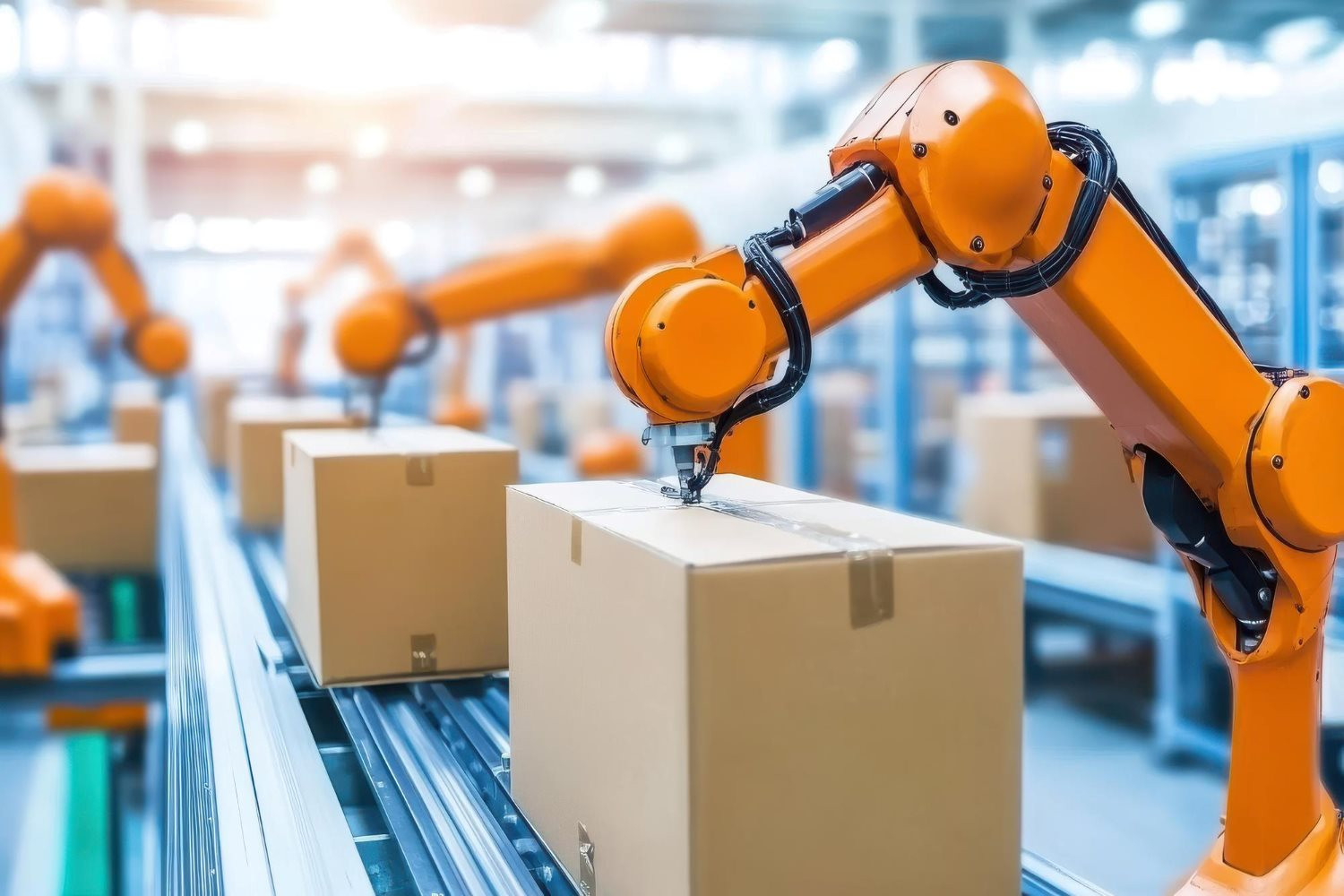
The second model is goods-to-person. Instead of workers walking to shelves, the system brings goods to workstations. This can significantly improve picking productivity, reduce errors and optimise storage density. However, it requires highly accurate SKU, inventory, order and replenishment data.
The third model is sorting robots. In e-commerce and express delivery, parcels must be sorted by route, area, driver, delivery point or order. Sorting robots help process large volumes of small parcels, reduce dependence on manual sorting and improve scalability during peak seasons.
The fourth model is palletising and depalletising robots. These support stacking, unstacking, carton handling and heavy-load operations. Their greatest value lies in reducing physically demanding labour, lowering injury risks and increasing stability in repetitive tasks.
Beyond these models, warehouse robotics can also combine with vision AI, sensors, digital twins, robot fleet management, predictive maintenance and data analytics platforms. At that stage, warehouses do not simply automate individual tasks; they optimise flow at the system level.
Robotics and the logistics labour question
One of the biggest concerns around robotics is job loss. In logistics, however, the story is more complex. Many warehouses adopt robots not because they want to reduce labour at all costs, but because labour is hard to recruit, productivity is unstable, repetitive tasks cause fatigue and fast-delivery requirements exceed manual capacity.
Robots may reduce demand for some repetitive jobs, but they also create new needs: system operation, robot maintenance, data analysis, robot fleet management, process design, quality control, exception handling and workforce training. The important issue is that companies need a labour transition strategy, so automation does not become an internal shock.
A good robotic warehouse is not a warehouse without people. It is a warehouse that reallocates roles between people and machines. Robots are good at repetitive, heavy, travel-intensive and highly stable tasks. People are better at judgment, quality checks, exception handling, process improvement and customer coordination.
Where should Vietnam start?
For Vietnamese companies, warehouse robotics should begin in areas where ROI is clear: fulfilment warehouses with high-frequency small orders, express sorting centres, retail warehouses with many SKUs, electronics component warehouses requiring accuracy, heavy-goods warehouses with safety risks and cold storage where working conditions are harsh.
Companies do not need to automate everything at once. They can pilot one area, one product line or one process. Robot-as-a-Service is also worth considering because it lowers upfront investment and allows businesses to rent robotics capability according to demand. IFR reports that RaaS in professional service robots grew 42% in 2024, showing rising interest in flexible adoption rather than full equipment ownership.
Before introducing robots, however, companies need six conditions: accurate inventory data, a suitable WMS or management system, a layout that can be redesigned, standardised inbound and outbound processes, trained staff and clear ROI metrics. Without these, robots may complicate an already unstable system.
Warehouse robotics is no longer science fiction. It is becoming part of modern logistics, especially in e-commerce, retail, fulfilment, express delivery, cold chains and high-value manufacturing. But robots are not magic tools. They work only when companies understand their operational problems and redesign systems to use technology effectively.
For Vietnam, robotics offers opportunities to raise warehouse productivity, reduce errors, improve workplace safety and increase peak-season order capacity. But that opportunity becomes an advantage only when companies stop asking “which robot should we buy first?” and start asking “which operational bottleneck should we redesign first?”.
.png "BSR Broadens Crude Slate, Strengthens Competitiveness")
.png "Saigon Newport Named One of Asia's Best Companies to Work for in 2026")