
.png)
.png)
The Shift from Manufacturing to Orchestration
Traditionally, industrial strength was measured by the number of factories, production lines, and the volume of goods produced.Today, that equation is changing.
.png)
.png)
The rise of e-commerce, artificial intelligence, automation, and data analytics has shifted value creation toward supply chain orchestration. Products must not only be manufactured efficiently but also delivered accurately, distributed intelligently, and adapted quickly to changing market demands.
Within this context, Guangzhou is emerging as one of Asia’s leading hubs for intelligent logistics and industrial innovation.

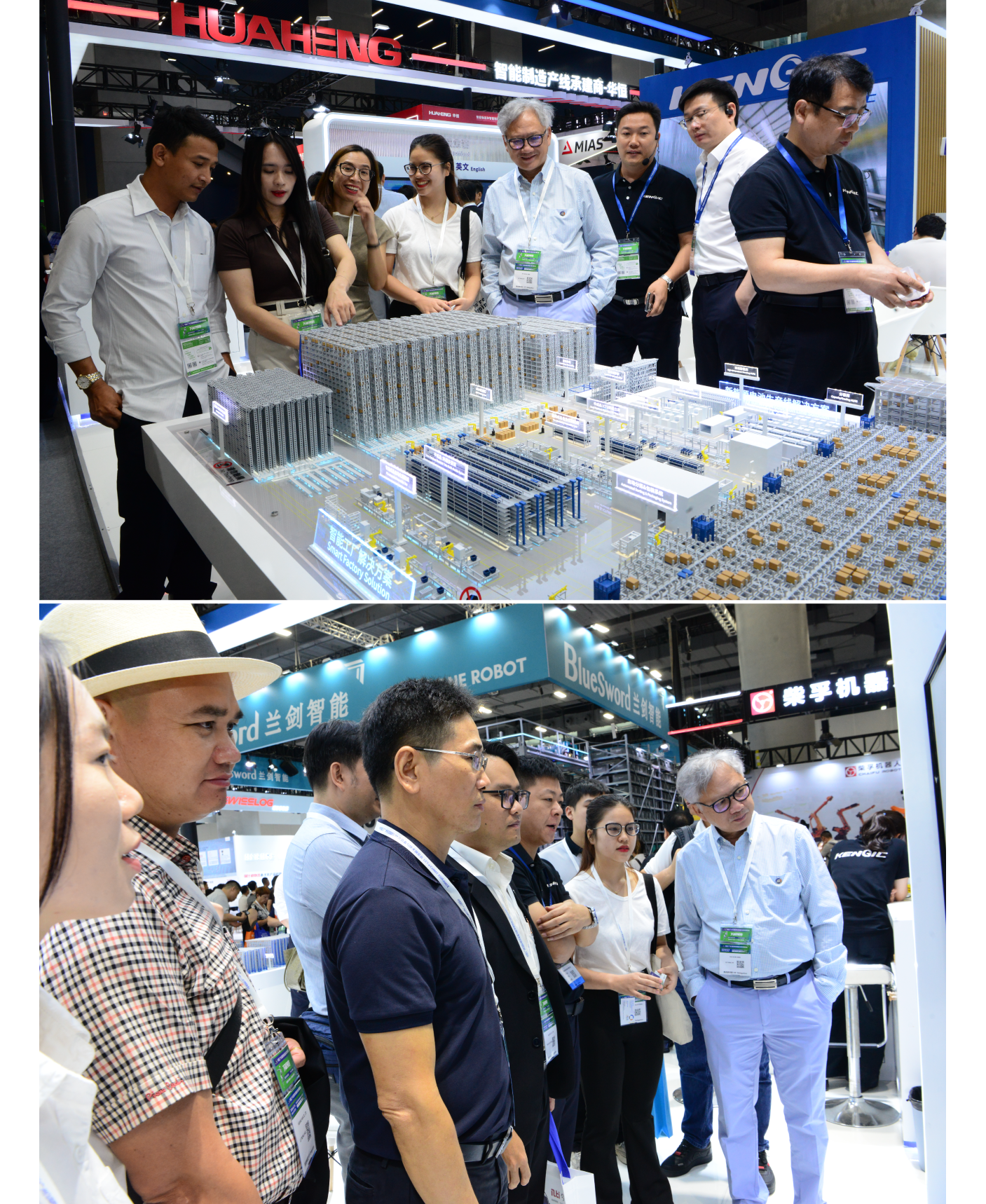
The strategic focus of LET-a CeMAT ASIA on Digital Intelligent Factories, Smart Logistics, and Robotics reflects the broader ambitions of the Guangdong–Hong Kong–Macao Greater Bay Area to become a global benchmark for advanced manufacturing and supply chain excellence.
The exhibition demonstrates that logistics is no longer a supporting function operating behind the scenes. It is becoming a critical driver of competitiveness and economic growth.
Data Is Becoming the New Logistics Infrastructure
One of the most significant developments in modern logistics is the growing importance of data as a strategic asset.
In the past, competitive advantages were often measured by warehouse capacity, transportation fleets, or physical infrastructure. Increasingly, however, success depends on an organization’s ability to collect, manage, and utilize data effectively. Every order, shipment, warehouse operation, vehicle movement, and robotic action generates valuable information.
.png)
.png)
This is why exhibitions such as LET are no longer simply platforms for showcasing equipment. They have become windows into a new operating model where data serves as the foundation of logistics performance.
The future of logistics will be shaped as much by information flows as by physical flows.
What Should Vietnam Prepare For?
For Vietnam, the most important lesson may not be the robots or automation technologies themselves. Rather, it is the development of a connected logistics ecosystem where infrastructure, data, businesses, and talent work together as an integrated network.
.png)
.png)
Modern logistics systems help companies expand market reach, strengthen customer relationships, improve resilience, and create sustainable competitive advantages.
LET-a CeMAT ASIA 2026 therefore represents much more than an international trade exhibition. At a broader level, it offers a preview of how leading economies are redesigning supply chains for the digital era.
For Vietnamese businesses, investors, and policymakers, observing these developments provides valuable insights into the future direction of logistics and supply chain management. As Vietnam seeks to elevate its position within regional and global supply chains, understanding these trends will be essential.
The future of logistics is no longer defined solely by the movement of goods. It is increasingly defined by the intelligence behind that movement—and Guangzhou is rapidly becoming one of the places where that future is being built.
.png "LET-a CeMAT ASIA 2026: When Automation Is No Longer an Option but a Condition for Competitiveness")
.png "Vietnam–Guangzhou Business Cooperation: Expanding Opportunities In Infrastructure, Logistics, Technology, And Talent Development")

.png "Ho Chi Minh City - Guangzhou: From a Young Entrepreneurs' Meeting to New Bridges of Cooperation")

.png "Dien Bien builds investment value chains to power its next growth chapter")

.jpg "Dien Bien, Yunnan and Luang Prabang: Expanding Regional Cooperation and Investment Opportunities")