
.jpg)
.jpg)
After completing its legal transition and organizational consolidation, the Ho Chi Minh City Small and Medium Enterprise Association (HCM-SME) enters a new term with a clear goal: to become a trusted platform accompanying the business community, laying the “runway” for digitalization, standardization, and market expansion. In a recent discussion, Chairman Pham Van Triem and Standing Vice Chairman Bui Ngoc Diep shared a development vision for HCM-SME built on Connectivity – Integration – Development, taking tangible outcomes at enterprises as the ultimate measure.
Consolidating the organization and strengthening the foundation in a new context
HCM-SME’s official operation in Ho Chi Minh City following its merger requires a restructuring of the apparatus toward selective expansion while remaining streamlined, with clearly assigned responsibilities and continuity in enterprise-support activities.
.jpg)
.jpg)
HCM-SME Chairman Pham Van Triem emphasized that consolidation is not merely a reshuffling of personnel but a process of “shaping a new operating method”—one that places enterprise experience and results at the center. In this long-term endeavor, the Association does not act in place of enterprises but works alongside them, connecting policy, finance, and market resources to shorten the journey of capability upgrading.
.jpg)
.jpg)
In his remarks, Mr. Triem added two key perspectives. First, internal consensus is decisive: a unified voice from the Executive Committee and Standing Board will enable the Association to “go far” with cross-functional initiatives connecting departments, sector clubs, and localities. Second, the partner ecosystem must be built as an “alliance serving enterprises,” in which universities, research institutes, banks, standards and certification bodies, digital platforms, and anchor companies coordinate smoothly, avoiding overlap and formality.
Three breakthroughs: digitalization – standardization – market expansion
HCM-SME identifies three enduring pathways. First, meaningful digitalization, starting with an electronic membership platform as the infrastructure for management and interaction. This is not only a centralized data repository but also a “gateway” for enterprises to access online training, expert consulting, legal libraries, and tools to gauge digital maturity. The Association prioritizes essential, easy-to-apply modules suitable for SMEs, while launching programs on cybersecurity and business continuity planning to reinforce a “digital shield” against increasingly complex risks.
Second, standardization according to international criteria and supply-chain requirements. HCM-SME will deploy a rapid assessment toolkit to help enterprises review core criteria on occupational safety, environment, labor and social responsibility, and traceability; from there, it will advise on roadmaps to obtain certificates appropriate to each industry. This “lean – precise – practical” approach aims to reduce compliance costs while creating a foundation for deeper participation in domestic and global value chains.
Third, market expansion based on digital capability and sectoral linkages. The Association will study the organization of promotion groups by product clusters, focusing on markets with favorable access and leveraging free trade agreements. In parallel, HCM-SME will promote the formation of industrial link clusters—platforms where enterprises in the same value chain share standards, match supply and demand, co-develop technology solutions, and implement chain-finance models. At the micro level, each sector club serves as a “touchpoint” to tackle concrete business problems; at the macro level, municipal departments and agencies are co-partners in improving the business environment.
.jpg)
.jpg)
Transparent governance and ecosystem linkages
At the operational level, HCM-SME focuses on process discipline and information transparency. Every initiative has a matrix defining responsibilities, timelines, and evaluation criteria, enabling specialist divisions to coordinate smoothly and avoid resource wastage. Activity and financial reports are disclosed periodically; internal audit mechanisms, conflict-of-interest rules, and professional ethics standards are rigorously enforced to ensure the organization’s integrity. The Association also encourages a culture of “candid feedback”—all member comments are recorded and publicly responded to.
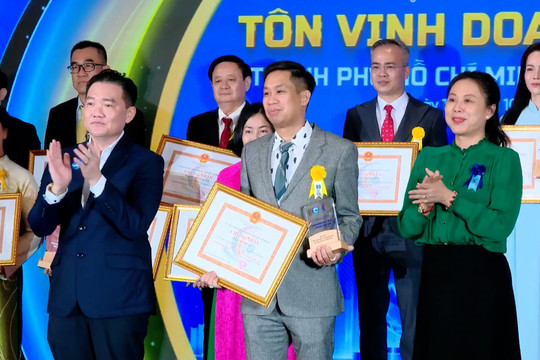
On the policy front, HCM-SME maintains a mechanism for regular dialogue with municipal departments, consolidating recommendations based on survey data and case studies from member enterprises. The goal is to shorten policy delays, remove procedural bottlenecks, and standardize access to public support programs. In terms of communications and branding, HCM-SME plans activities to honor enterprises and encourage investment in product and service quality and customer experience, regarding this as a “soft lever” to raise the competitiveness standards of the SME sector.
Standing Vice Chairman Bui Ngoc Diep emphasized that for programs to truly “reach” enterprises, a culture of substantive collaboration is essential. Sector-cluster service centers will act as one-stop hubs where enterprises can access training, consulting, standards, trade promotion, and financial connections. In industries with high technical requirements, the Association will build a network of specialized advisors, linking with universities, institutes, and certification organizations to ensure services meet international standards while remaining cost-appropriate.
.jpg)
.jpg)
The effort to build an ecosystem is also tied to finance for growth. HCM-SME aims to act as a “translator” between enterprises and financial institutions: standardizing documentation, enhancing management capacity, and connecting solutions such as factoring, purchase-order financing, and risk insurance. The objective is not to chase loan size, but to channel smart capital—aligned with real needs and overseen by management discipline. Conversely, enterprises must commit to transparent bookkeeping and compliance with standards to build long-term credit credibility.
In his concluding message, Chairman Pham Van Triem affirmed: “HCM-SME wishes to be seen as a service platform rather than a purely membership-gathering organization. We prioritize actions that are close – targeted – measurable: helping enterprises standardize processes, elevate management, and unlock access to markets and capital. Every step forward, however small, deserves to be recognized and scaled.” He also conveyed that solidarity – integrity – learning are keys to going the distance: solidarity to pool resources, integrity to preserve trust, and learning to drive continuous innovation.
.jpg)
.jpg)





.png "Con Dao – Island Special Zone, International Eco-Tourism Hub")