
Only about 5–7 percent of the current workforce has received formal logistics training, while demand continues to surge through 2035.
A Dual Shortage in Headcount and High-Quality Skills
Recent surveys highlight a dual crisis of quantity and quality in Vietnam’s logistics workforce. The industry employs more than half a million workers, yet only a small fraction has benefited from structured professional education; most companies rely heavily on on-the-job training to fill skill gaps. Forecasts suggest that by 2030, Vietnam could face a shortfall of more than 200,000 logistics professionals with adequate technical, language and digital skills.
Several factors are driving this gap. First, the pace of market expansion has outstripped the capacity of universities, colleges and vocational institutions to train specialized logistics staff. Second, many training programmes remain theoretical and detached from real-world Logistics 4.0 practice, with instructors lacking hands-on industry experience. Third, student awareness of logistics as a profession is still limited; many young people “fall into” logistics without proper career orientation.

On the business side, more than 85 percent of logistics firms report that they must train and upskill staff primarily through in-house, practical experience. Some large companies have established internal training centres, but most SMEs cannot afford such investments, leaving them at a disadvantage when competing for talent.
Vietnam’s logistics talent shortage is not just a matter of “not enough workers”; it is a strategic risk for the entire supply chain. When frontline staff lack the right skills, any shock - port congestion, new regulations, road closures - can quickly escalate into a crisis. In a world of frequent disruptions, a well-trained logistics workforce that understands both operations and technology is the shock absorber that helps the wider economy withstand turbulence and maintain trade flows.
From Digital Skills to Green Logistics: The New Competency Profile
Vietnam’s National Digital Transformation Programme to 2025, with orientation to 2030, identifies the development of a digitally skilled workforce as a core objective, with logistics singled out as a priority sector. For logistics professionals, this means that core operational knowledge—freight forwarding, warehousing, transport - is no longer sufficient. They must also be proficient with transport and warehouse management systems, tracking and tracing platforms, e-booking and e-documentation tools, and data dashboards.
At the same time, the global push toward Net Zero is turning “green logistics” into a new baseline requirement. Professionals now need to calculate emissions intensities on specific routes and modes, understand concepts like Scope 1, 2 and 3 emissions and navigate emerging regulations such as the EU’s CBAM and partner ESG frameworks.
Research on digital skills in Vietnam’s logistics sector indicates rising demand for roles such as data-driven route optimization specialists, IoT-enabled warehouse managers, supply chain risk analysts and digital transformation project managers. This calls for a new learning mindset among students and workers: beyond classic freight forwarding or customs procedures, they must invest in technology literacy, analytical thinking and specialized English.
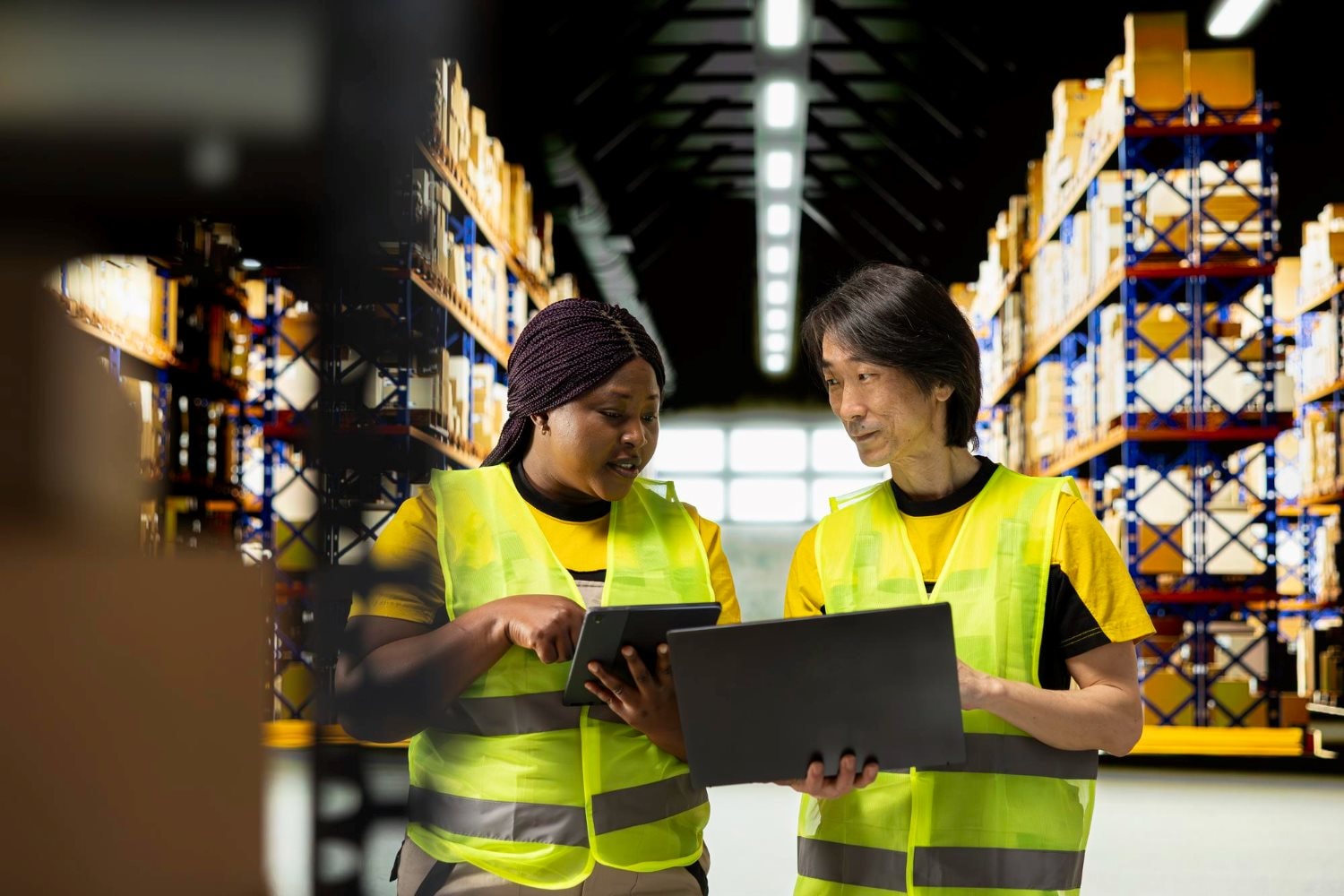
The “next-generation” logistics professional sits at the intersection of three competencies: solid operational know-how, strong digital skills and a sustainability mindset. It could be a dispatcher who reads and acts on real-time dashboards, a warehouse supervisor who understands green storage standards or a route manager who can negotiate with clients and quantify CO₂ savings from route optimisation. These combined skills are becoming a de facto entry ticket for candidates looking to build long-term careers in logistics.
Bridging the Talent Gap: Linking Schools, Training Institutes and Businesses
To bridge the skills gap, various initiatives have been launched to connect logistics companies with education and training providers. Human-resource forums, digital-skills workshops and career events organised around national logistics exhibitions are creating platforms where industry and academia can exchange needs and solutions.
As a FIATA member, the Vietnam Logistics Business Association (VLA) is authorised to deliver the FIATA Diploma in Freight Forwarding and the FIATA Higher Diploma in Supply Chain Management, bringing international training standards to the domestic market. If these programmes are closely aligned with business needs and regularly updated with modules on digitalisation and green logistics, they can form the backbone of Vietnam’s logistics education ecosystem.
Government policy will also be crucial. Support schemes for upskilling, such as tuition subsidies and concessional loans for short courses in digital skills, English and supply chain management, can help tens of thousands of workers upgrade their capabilities without leaving the labour force.
Human capital will determine how quickly and effectively Vietnam’s logistics industry can transform in the coming decade. A shortage of digitally savvy, sustainability-literate professionals will slow down firms in a supply-chain landscape where data and carbon performance are key competitive differentiators. Solving this challenge demands a coordinated effort: enabling state policies, agile and practice-oriented curricula from universities and vocational schools and proactive “talent co-creation” by businesses. If these pieces come together, Vietnam can build a logistics workforce capable of steering its supply chains confidently through the twin transitions of digitalisation and green growth.






.png "Dien Bien builds investment value chains to power its next growth chapter")

.jpg "Dien Bien, Yunnan and Luang Prabang: Expanding Regional Cooperation and Investment Opportunities")