
.jpg)
Rather than chasing trends or investing in stand-alone equipment, businesses need a “software-driven hardware” approach, and more importantly, they must measure benefits by workflow, not by individual machines.
Demand Rebounds in CPG & Automotive
Fast-moving consumer goods (CPG) and the automotive sector—both with heavy logistics needs—are leading the wave of reinvestment in automation. Pressures from e-commerce, increasingly shorter order cycles, and strict delivery accuracy requirements have made it impossible for many companies to continue with traditional manual operations.
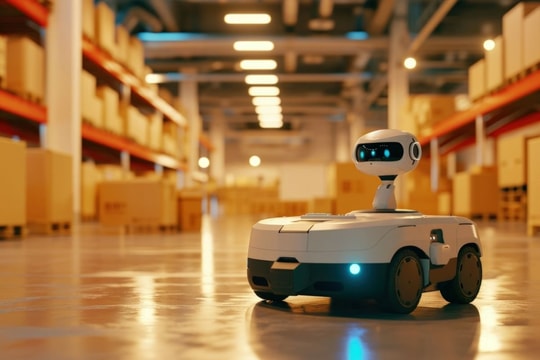
At large distribution centers, order volumes that surge during peak seasons are forcing supply chain leaders to seek sustainable solutions. Mobile robots and automated racking systems have become viable options to maintain customer service levels while ensuring costs remain under control.
Humanoids: Real Value and Clear Limits
While mobile robots and racking systems are now widespread, humanoid robots remain a subject of debate. The image of robots walking, grasping, and picking items like humans gives the impression that “the future has arrived.” Yet the reality is that the maturity of this technology is uneven, and investment costs remain high.
Humanoids demonstrate real benefits in dynamic environments where many human-like manual tasks are difficult to standardize. But for stable product lines with repetitive cycles, mobile robots or automated racking systems remain more cost-effective and safer. Companies must carefully evaluate these factors to avoid falling into a “technology illusion” while ignoring proven, reliable solutions.
The return on investment (ROI) calculation should start with defining the “flow unit”—a product line, a picking task, or a container. Next, simulate 2–3 scenarios with varying automation levels to compare throughput, on-time delivery, and labor demand.
Total cost of ownership (TCO) must be fully accounted for: maintenance, consumables, downtime, and software integration. Indirect benefits should also be measured, such as improved worker safety, fewer errors, and greater stability during peak seasons. Finally, follow a “land and expand” strategy: begin with one area, standardize orchestration software and safety protocols, then scale gradually to avoid full dependency on a single provider.
.jpg)
Integrating WMS–WES–Orchestrator
A common weakness in automation projects is that companies purchase equipment piecemeal without a unified orchestration system. The result is scattered robots, fragmented data, and underwhelming performance.
The solution is to build an architecture where “software serves as the brain.” Warehouse Management Systems (WMS), Warehouse Execution Systems (WES), and orchestrator platforms must be seamlessly integrated. Only with a unified command center can robots operate as a coordinated team rather than as isolated “smart fragments.”
Measuring ROI by “Flow Unit”
The key shift in mindset is this: effectiveness should not be measured by individual machines but by workflow. A robot may be advanced, but if it only handles a fraction of the process while bottlenecks remain elsewhere, ROI will never meet expectations.
By evaluating ROI through the lens of workflows, managers can identify where automation is essential, where human labor is sufficient, and where hybrid approaches make sense. This ensures investments are targeted and avoids the trap of “chasing technology” without tangible economic value.
Humanoid robots are attractive because of their flexible handling capabilities, but their limitations are significant. They only deliver value in highly variable environments where tasks are difficult to standardize. In stable, repetitive operations, mobile robots and automated racking systems still outperform in cost and reliability.
Moreover, companies must pay attention to safety standards, the time needed to train vision models, and contingency plans when robots fail. The crucial lesson: orchestration software must serve as the “brain,” while hardware should adapt flexibly to operational needs.
Warehouse automation is entering a new cycle in which businesses are no longer chasing trends or showcasing flashy technology but focusing on measurable benefits. The issue is not how many robots a company owns, but how well workflows are optimized, how ROI is proven, and how flexible the system can be. A sustainable strategy is one that starts small, measures clearly, scales step by step, and avoids being locked into a single platform.

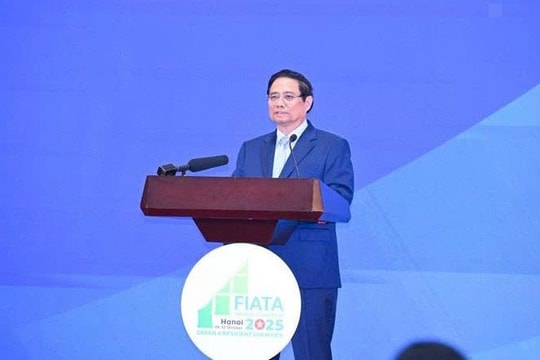

.jpg "Green & Resilient Logistics - From Declaration to Action
at FWC 2025")




.jpg "Dien Bien, Yunnan and Luang Prabang: Expanding Regional Cooperation and Investment Opportunities")