

Behind the rate charts lie two major variables: carriers rerouting around the Cape of Good Hope due to Red Sea instability, and a “wait-and-see” mindset about when they will return to the Suez. This picture forces businesses to both control costs and preserve speed to shelf, especially for time-sensitive products such as consumer electronics, seasonal fashion, and high-value components.
Early peak, quick retreat
From the first weeks of 2025, pre-Lunar-New-Year front-loading, combined with GRI surcharges and Red Sea transshipment risks, pushed Trans-Pacific and Asia–Europe rates sharply higher. Many US importers pulled forward spring–summer orders to sidestep risk, draining available capacity for several weeks. But after Lunar New Year, as consumer demand cooled and fleets adapted to the longer Africa routing, benchmark rates began sliding to lower levels. By the end of Q3, most indices indicated a clear downtrend from early-year “peaks,” though short bursts of rate rebounds still appeared due to blank sailings or service adjustments. The rate curve thus reflects both seasonality and strong geopolitical effects.
When to change mode
The “communicating-vessels” effect between ocean and air becomes especially visible whenever box rates rise too fast or bottlenecks emerge in the supply chain. Companies tend to shift a portion of shipments to air or sea-air to hold launch dates, hit shelf calendars, and honor commitments to retail chains. Unlike 2021–2022, however, today’s switches to air are shorter-lived for two reasons: carriers proactively smooth capacity to hold a floor under rates when demand is weak, and the combination of bellyhold capacity and freighter fleets is more flexible than before, making air rates less prone to prolonged spikes. The new rule is to define quantitative trigger thresholds rather than reacting by feel: if ocean transit exceeds plan beyond a set threshold, if gross margins risk being eroded by surcharges and late-delivery penalties beyond acceptable limits, if the opportunity cost of missing shelf dates outweighs the air–sea rate gap, then a mode switch is warranted.
The Red Sea is not yet calm
Positive signals from the Suez Canal—fee incentives and navigational stabilization efforts—have at times raised hopes that the Red Sea route would soon reach a “new normal.” Nevertheless, security conditions continue to shift quickly, leading many carriers to keep using the Africa detour as the safer option. Each detour stretches transit by several days to more than a week, lengthening container time at sea, scattering empty-equipment balances, and creating a natural rate “floor” that is hard to break. If conditions ease and fleets return to Suez in unison, effective capacity will jump immediately and press rates to new lows. Procurement decisions therefore cannot be locked to a single scenario; they need threshold-based adjustment mechanisms.

A decision playbook
Rather than isolated bullet lists, companies should standardize a playbook that runs seamlessly from data to action, starting with a weekly updated dashboard for four critical corridors—Asia–US West Coast, Asia–US East Coast, Asia–North Europe, Asia–Mediterranean—tracking spot prices alongside contract indices, paired with three operating indicators: blank-sailing and void-sailing ratios, dwell time at transshipment hubs, and the deviation between actual and planned ETAs. Based on this dashboard, firms define threshold bands for three trigger axes—order gross margin, lead-time deviation, revenue opportunity cost. When any axis breaches its band, the system recommends shifting part of the portfolio to air or sea-air, prioritizing time-sensitive SKUs. The end-to-end process is tied to flexible contracts that include windows for changing airports or seaports, transparent peak-season surcharge mechanisms, and on-time-performance clauses with refunds or compensation for delays. Sea-air chains should likewise be pre-standardized rather than improvised, with fixed lanes through high-throughput hubs, clear ground-handling SLAs, packaging and ULD standards, and the use of E-freight and E-AWB to avoid losing the speed advantage in the final leg.
Actions for the next quarter
The near-term focus is to increase flexibility without loosening cost discipline, beginning with a review of alternative gateways to add at least one domestic or regional seaport gateway and one air gateway in Europe or the US, ensuring documentation and operational processes allow a switch of gateway within two working days. Next is to sign peak-season addenda with shipping lines and airlines or forwarders to lock surcharge mechanisms and on-time commitments, avoiding open-ended clauses that can inflate costs, while completing a sea-air handbook defining standard lanes, minimum weekly allotments, customs-clearance and last-mile SLAs.
The final buffer is a destination-market seasonal inventory strategy with a one-to-two-week safety margin for high-risk product groups during noisy periods such as holidays and before ocean-rate adjustments, combined with pilot near-shoring or light assembly where partner infrastructure allows, to reduce dependence on a single corridor.
Implications for Vietnam
Vietnam sits at the junction of two “communicating vessels”: electronics assembly and fast-fashion garment manufacturing on one side, and rising temperature-controlled pharma demand on the other. Competitive advantage therefore hinges more on speed and delivery reliability than on price alone. Vietnamese companies should simultaneously deploy mixed-rate contracts to lock a cost base while keeping flexibility for short spikes, expand multi-gateway options to reduce seasonal choke-point risks, and invest in digital standards—E-AWB and E-freight—alongside GDP-compliant cold-chain facilities to meet stringent requirements from global retail chains. As ocean alliances continue fine-tuning services through 2025 and the Red Sea remains unsettled, standing on a single corridor or gateway constitutes systemic risk; scenario thinking and threshold-based activation are safer, more effective management methods for both mid-sized and large enterprises.
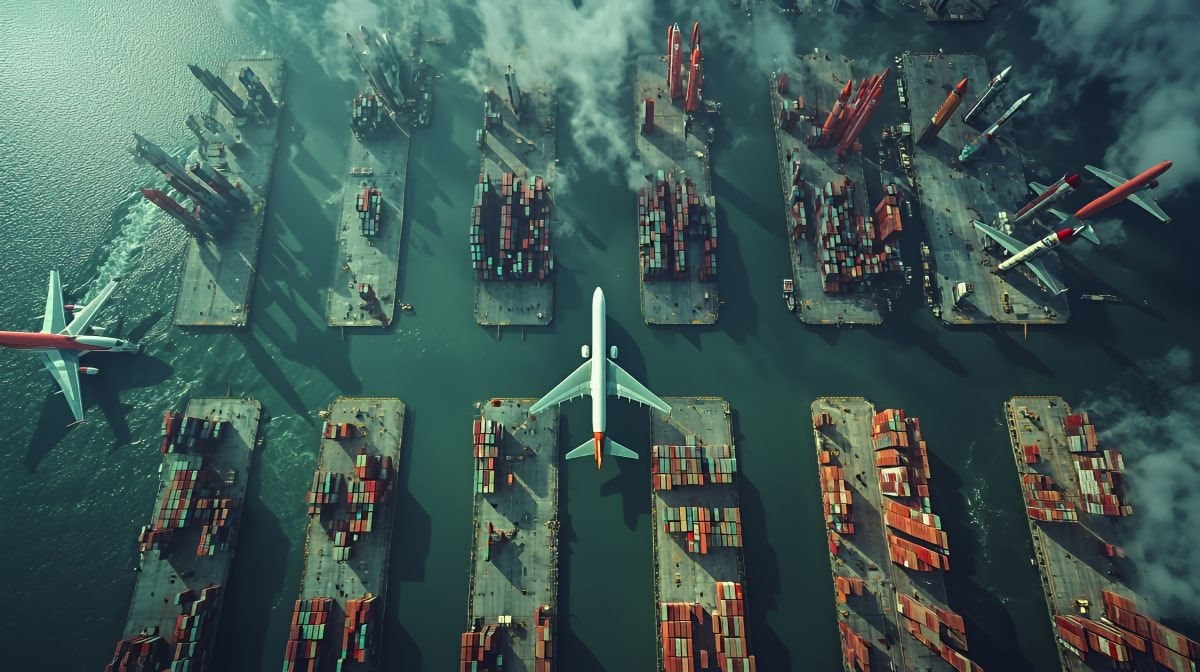
The ocean-freight whirlwind of 2025 is not a long storm but a series of short, erratic gusts. Any gust can delay shelf dates or erode margins if companies lack a ready playbook. The right playbook combines flexible contracting with multi-gateway routing and a pre-standardized sea-air chain, plus a smart layer of seasonal inventory. While markets are still shaped by Red Sea reroutings and ongoing service-network adjustments, ASEAN businesses—in Vietnam in particular—can turn the “communicating-vessels” effect into an advantage: capture airfreight speed when needed and enjoy ocean-freight cost efficiency when the seas are calm.

.jpg "Ho Chi Minh City SME Association HCM-SME): Consolidate to Break Through, Accompany to Grow Strong")





.png "Con Dao – Island Special Zone, International Eco-Tourism Hub")
.jpg "How Supply Chains Survive: Red Sea Turbulence and a Parched Panama Canal?")