

From Savings to Total Value
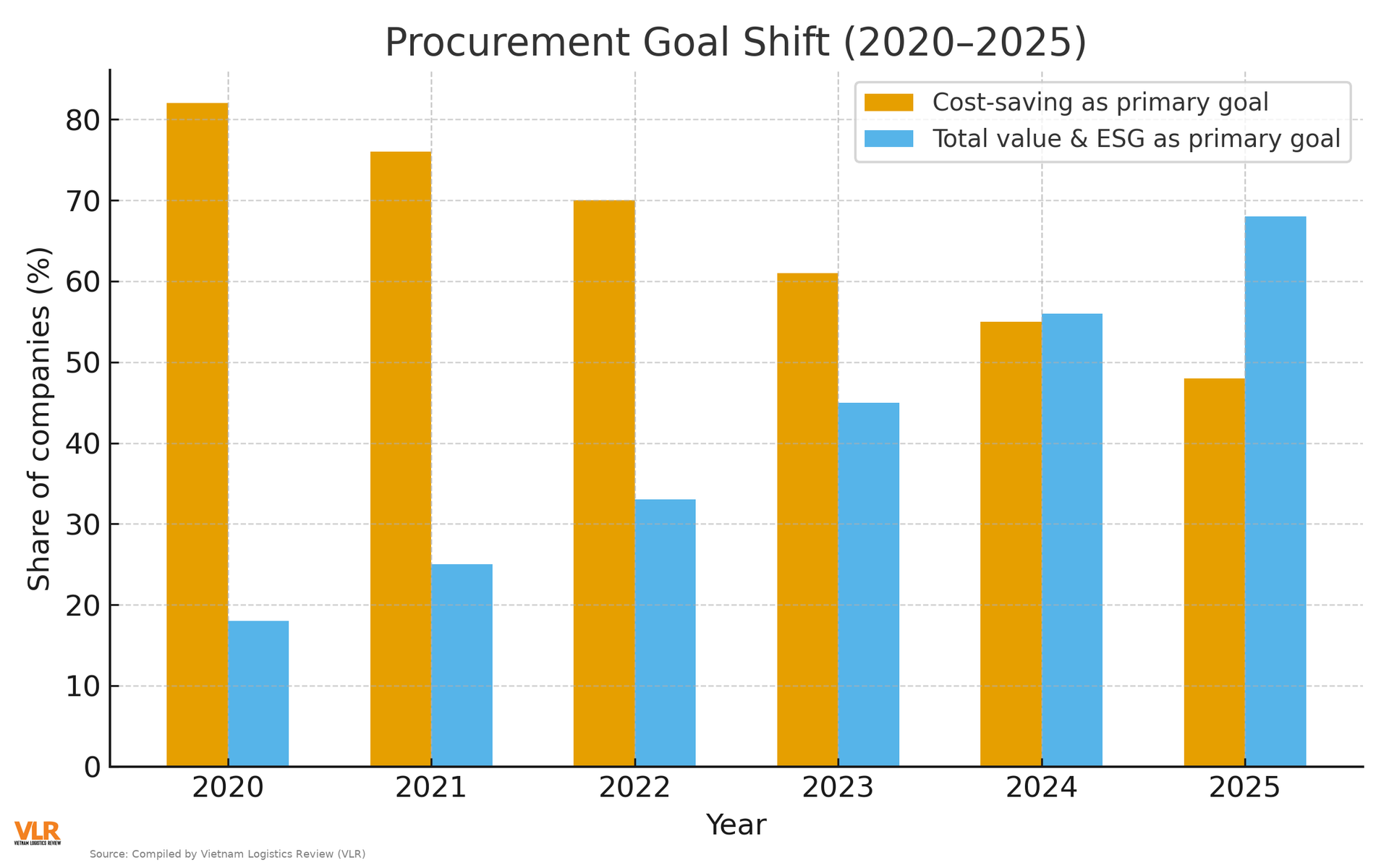
For years, procurement performance was measured by one key figure: the percentage of cost savings. But in today’s volatile and uncertain environment, that number no longer tells the whole story. Leading enterprises now evaluate procurement by its ability to create total value from supply stability and ESG assurance (environmental, social, governance) to product innovation and risk mitigation.
The new approach is outcome-based sourcing: selecting suppliers not just for low prices, but for long-term reliability, responsiveness, and willingness to share risk. As relationships between buyers and suppliers become symbiotic, value flows both ways from raw-material sourcing to the end-customer experience.
AI as a Co-Pilot for Negotiation and Risk
Artificial intelligence is transforming how companies prepare and conduct negotiations. Intelligent “co-pilots” can analyze historical data, benchmark market trends, and suggest negotiation scenarios that optimize both price and performance.
Beyond pricing, AI helps uncover hidden risks across the supply chain such as over-dependence on politically unstable regions or abnormal spikes in logistics costs. By integrating ESG, quality, and delivery data into a unified system, procurement teams gain a holistic view and can make proactive, not reactive, decisions.
Smart Procurement Dashboard
A live supplier profile connects real-time data on quality, delivery, ESG compliance, and geopolitical risk. AI engines generate negotiation strategies based on historical data and market benchmarks. Contracts are managed through performance indicators, with automated alerts for cost or delivery anomalies.
Crucially, connecting procurement with downstream market data enables proactive purchasing aligned with demand shifts. The result: speed, transparency, and value creation far beyond traditional “savings percentages.”
Next-Generation Supplier Relationship Management
Previously, supplier relationship management (SRM) focused on monitoring orders and quality. Now it’s evolving into a two-way data partnership. Suppliers are no longer mere vendors they’re innovation allies and co-creators of sustainability.
Modern SRM systems allow both sides to access shared dashboards, exchange metrics, and monitor performance in real time. A two-way scorecard helps companies evaluate suppliers by ESG indicators, productivity, and reliability while suppliers can provide feedback on processes, collaboration, and planning.
This transparency builds trust and lays the foundation for enduring, value-driven partnerships.
Strategic Portfolios and Co-Innovation
Procurement 2025 is about purposeful innovation, not just transactions. Forward-thinking organizations are reclassifying their supplier portfolios by strategic value identifying key partners capable of co-developing products, sharing forecasts, and testing new technologies.
not reactive, decisions
They’re creating innovation incubators
where startups, SMEs, and large suppliers experiment with sustainable solutions. Embedding shared metrics such as CO₂ emissions, quality, and time-to-market into contracts aligns both sides toward long-term goals.
Instead of competing purely on price, partners now share knowledge and rewards to strengthen their collective position in the global value chain.
Building SRM for Innovation
Strategic suppliers are invited into joint development programs, sharing forecasts and technology roadmaps. Contracts include shared KPIs such as CO₂ reduction, product quality, and market-launch speed.
Companies also establish “collaboration incubators” with startups to test emerging technologies and drive green innovation. Two-way scorecards published periodically sustain transparency, trust, and continuous improvement.
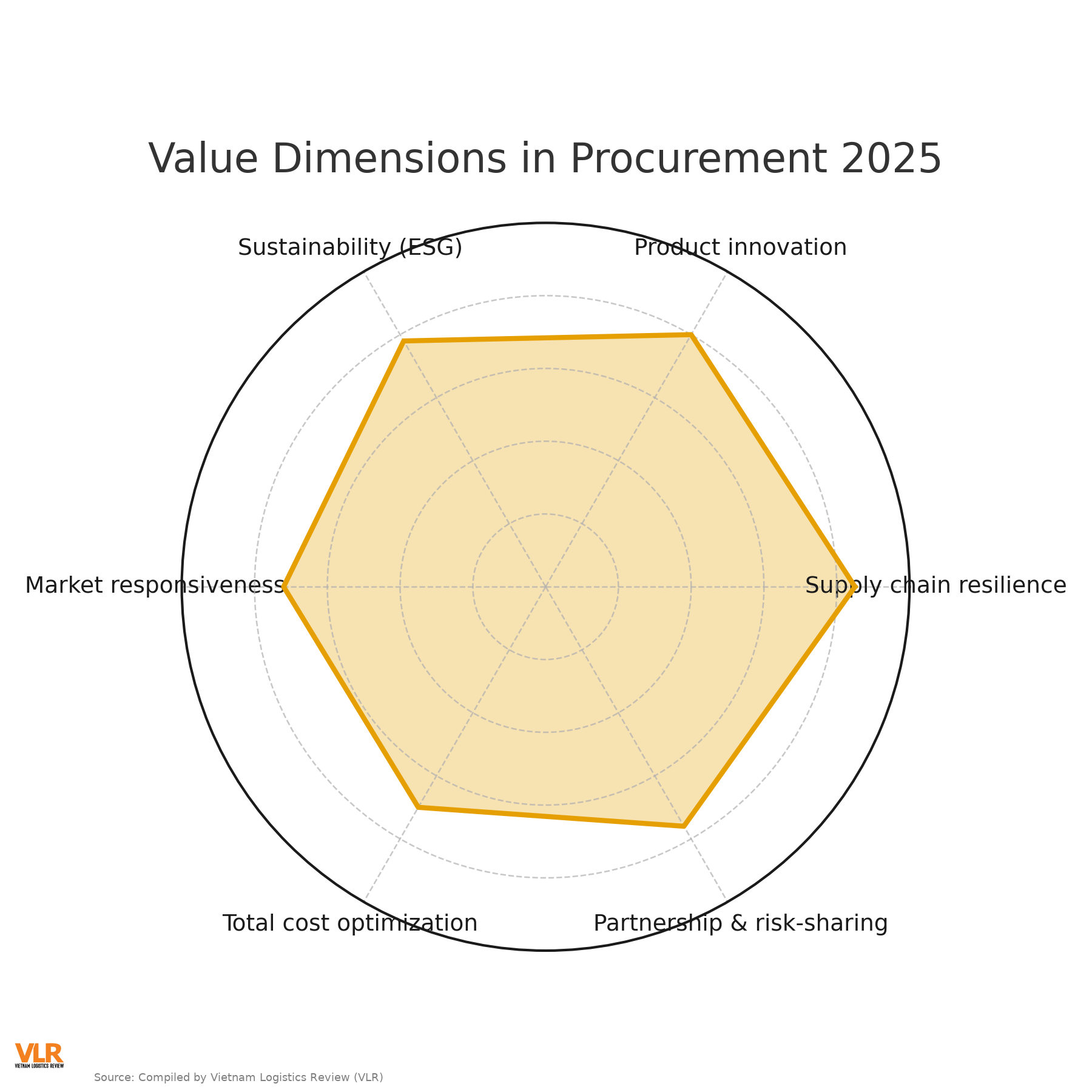
Procurement is entering an era of redefined value. With data mastery, AI adoption, and balanced supplier partnerships, it evolves from a cost-saving function into a value amplifier for the entire supply chain. This is how organizations enhance both economic performance and sustainability fueling a quiet revolution unfolding across every enterprise on the path to 2025.
.png "Cross-Border E-Commerce: Speed Must Go Hand in Hand with Standards")


.png "Guangzhou Digitalization & AI Expo 2026")
.jpg "Warehousing 2025: Are Robots Truly the Optimal Solution?")


.png "Dien Bien builds investment value chains to power its next growth chapter")

.jpg "Dien Bien, Yunnan and Luang Prabang: Expanding Regional Cooperation and Investment Opportunities")